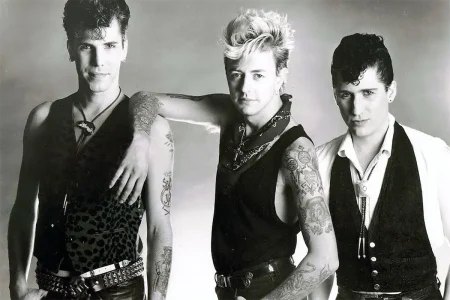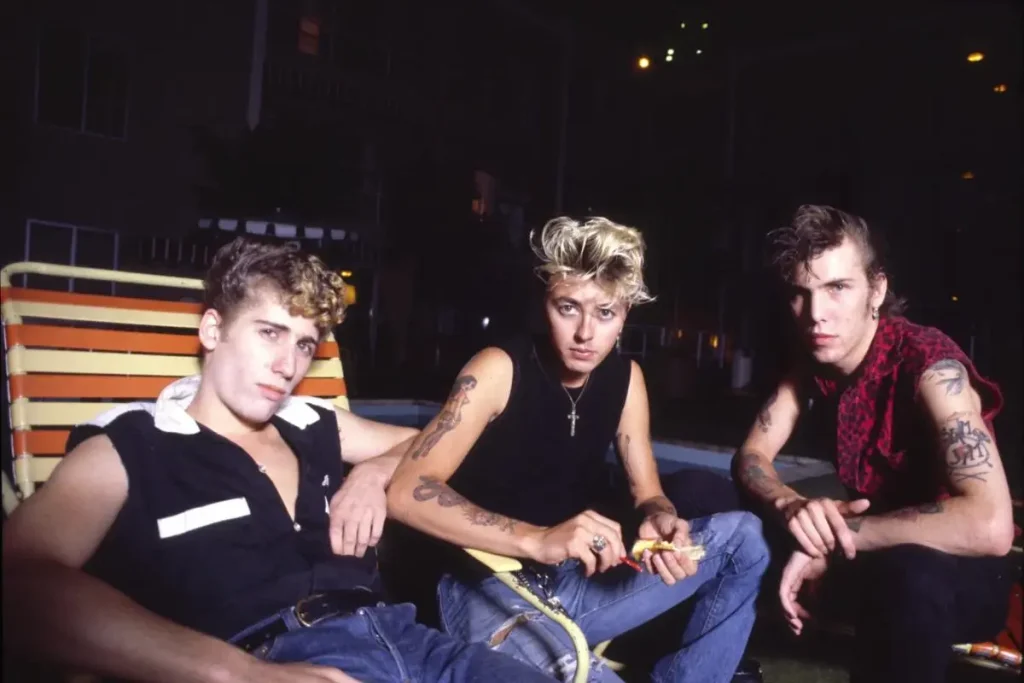
The Stray Cats are one of rock’s best reversals: an American band that didn’t “make it” in America first. They left the country, plugged into a UK youth scene that treated 1950s rockabilly like living ammunition, and came back as a headline-making “new” thing.
It is tempting to call it irony. It is closer to strategy, even if it started as survival: if your hometown is bored with its own roots, you find an audience that still hears electricity in them.
“We went to England because there was a scene there.”
Brian Setzer, quoted in a 2019 interview about the band’s early move
Rockabilly at home: an American sound with a closed door
By the late 1970s, rockabilly had become “oldies” in the U.S., filed next to sock hops and nostalgia tours. Meanwhile, American rock radio was moving fast: arena rock, disco’s aftershocks, corporate AOR polish, then the first wave of new wave.
The Stray Cats were not reenactors. They were a tight trio with punk-era urgency, but the tools were unmistakably rockabilly: slapback echo, sprinting tempos, and a Gretsch-driven twang that refused to behave.
That mix could have been a perfect American reset. But America’s music business often needs a foreign stamp of approval before it trusts its own ideas, and rockabilly was not being treated as “future-facing” stateside.
The UK factor: when Britain treated rockabilly like a street movement
Across the Atlantic, the story was different. Britain had a visible rockabilly revival bubbling in clubs and style tribes, fueled by a broader post-punk hunger for something raw, physical, and unpretentious.
In that environment, rockabilly was not a museum. It was fashion, attitude, nightlife, and identity. The Stray Cats walked into a ready-made ecosystem: promoters who could book them, kids who dressed the part, and press who knew how to frame a small band as a big deal.
It is worth underlining how rare that is. Many American genre revivalists have to build a scene; the Stray Cats found one waiting, and it happened to be on another continent.
1980: the move that changed everything
The core narrative is now part of Stray Cats legend: the Long Island trio relocated to the UK around 1980 and quickly began drawing attention. Even mainstream reference accounts note the sequence clearly: UK move first, UK breakthrough first, U.S. breakthrough later.
That boomerang arc is laid out in standard band histories, including the band’s overview entries and discographical timelines that place the early hit singles and the initial buzz in Britain ahead of the U.S. splash.
The band’s official overview of their career arc frames their identity as a tight rockabilly unit that rose fast, a useful anchor when separating myth from what actually happened.
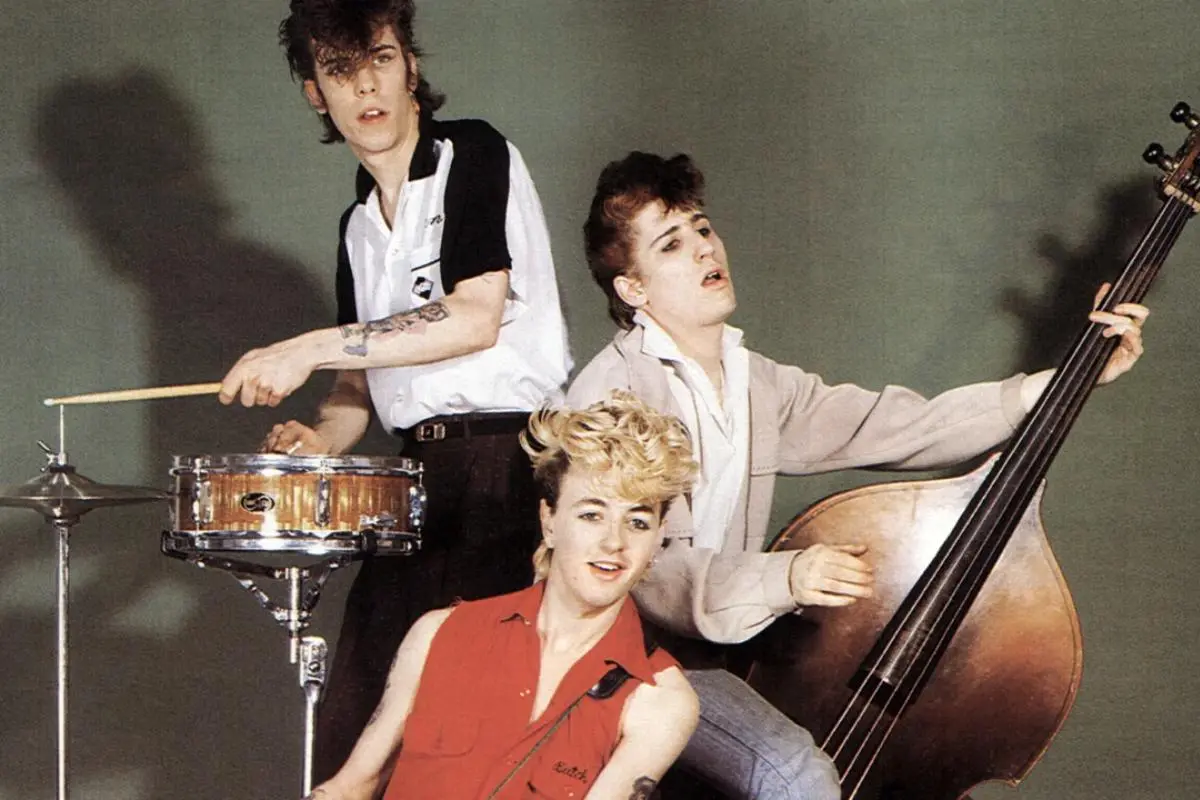
Dave Edmunds: the producer who helped them sound like a record, not a costume
The Stray Cats did not succeed only because the UK had better taste. They succeeded because they were good, and because the production captured what was good about them without sanding down the danger.
Producer Dave Edmunds mattered here, both as a respected rock and roots figure and as someone who understood how to make retro elements feel present tense. He helped translate a club band into something that could compete on radio and TV without losing its bite.
In institutional writing on the band’s role in the rockabilly revival, Edmunds is frequently cited as a key catalyst in turning momentum into chart impact.
The songs that lit the fuse in Britain
“Runaway Boys” and “Stray Cat Strut” were not just catchy. They were coded correctly for the moment: rebellious but not nihilistic, classic but not corny, tough but still fun.
British chart documentation shows how their singles registered in the UK marketplace, where rockabilly revival records could legitimately compete with new wave and pop. The UK chart history for “Stray Cat Strut” provides an accessible paper trail of their UK chart presence.
And crucially, the band looked like they sounded. In an era when music television and youth-culture photography were becoming the megaphone, that coherence mattered. It is hard to overstate how quickly a sharp visual identity can convert curiosity into fandom.
Then the boomerang: UK heat creates U.S. “discovery”
Once the Stray Cats had a proven story overseas, America could receive them as validated. That is the part that should make U.S. music fans a little annoyed: it often takes an export success for an American audience to treat American roots as exciting again.
When the trio finally broke big in the U.S., it was not as a niche throwback act. They became the most visible face of an early-’80s rockabilly surge, influencing fashion, guitar tone obsessions, and a broader appetite for pre-Beatles rock and roll energy.
Mainstream band histories summarize this sequence plainly: early UK hits first, later U.S. breakthrough, followed by major visibility in the early-’80s rockabilly revival.
Why the Stray Cats worked: three musical choices that made rockabilly sound dangerous again
1) The trio format made everything punchier
Three players leaves nowhere to hide. The Stray Cats’ lineup made arrangements lean and aggressive, closer to punk’s economy than classic rock’s sprawl.
2) Brian Setzer’s guitar tone was a mission statement
That bright, percussive Gretsch sound, often paired with slapback echo, carries the entire aesthetic in a single chord. It telegraphs “1956,” but the attack says “right now.”
Instrument makers and guitar press have long treated Setzer as a key modern ambassador for Gretsch-style rockabilly tone and technique. Even general manufacturer history and artist ecosystems around Gretsch highlight how central that sound is to rockabilly’s modern image.
3) They wrote new songs that behaved like classics
Plenty of revival acts can play the old licks. Fewer can write new material that feels inevitable, like it always existed. The Stray Cats did, which is why they were able to graduate from “scene band” to “hits band.”
Exporting an American genre: why it happens more often than we admit
The Stray Cats story isn’t just trivia. It reveals a pattern: American roots music sometimes needs foreign audiences to remind America it is valuable.
We have seen similar loops with blues and early jazz appreciation, as well as later cycles where UK tastemakers helped reframe U.S. styles as “cool” rather than “dated.” The Stray Cats just did it in unusually direct fashion, with a hard pivot across the Atlantic at exactly the right time.
There is an edgy lesson here for musicians: if your scene is dead, stop begging it to wake up. Find the place where your music already makes sense, then let the headlines chase you back home.

Timeline cheat sheet: the Stray Cats’ transatlantic slingshot
| Moment | What it meant |
|---|---|
| Late 1970s (Long Island/NYC area) | Developed a rockabilly-meets-punk approach while the U.S. market treated rockabilly as nostalgia. |
| 1980 (move to the UK) | Entered an active rockabilly revival scene with clubs, press attention, and style culture described in standard band timelines. |
| Early UK singles and buzz | Built credibility and momentum with hits like “Runaway Boys” and “Stray Cat Strut” chart activity. |
| Return wave to the U.S. | UK success created U.S. demand, helping position them as leaders of the rockabilly revival. |
Listening guide: hear the “reintroduction” in action
If you want to hear how the Stray Cats made an American genre feel newly exportable, try this order. You are listening for attitude and sonics, not just song titles.
- “Runaway Boys” – velocity, bite, and a hook that doesn’t apologize for being simple.
- “Stray Cat Strut” – swagger and restraint; the groove is the weapon.
- “Rock This Town” – a mission statement for the revival: danceable, loud, and built for live rooms.
For quick reference on the band’s core catalog and how releases are commonly grouped and dated, their official discography and band materials are useful cross-checks.
The larger legacy: they didn’t just revive rockabilly, they rebranded it
After the Stray Cats, rockabilly in the mainstream imagination was no longer strictly black-and-white footage. It became neon-lit again: pompadours next to synth-pop, upright bass next to drum machines, a reminder that “old” can be the sharpest knife in the drawer.
Later reunions and releases only reinforced the point that this was never a novelty act. Industry coverage around their return projects emphasizes the durability of the trio’s appeal and the ongoing appetite for that sound, a topic often tracked by music-industry news and analysis.
Even punk-adjacent histories of the era tend to treat the Stray Cats as part of the broader early-’80s underground-to-mainstream cross-pollination, as reflected in punk-era profiles that place them in the wider scene. They were proof that tradition could be loud enough to compete with the future.
Conclusion: the strangest kind of homecoming
The Stray Cats didn’t “discover” rockabilly – America already invented it. What they discovered was that, sometimes, you have to leave home to make home listen.
They exported a distinctly American sound to a UK scene ready to explode, then brought it back with enough heat to make it feel brand new. If that bothers your pride a little, good: it should also remind you that great music doesn’t need permission – it just needs an audience.