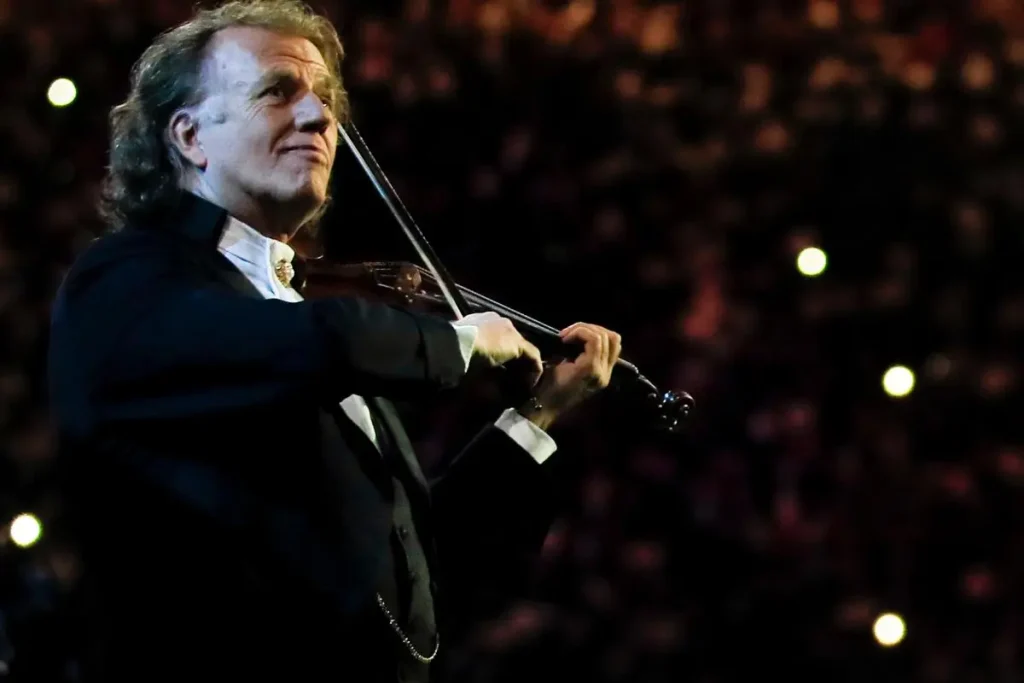
When André Rieu walks onstage, the audience does not just hear a violin. It gets permission to clap on the beat, sing out loud, and treat a waltz like a hit single.
That permission is why he became a household name far beyond conservatories. Around his milestone 75th birthday, the Dutch violinist and conductor has been unusually candid about what fuels his longevity: a joy-first philosophy and a marriage built on teamwork, not fairy dust.
Why André Rieu still matters (even if you roll your eyes)
Classical music is often sold like a museum: quiet, sacred, and slightly judgmental. Rieu sells it like a night out, where emotion is the dress code and melody is king. Purists call that “dumbing down,” but it is also how new listeners get hooked.
His impact is not subtle: he normalized orchestras in arenas, on TV, and in cinemas, and he made dancing at a concert feel acceptable again. Love him or hate him, he has dragged classical music back into everyday life by force of charm.
Quick career timeline: the “waltz king” in five pivots
If you only know Rieu from a DVD on the coffee table, his career can look like instant stardom. In reality, he built a family business slowly, then accelerated hard once the formula clicked.
| Year | Turning point | Why fans still talk about it |
|---|---|---|
| 1949 | Born in Maastricht, Netherlands (October 1). | The local pride angle never left the brand. |
| 1975 | Marries Marjorie, his long-time partner in life and work. | Decades later, the marriage remains part of the story. |
| 1978 | Forms the Maastricht Salon Orchestra. | Small venues first, then bigger dreams. |
| 1987 | Creates the Johann Strauss Orchestra. | He finally has a vehicle for “waltz at scale.” |
| 1995 | A waltz performance at a major football match becomes a breakout moment. | It proved classical could win a crowd that came for sport. |
Timeline notes: key dates are from André Rieu’s press biography and a general reference profile. It’s a highlights list, not an exhaustive timeline.
The Johann Strauss Orchestra: where discipline meets “we’re practically married”
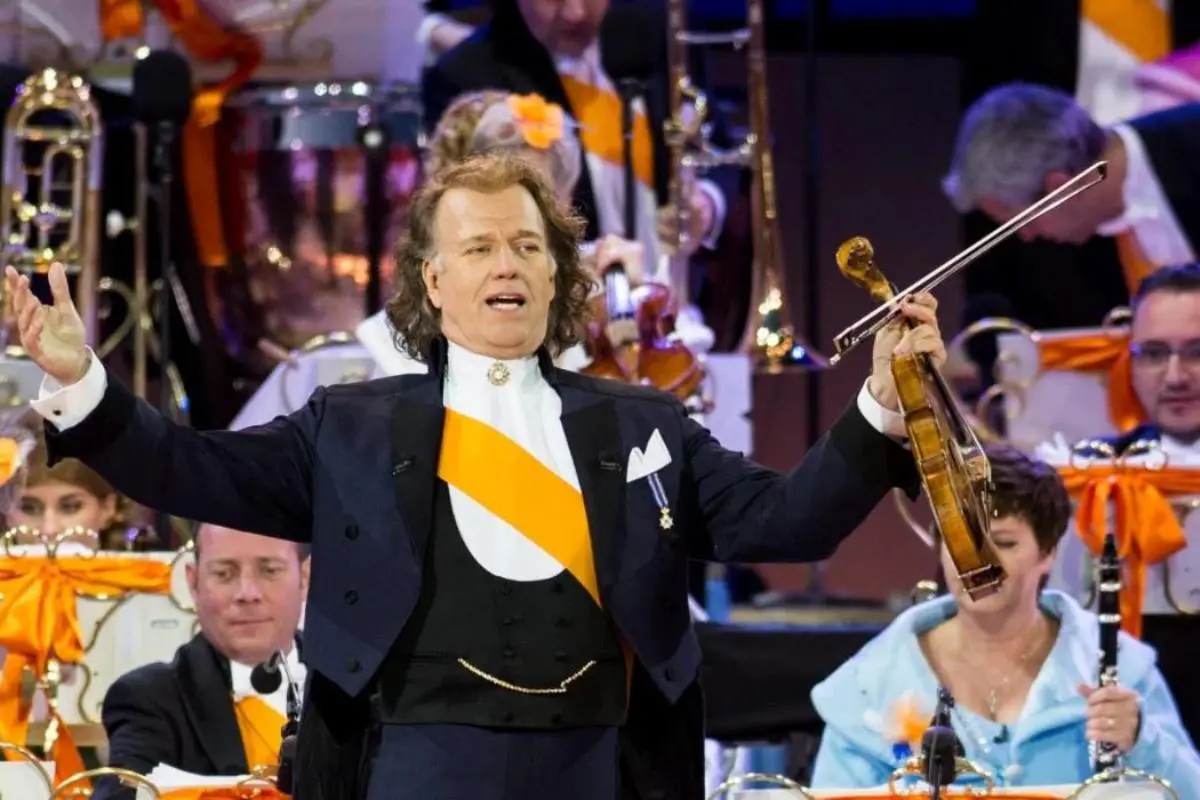
The secret weapon is not just Rieu’s violin, it is the machine behind him. His shows rely on tight ensemble playing, glamorous visuals, and performers who know how to smile without looking fake. In other words, it is classical technique with a pop-tour attitude.
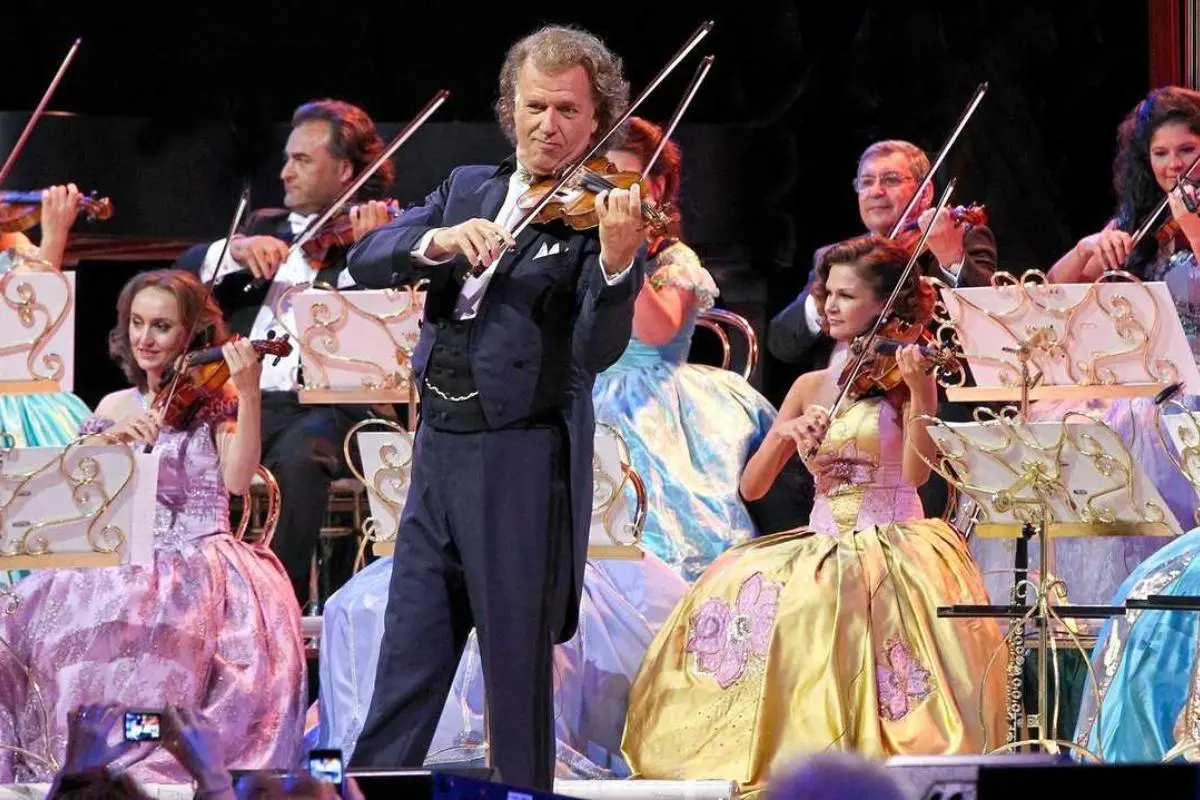
On Rieu’s own telling, he is “practically married” to the Johann Strauss Orchestra, and the fun is part of the job. The group was founded in 1987, debuted publicly on January 1, 1988, and grew from 12 players to about 60-75 on big stages in his overview of the Johann Strauss Orchestra.
The waltz as a delivery system for joy
Musically, the waltz is a cheat code: that one-two-three pulse invites movement, even in people who swear they “don’t dance.” For a violinist, it is also a perfect canvas for singing tone, generous vibrato, and phrasing that feels like breathing. Rieu leans hard into that romantic elasticity.
In one interview, he argued that the world needs more waltz, especially in uneasy times, because music connects people and makes them happy. He even described the three-quarter meter as a kind of doorway to another world, and said he is not afraid of “kitsch” as long as it is not shallow.
The pop-star playbook: huge numbers, huge risks
Rieu’s critics love the word “schmaltz,” but the scale is undeniable: tens of millions of discs sold and concert films that perform like cinema events. One profile also recalled his boldest gamble, touring with a full-scale Schönbrunn Palace replica and ending up €34 million in debt before bouncing back.
Here’s the uncomfortable truth: Rieu uses pop-business tactics to sell orchestral music. That is why he’s both a gateway for newcomers and an annoyance to purists.
What he’s revealed about his private life (and why it hits hard)
Rieu has described a childhood where his parents were severe and he did not feel loved, which he links to his drive to make people happy through music. He also framed his long relationship in plain language: he and Marjorie often think the same thing, respect each other, and do not “own” each other.
That combination explains the onstage persona: the eternal optimist, but not a naïve one. If your early life felt cold, you either repeat it or overcorrect. Rieu overcorrected by building a career that runs on warmth, eye contact, and emotional permission.
The marriage secret: no fairy tales, just a shared operating system
In a 75th birthday interview, Rieu said his marriage works because he and Marjorie are deeply alike and rarely argue. He also said the calmer, deeper bond mattered more than dramatic “butterflies,” which he views as unhealthy obsession in a German interview about his marriage.
Accessibility is his public brand, but stability is his private strategy. The relationship reads like an artist’s survival plan: keep the home base steady, pick a partner who shares your values, and protect the work.
Milestone birthday: why 75 became a public reset
For his 75th birthday, Rieu celebrated with family and orchestra, inviting over 400 people to the Efteling theme park. He also served as guest editor-in-chief of Margriet magazine, while Vrijthof concerts in Maastricht continued drawing fans from more than 100 countries, as described in his 2024 biography update.
A local report on the Margriet special described a garden launch at his Maastricht castle and noted he discussed his life, career, and even his vegetable garden and favorite city, Rome in Chapeau Magazine’s write-up of the Margriet edition. It was celebration, publicity, and tour prep rolled into one.
Lasting impact: making music lessons feel worth fighting for
Rieu’s “impact” is not just ticket sales and feel-good clips. He and Marjorie have backed music access at home, including a €425,000 donation to Jeugdfonds Cultuur Limburg intended to help fund lessons and cultural participation for 1,000 children, plus a relay-style fund to encourage more long-term giving.
That kind of move matters in an era when instrumental tuition can feel like a luxury. It also fits his message: music is not “extra,” it’s a tool for belonging.
What musicians can steal from André Rieu (even if you hate the sequins)
You do not need balloon drops to learn from Rieu. Treat “audience experience” as a musical parameter, like intonation or rhythm. Try these tactics in recitals, rehearsals, or online videos.
- Open with a melody the room can hum, then go deeper.
- In 3/4, make beat 1 clear, keep 2-3 light.
- Choose tone and phrasing over speed; let the violin sing.
- Say something onstage: one sentence of context builds connection.
Accessibility is not the enemy of artistry. When you remove intimidation, people stop feeling “unqualified” and start listening. Rieu’s career is a loud reminder that emotion is part of technique.
Conclusion
Fans celebrate André Rieu because he makes classical music feel like real life: messy, romantic, and communal. His longevity comes from betting on joy, taking gigantic risks, and keeping his personal foundation boringly stable. Love the glitter or not, the impact is real.