Some nicknames are publicist perfume. “King of the Jukebox” is different: it’s more like a job title you earn by surviving loud rooms, sticky floors, and audiences who do not care about your brand story. They care about whether the song hits hard, fast, and true before the pool game ends.
Mark Chesnutt earned that crown because his music lived where jukeboxes live: bars, dancehalls, VFWs, and country clubs where the speakers are slightly blown and the emotion is never subtle. “King of the Jukebox” is shorthand for “this guy’s songs got replayed by regular people,” and Chesnutt’s early-to-mid ’90s run is basically the textbook case.
“Jukebox” is defined as “a coin-operated phonograph or compact-disc player that automatically plays selections from a list.”
“Jukebox” is defined as “a coin-operated phonograph or compact-disc player”
What a jukebox crown really means (and what it doesn’t)
A jukebox king is not necessarily the most critically celebrated artist, or the one with the trendiest crossover hit. It’s the singer whose songs work as social tools in public spaces: fuel for dancing, crying, flirting, fighting, and forgiving.
In that world, the metrics are brutally simple. If a song doesn’t “read” instantly, it dies. If it does, it gets fed quarters night after night, even when radio moves on.
Chesnutt’s lane: barroom traditional country, no apologies
Chesnutt came up in the era when Nashville was splitting down the middle: slicker pop-country on one side, neo-traditional honky-tonk on the other. His catalog leans hard into the second camp, with themes that belong in neon light: cheating, drinking, regret, and small-town mess.
He also arrived at the right moment. Country radio in the early ’90s still had room for hard-edged, George Jones-shaped singing, even as the format started flirting with arena polish.
“Honky-tonk” refers to “a cheap nightclub or dance hall, especially one featuring country music.”
The provocative claim: Chesnutt wasn’t behind the times – he was ahead of the room
It’s easy to say Chesnutt “stayed traditional” while others went pop. The spicier truth is that he understood something the industry often forgets: bars are where country music proves it’s alive.
Pop crossover can inflate a moment. Jukebox demand can sustain a career because it’s tied to repeat behavior, not novelty.
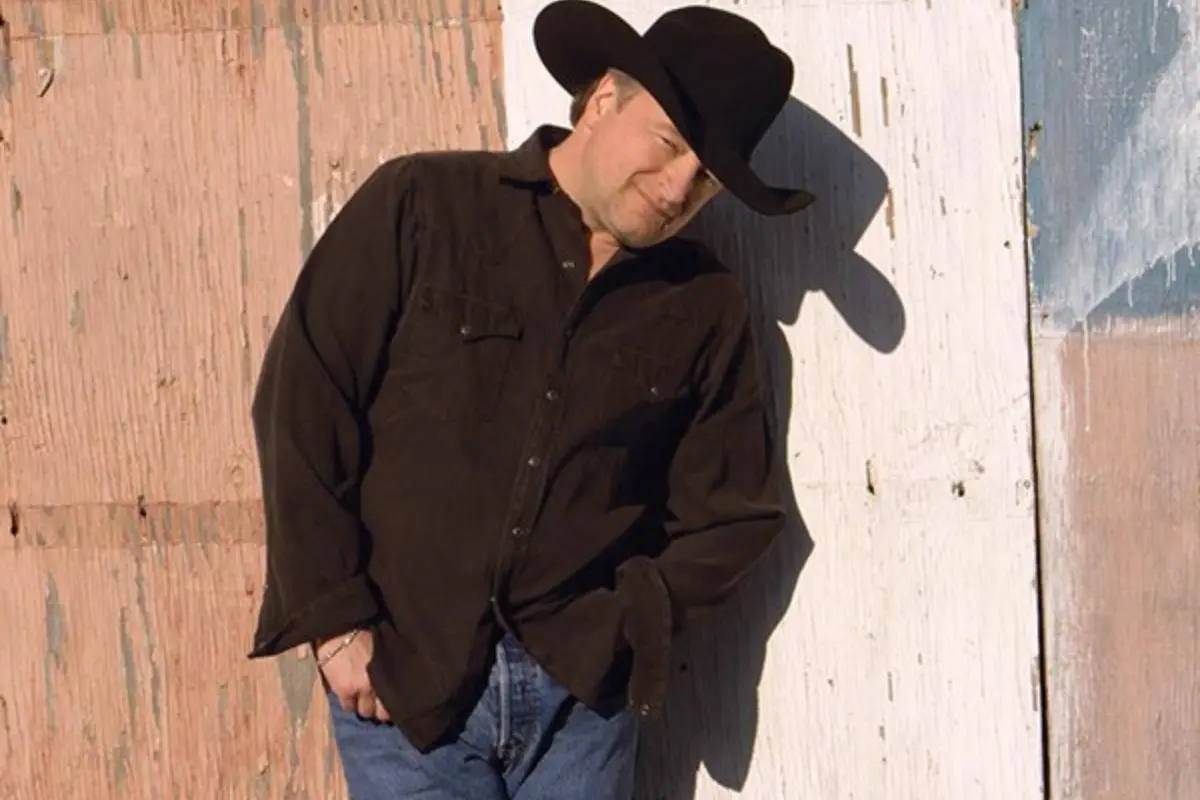
Why “Bubba Shot the Jukebox” became the calling card
Some artists get a signature song by accident. Chesnutt got one by writing a literal mission statement: a bar scene where the jukebox is the emotional centerpiece, and the comedy is braided to menace.
Even people who couldn’t name his albums tend to remember the title. That’s exactly how jukebox culture works: you remember the button you press.
“Bubba shot the jukebox last night, said it played a sad song that made him cry.”
“Bubba Shot the Jukebox” lyrics, AZLyrics
Behind the scenes, the song’s credibility is reinforced by its professional Nashville songwriting DNA and publishing trail. When you can trace a song cleanly through rights organizations, it’s a sign it has legs beyond a single chart run.
The work “Bubba Shot the Jukebox” appears in the ASCAP repertory database, where users can verify registered writers and publishers.
It’s funny, but it’s not a joke
The genius of “Bubba” is that it treats a jukebox like a therapist, a weapon, and a town crier all at once. That’s not exaggeration. In a real bar, the jukebox is often the most powerful object in the room because it controls the vibe.
Country music has always loved songs about songs, but Chesnutt made the jukebox itself the character. That’s brand-building you can’t fake.
The “put it on again” factor: singles built for repeat plays
The heart of the “King of the Jukebox” label is repetition. A jukebox staple isn’t just a hit; it’s a habit. Chesnutt’s best-known stretch produced a pile of songs that invite replays because they’re simple to understand, easy to sing along with, and emotionally direct.
His discography also shows a clear emphasis on radio-friendly single writing: tight structures, punchline choruses, and production that prioritizes vocal clarity.
Chesnutt’s mainstream profile and hitmaking era are summarized in his biography overview.
Jukebox math: clarity beats complexity
In a loud bar, subtle songs get punished. The perfect jukebox track has a strong backbeat, a groove you can two-step to, and a vocal that cuts through crowd noise.
That’s a big reason Chesnutt’s George Jones influence matters. It’s not just a tasteful inspiration; it’s a practical advantage. A Jones-style delivery carries emotion in the consonants and phrasing, so the meaning survives bad speakers and worse attention spans.
Chesnutt’s connection to the neo-traditional line (and the common comparisons to George Jones in coverage of his style) is frequently noted in artist profiles and career summaries.
Why the nickname stuck in the ’90s, even as country got slicker
The early-to-mid ’90s are often remembered as a “golden” era, but it was also a battleground. The format was expanding, and with expansion came pressure to smooth out rough edges.
Chesnutt’s records didn’t chase polish as the main event. They chased function: get the dancers moving, give the lonely guy at the end of the bar a line to live in, and never waste a chorus.
Dancehall practicality: songs that work on first listen
A jukebox doesn’t come with liner notes. A first-time listener needs to grasp the scenario immediately, which is why Chesnutt leaned into everyday language and vivid setups.
That’s also why his catalog pairs well with the social rituals of honky-tonks: line dancing, shuffling, slow-dancing, and the late-night “play that one again” chant.
Jukebox culture is older than streaming – and it still explains careers
It’s tempting to treat jukeboxes as nostalgia props, but jukebox culture created a real economy for popular music. Operators tracked what got played, venues competed for the best machines, and songs became local hits long before national algorithms.
Modern streaming is basically a jukebox with a better screen and worse romance. The core behavior is the same: people pay (money or attention) to repeat the songs that match their life.
For a broader overview of jukebox history and how the machines spread through public spaces, see Jukebox History.

A quick “jukebox test” for Chesnutt songs (useful for DJs and bar owners)
If you’re programming a bar playlist (digital or mechanical), Chesnutt is useful because his songs tend to fall into clear, functional buckets. Here’s a practical way to think about why they work.
| Jukebox moment | What the room needs | Why Chesnutt fits |
|---|---|---|
| Early evening warm-up | Medium tempo, friendly hook | Clean choruses and familiar country language |
| Dance floor peak | Shuffle or two-step pulse | Backbeat-forward production and barroom tempos |
| Last-call feelings | Heartbreak that doesn’t whisper | Big, plaintive vocal that survives noise |
| Comedy with teeth | A singalong story | “Bubba” turns the bar into the plot |
Was he really a “King,” or is it just a catchy label?
Nicknames can be corny, and this one absolutely is. That’s part of why it works. Country music has always loved plainspoken myth-making: if the songs rule the bar, the singer gets crowned.
Chesnutt’s case is stronger than most because the “jukebox” idea isn’t a metaphor stapled on later. It’s literally embedded in one of his signature titles, and it matches the function of his sound.
Country press has explicitly used the nickname in features focused on his career and audience connection.
How to hear Chesnutt like a jukebox listener (not a headphone critic)
If you want to understand the “King of the Jukebox” phenomenon, don’t start by analyzing lyrics in silence. Start by imagining a crowded room where people are talking over the music, and the song still has to land.
- Listen for the drum and bass: if the groove is obvious, the room can dance without thinking.
- Listen for vocal placement: jukebox-ready mixes push the vocal forward so the story survives noise.
- Listen for the chorus: the hook should feel inevitable, like a chant the room already knows.
Watching a widely available performance or official audio video also helps you catch the “loud-room” intent in the delivery.
Conclusion: the jukebox crown is earned in public
Mark Chesnutt’s “King of the Jukebox” tag stuck because it describes real-world behavior: crowds replayed his songs in the places where country music is supposed to do its work. He didn’t just score hits; he made records that function like emotional utilities in bars and dancehalls.
And if that sounds less glamorous than being a crossover superstar, good. Jukebox royalty is messier, rowdier, and more honest, which is exactly why it lasts.
For additional career context and discography framing, his overview entry provides a concise starting point.