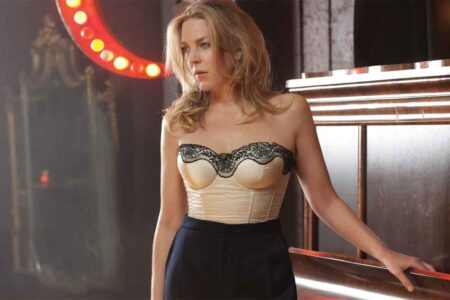
Diana Krall did not float into jazz greatness on a cloud of industry hype. For roughly two decades she paid her rent the old fashioned way: grinding out long nights at pianos in restaurants, hotel lounges and bars across North America and Europe, often six or seven hours at a stretch.
In an era obsessed with instant stardom, her story is almost subversive. It is the tale of a woman who chose work over image, barrooms over talent shows and slow mastery over shortcuts.
From Nanaimo diners to Berklee practice rooms
Krall grew up in Nanaimo, a working port town on Vancouver Island, in a house full of records and pianos. She was at the keyboard by age four and had formal training through the Royal Conservatory system, but her education quickly spilled out of the lesson room and into real life.
By 15 she was already a professional, playing standards in local restaurants several nights a week. One early bio from her management notes that her first paying gig was three nights a week at a hometown eatery, a serious schedule for a teenager. Those gigs were not glamorous, but they started a habit: music was not a hobby, it was her job.
Her talent earned her a scholarship from the Vancouver International Jazz Festival to Berklee College of Music in Boston in the early 1980s, where she studied for several years. That move looked like the classic conservatory route, but Krall never stayed inside the academic bubble for long. Even as a student she was already using bar and hotel jobs to pay the bills.
Twenty years of barrooms and hotel lobbies
Building a life on the North American circuit
After Berklee, master bassist Ray Brown heard her in Nanaimo, became a mentor and pushed her toward Los Angeles. There she studied with pianist Jimmy Rowles, who insisted she sing as well as play. According to one detailed profile, Rowles and the local scene nudged her into Los Angeles piano bars, where she learned quickly that the microphone could double her work opportunities.
Krall has said bluntly in interview that for about 20 years she worked as a bar pianist and supported herself and her lessons by playing in hotels and bars. This was not some romantic bohemian phase. It was a straight up survival strategy in an expensive city, and it continued as she moved through Toronto, back to British Columbia and then to New York.
By 1990 she had relocated to New York but still lived like a working club musician, commuting to a regular trio gig in Boston while honing her piano and vocal concept night after night. Even after she landed a record deal in her mid twenties, she told one interviewer she was still playing “seven hours a night in piano bars” to support herself well into her thirties. That is the sort of workload most pop idols would not tolerate for a single tour, let alone a decade.

Crossing the Atlantic: Sweden, Zurich and the European apprenticeship
The grind was not confined to North America. Krall also took her skills to Europe, particularly Sweden and Switzerland, where the hotel and club circuit offered both work and a different kind of audience. In her mid twenties she spent around three months based in Zurich’s old Niederdorf district, playing in hotel bars six nights a week.
She has described those Zurich months as a mix of solitude, discipline and observation: walking past the same sex worker on the corner each evening, trading greetings, then disappearing into a hotel lounge to play for hours while quietly watching strangers drink, flirt, argue and fall apart. On off days she took trains around Europe, often getting lost and making the best of it. It was not a star trip, it was an education in adulthood.
Europe also gave her one of her first important recordings. In 1988 a Swiss based trombonist and bandleader, Vince Benedetti, heard her in a Zurich piano bar and was floored. Several accounts describe the encounter as almost accidental – he was even driving a taxi to supplement his income when he first met her – but he soon invited her to tour with his group. In 1990 they recorded the album Heartdrops: Vince Benedetti Meets Diana Krall in Switzerland, years before her official debut, capturing a young Krall already singing and playing with the relaxed time feel that would later make her famous.
What that grind did to her music
Time, touch and the art of underplaying
Those twenty working years did more than keep the lights on. They carved her musical identity. Playing for diners and drinkers forces a pianist to develop impeccable time, quiet dynamic control and a sense of when to step forward or disappear completely. Krall’s later records – from Only Trust Your Heart and All for You through When I Look In Your Eyes – are full of the kind of unhurried swing and subtle voicings you only get from thousands of hours on a bandstand.
She has often aligned herself with understated stylists like Shirley Horn and Carmen McRae rather than vocal acrobats. In one interview she joked that her job is to sing “very Clint Eastwood style” – minimal gesture, maximum impact. That cool precision is exactly what you need when the espresso machine shrieks in the middle of a ballad. Years of fighting sonic clutter in bars trained her to keep the emotional center of a song even when the room is noisy or indifferent.
Learning people, not just tunes
Krall has also been frank that those years taught her work ethic and human psychology as much as harmony. She talked about learning what it means to really work hard, to keep moving forward, and to study how people behave when they think you are just background noise. You can hear that observational quality in the way she phrases lyrics: she rarely oversells a line, she lets tiny shifts in emphasis suggest whole backstories.
That is part of why older listeners, especially those who grew up with torch singers and understated crooners, often feel an immediate connection to her. She sounds like someone who has spent a long time watching life from the corner of the room rather than someone who went straight from music school into a stylized “jazz diva” persona.
From bar gigs to world tours (without losing the barroom soul)
The industry eventually caught up with the work she had already done. Her first official album, Stepping Out, was recorded in 1992 and released in 1993 on Justin Time Records, with Ray Brown’s circle of musicians helping to legitimize her in the jazz world. Producer Tommy LiPuma then stepped in for Only Trust Your Heart in 1995, and the Nat King Cole tribute All for You in 1996 became a surprise hit, staying on the Billboard jazz charts for well over a year.
By the late 1990s Krall was headlining concert halls, cutting platinum albums and collecting Grammys, yet the touring looked suspiciously like the old grind, just with better pianos. Management biographies from the mid 1990s already note that she was playing major European festivals and touring Japan in addition to an intense North American schedule.

The pattern never really stopped. Her world tours for albums like When I Look In Your Eyes, The Look of Love, Live in Paris and, much later, This Dream of You have repeatedly crisscrossed North America and Europe, often favoring classic venues like London’s Royal Albert Hall, Paris’s Olympia and high profile jazz festivals in Germany and Switzerland. Decades after those first restaurant gigs, she is still effectively living the same life: long strings of nights at the piano in one city after another.
| Phase | Rough years | Main locations | How she supported herself |
|---|---|---|---|
| Teen prodigy | Late 1970s – early 1980s | Nanaimo, Vancouver | Restaurant and small club gigs while in school |
| Student worker | Early 1980s | Boston, Los Angeles | Bar and hotel jobs funding Berklee studies and private lessons |
| European apprentice | Mid – late 1980s | Sweden, Zurich and other European cities | Six night hotel lounge stints, touring with local bands, early studio date with Vince Benedetti |
| New York working musician | Around 1990 – mid 1990s | New York, Boston, Toronto | Regular trio gigs, club work while starting her recording career |
What working musicians can learn from Krall’s twenty year apprenticeship
Most artists today are told to chase visibility first and craft later. Krall inverted that. She built her craft in relative obscurity until the music was undeniable. For players of any age, a few lessons stand out.
- The room is your teacher. Years of playing to half listening patrons sharpened her dynamic control, tempo and sense of proportion. You cannot get that from a practice app.
- Make the gig pay for the growth. She literally financed Berklee studies and private lessons with bar work. If your gigs are not feeding your development, change something about how or where you play.
- Use travel as a musical education. Krall treated European stints not as escapism but as homework: opera houses, museums, wrong trains, unfamiliar languages. All of that texture shows up in her phrasing later.
- Respect “background music” work. Hotel and restaurant gigs are often mocked, but for Krall they were a laboratory where she could experiment nightly and learn how real people respond.
- Let image follow sound, not the other way round. By the time labels started polishing her image, the underlying time feel, touch and harmonic sense were already locked in from thousands of unrecorded sets.
Closing thoughts: the slow road that still wins
In one of her most quoted lines, Krall said: “You don’t just start out getting a record deal being a jazz pianist, you have to wash and dry some dishes first.” That is not self pity, it is a working musician describing reality.
Her path from Nanaimo diners to European hotel bars to sold out concert halls across North America and Europe is proof that the long, unglamorous route can still produce world class artistry. For listeners who grew up with classic jazz and pre digital pop, that should sound familiar. The greats almost always had a grind behind the glory.
Diana Krall’s story is not just about talent. It is about a woman who chose to live on her instrument for twenty years, on two continents, before the world at large decided to pay attention. In a culture addicted to shortcuts, that alone makes her one of the most quietly radical figures in modern jazz.