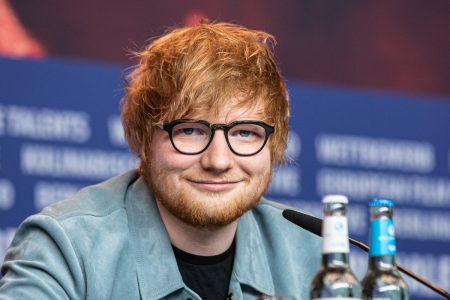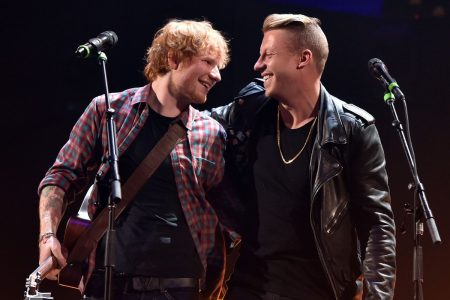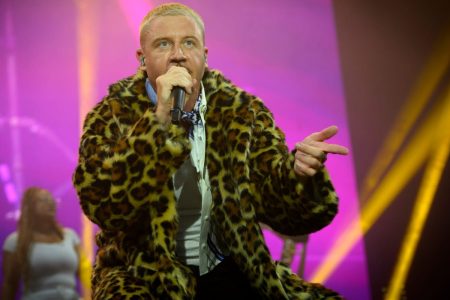
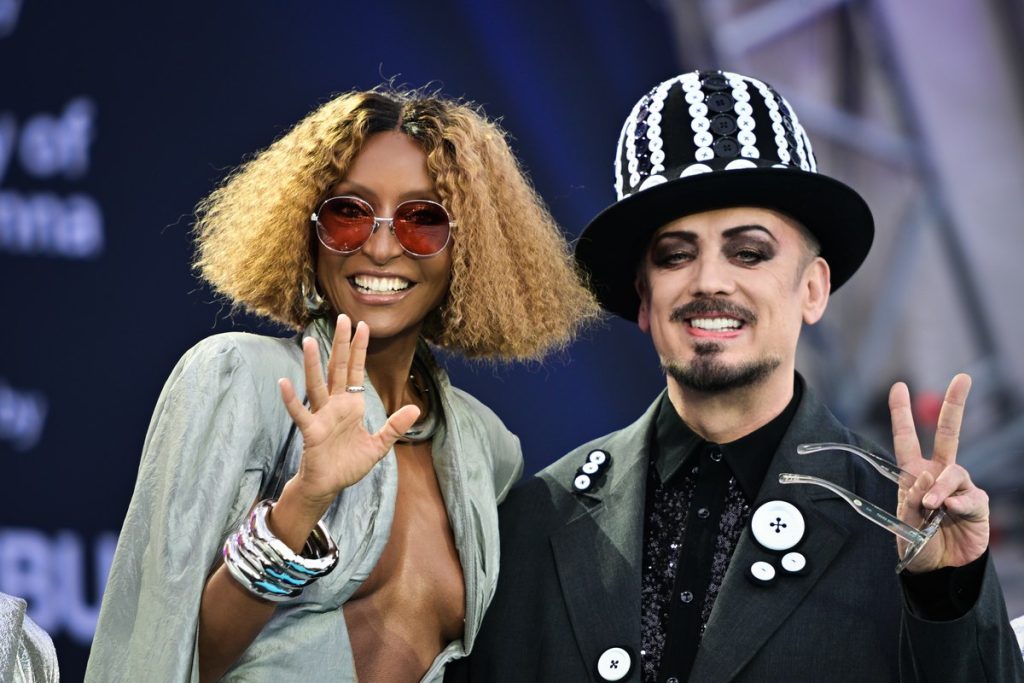
Boy George has named one of the friends he says he lost over his pro-Israel single “We Will Dance Again,” and he has taken a side in the row over Macklemore being dropped from Ed Sheeran’s stadium shows. Speaking to The Hollywood Reporter on a tour stop in Chicago, the Culture Club frontman, 65, said his decision to speak up has cost him relationships that went back years, and that he has no intention of going quiet.
“I don’t think it’s the time to be quiet,” he told The Hollywood Reporter. “I think it’s the time to be clear and to be loving.”
The friend he named
Asked whether there was anyone he would name among the friends he has lost, George pointed to Martyn Ware, the co-founder of the Human League and Heaven 17. The two have history: George recorded a version of “I Wanna Be Your Dog” with Ware and has shared a stage with him. According to George, Ware “came out quite early” and told him “Shame on you.” George says he answered on X with a single line: “You’ve lost that loving feeling.”
Ware’s original objection was public. When the song first surfaced in July, Ware posted on X that he could not believe “my old friend Boy George” had made what he called an “overtly pro-genocide” and “anti-Palestinian piece of musical propaganda,” as The National reported at the time.
George would not name anyone else. “Most of them I don’t want to name because I don’t want them to have any more attention than they’ve already had from me,” he told the outlet. He also conceded some fault in how he has handled the fight online: “I’ve made some mistakes in my communication online. There are people I shouldn’t have bothered reacting to.”
How it got here
The song grew out of a visit to the Nova Exhibition in London, the immersive installation about the October 7, 2023, attack on the Nova music festival in southern Israel. George says he wrote it to send his Jewish friends a simple message: “Not everybody hates you. You are loved.”
The reaction was swift. In late July he withdrew from a planned run as King Herod in the London Palladium revival of Jesus Christ Superstar. His manager announced the decision without giving a reason, and the production carried on with Richard Armitage covering the role, according to The National. Around the same time he split with Tony Pontius, who had run his BGP label for years. George said on X that Pontius told him, “I want nothing to do with this song,” and added that “when someone is gutless it really does not hurt to say goodbye.”
The track was built partly with AI, which drew a second wave of criticism. George told The Hollywood Reporter he wrote the melody and the words himself and used an AI tool for the music because he did not want anyone “hanging over my shoulder” telling him a line was too harsh, something he says he has heard for 40 years. The song was pulled from streaming platforms after the initial backlash. It is now officially released and on most services.
He did not back off. At the end of October he flew to Israel, where the Times of Israel reported he visited the Nova festival site with survivor and former hostage Omer Shem Tov, and played two sold-out shows at Tel Aviv’s Menora Mivtachim Arena on November 4 and 7. Organizers donated 1,500 tickets to Nova survivors and bereaved families. He also met Israeli President Isaac Herzog, and Ynet reported that he told Herzog the stance had cost him friendships but that he did not regret it: “Someone had to do it.”
Taking Kraft’s side on Macklemore
The sharpest part of the interview concerns a row George was never directly involved in. In September, Macklemore was dropped from the remaining stops of Ed Sheeran’s North American stadium tour after saying “Free Palestine” onstage and accusing Israel of genocide during a show at MetLife Stadium in New Jersey.
Accounts of who made the call differ. Sheeran’s promoter said unnamed venues would not host a concert with Macklemore on the bill. New England Patriots owner Robert Kraft then confirmed he had opposed Macklemore playing the two Gillette Stadium dates, JTA reported, saying the decision was “not about diminishing the suffering of innocent Palestinians” but that advocacy “should not come at the expense of the Jewish community.” Macklemore’s version, per Boston.com, is that Sheeran told him Kraft had rallied other stadium owners to deliver an ultimatum. Sheeran’s representatives did not comment on the record to either outlet.
George is firmly with Kraft. He noted that Kraft is Jewish and has spent years fighting antisemitism, and argued that an owner is entitled to decide who performs in his building. “You have a choice who comes and sits at your dinner table, whether you’re a billionaire or a housewife,” he said. “And if you’ve cooked the meal and paid for the building, you do have a right.” Anyone who disagrees, in his words, can “take your freedom of speech over there and do it on the street.”
Supporters will see a performer refusing to be bullied out of a position. Critics will see an artist cheering on a billionaire keeping a rapper off a stage.
What comes next
George is still touring the United States, and he says the support he has received is real but quiet. “There is a lot of support out there,” he said, “but it is scared of itself.” With the single now back on streaming and his Tel Aviv shows behind him, the question is less whether he will keep talking about it than how many more old collaborators will answer him in public.