Celine Dion walks back onto a concert stage tonight for the first time in six years, opening a residency at the 40,000-seat Paris La Défense Arena that has grown from ten dates to twenty-six on demand alone.
It is her first full concert since her 2020 tour was cut short, and her first since she told the world in December 2022 that she had been diagnosed with stiff person syndrome — a rare neurological disorder that causes extreme muscle rigidity, spasms and chronic pain. There is no cure for it. There are only treatments that manage the symptoms, and for a singer whose instrument depends on absolute control of the diaphragm and the throat, the symptoms were the career.
What the illness actually took
The first flare-up came in 2020, at the start of the pandemic, and the diagnosis did not follow for another two years. In between, Dion cancelled dates and gave her fans very little explanation, something she has since said she found unbearable. When she finally described the condition publicly in 2022, she was blunt about what it was doing to her.
“Unfortunately, these spasms affect every aspect of my daily life,” she said at the time. “Sometimes causing difficulties when I walk and not allowing me to use my vocal cords to sing the way I’m used to.” She added the line that explains why tonight matters: “All I know is singing. It’s what I’ve done all my life, and it’s what I love to do the most.”
Then she disappeared. The 2024 documentary I Am: Celine Dion showed viewers what she had been keeping back — including footage of a full-body seizure — and reframed the retreat as something closer to a siege than a sabbatical.
How many times has she actually sung?
Accounts differ on this, and it is worth being precise. ABC News reports that since the 2022 announcement Dion has made only one performance appearance: the opening ceremony of the 2024 Paris Olympics, where she sang an Edith Piaf song from a platform on the Eiffel Tower in the rain.
The Mirror adds another: a performance at an Elie Saab fashion event in Riyadh in late August this year, which it describes as her first public appearance in two years. Confusingly, the same report also states that Dion has performed only once since her last tour, a line that sits awkwardly beside its own account of Riyadh and the Olympics. The count, in other words, depends on who is doing the counting and what they are willing to call a performance. What is not in dispute is that a full concert — two hours, her own show, her own set list — has not happened since March 2020.
The work behind the comeback
Dion announced the return in March, on her birthday, in a video and a message projected onto the Eiffel Tower. “I’m so ready to do this,” she said. “I’m feeling good, I’m strong, I’m feeling excited, obviously, and of course, a little nervous.” She also told fans directly: “I’m doing great, managing my health, feeling good. I’m singing again, even doing a little bit of dancing.”
Preparing for a residency at 58 with a progressive neurological condition has meant a training schedule that reads like an athlete’s. She has described ninety-minute Pilates sessions three times a week and ballet classes twice weekly, with a treadmill, reformer machine, weights and a ballet barre installed at her recording studio at the Palms Casino Resort in Las Vegas.
She has also pushed back on the vocabulary. Speaking to Harper’s Bazaar this month, she rejected the word most people reach for: “It is a progressive condition. I don’t like to say ‘disease.'”
Asked what she owed the people who had waited, her answer was less about spectacle than about accounting. “It’s been so long, I would like to offer them something to show how I’ve missed them,” she told the magazine. “They paid for tickets, they bought my records. They gave me that luxury. So the least I can do is tell them that I’m alive.”
Paris got there first
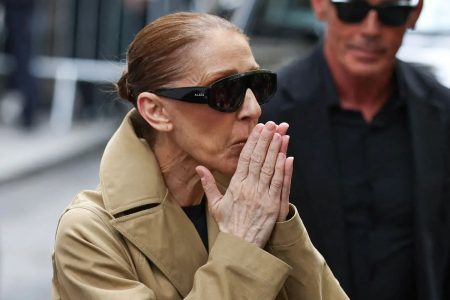
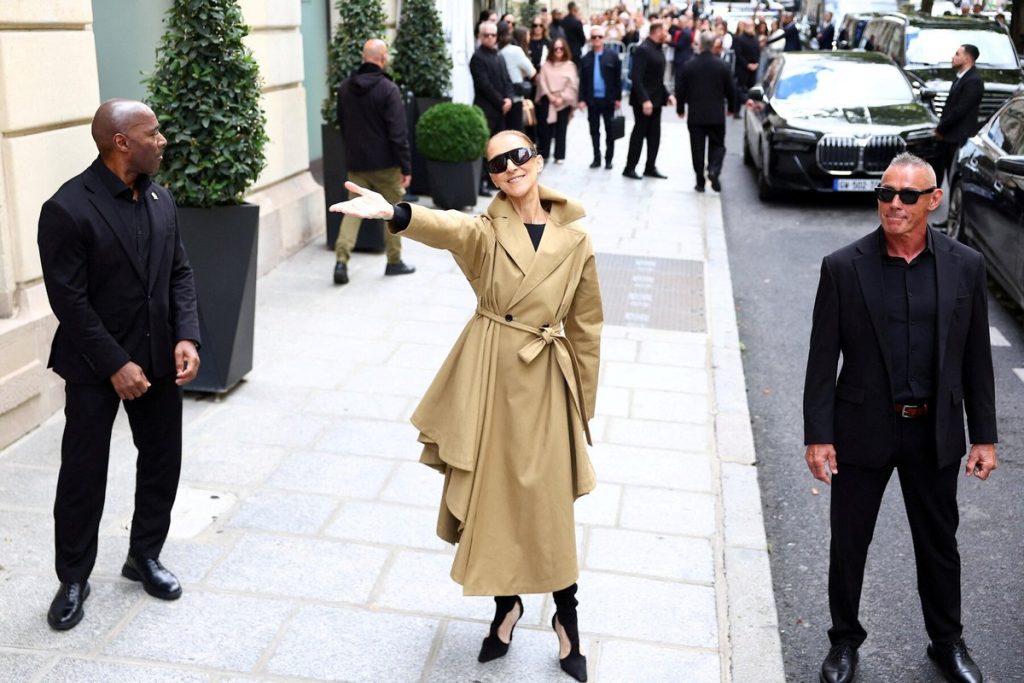
The city has spent a fortnight turning the run-up into an event in its own right. Dion arrived in France on 28 August and has been staying at the Royal Monceau near the Arc de Triomphe, where crowds have gathered daily hoping for a glimpse of her. On 1 September she stopped and sang to them unaccompanied — an impromptu snatch of one of her French-language hits, delivered on a pavement to a few dozen people.
The night before the first show, thousands gathered at the Place de la Bataille-de-Stalingrad for a mass open-air karaoke of her back catalogue in French. “For me, it’s what Paris is all about, just gathering people in open spaces and having a moment together, singing together,” one attendee, Suvi Kallom, told reporters.
Paris mayor Emmanuel Grégoire framed it as a deliberate civic response to a ticket scramble. “We know that Celine Dion’s concert was a huge popular success. It’s difficult to get tickets, many people don’t have the pleasure of going,” he said. “So we try to organise more events focused on fun and sharing a good time.” The metro station serving the arena has been redecorated with her lyrics, and a sign there invites passengers to let themselves be carried to the concert.
Among the fans outside the hotel was Cristina Piergentili, 38, who travelled from Italy. “She made me dream all my life and I want to thank her,” she said. Another, Aurelie Chabroll, put the appeal more plainly: “She’s a fighter. She really proved that to us and her return is just magical.”
What happens next
The 2026 leg runs on Wednesdays and Saturdays from tonight through 14 October. The remaining dates carry the residency into May 2027, twenty-six shows in all across roughly eight months — a schedule that would be demanding for a performer in perfect health.
Whether her voice holds across that run is the question nobody, including Dion, can answer in advance. Tonight only answers the first part of it.