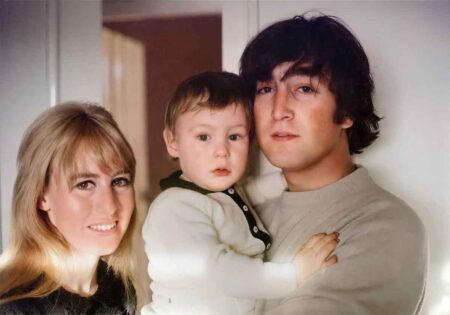
Some breaking-news stories feel “big” because they’re famous. John Lennon’s murder felt big because, for a few minutes, it was unconfirmed, half-heard, and terrifyingly possible.
That gap between rumor and truth is where Alan Weiss’s night begins. In the now-often-shared recollection attributed to Weiss, he describes Roosevelt Hospital’s emergency room as a scene of frantic, hands-on resuscitation, then the surreal coincidence of a Beatles track playing as the reality of Lennon’s death set in. Whether you take every detail literally or treat it as a memory seared by shock, the broader point holds: a single eyewitness with newsroom instincts helped turn chaos into a confirmed report.
“Even though it’s been more than 40 years, it’s a scene I’ll never forget.”
Alan Weiss (as widely quoted in online retellings)
Who Alan Weiss was (and why he mattered)
Weiss wasn’t a rock journalist hunting a scoop outside the Dakota. He was a WABC-TV producer who happened to be at Roosevelt Hospital because he’d been injured in a motorcycle accident, meaning he was physically inside the story before the world even knew there was one.
The reputation he later earned is tied to a specific skill: recognizing what a name on a police officer’s lips means when you’re in the right place at the wrong time. The 2016 film The Lennon Report dramatizes that split-second decision to stop being a patient and start being a producer, turning a hospital corridor into a de facto assignment desk.
The uncomfortable truth about “first”
In legend, there’s always one hero who “broke” the news. In reality, big stories are a relay race: a witness, a phone call, an assignment editor, a network feed, an anchor willing to say the words out loud.
Weiss’s role sits near the front of that relay. The fact that his actions were adapted into a feature film doesn’t make the event truer or less true, but it does show how central the “how we learned it” question has become to the Lennon story.
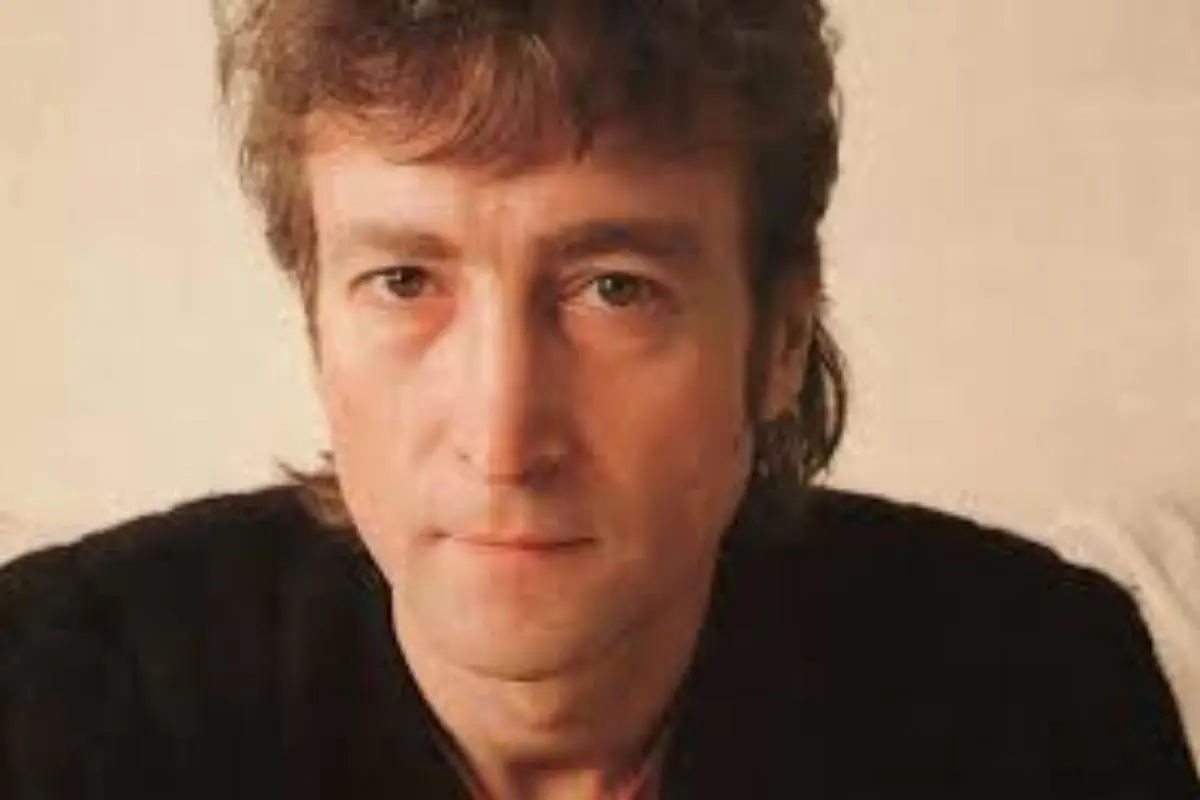
December 8, 1980: a timeline of shock (what we know vs. what we repeat)
Here’s the part most people agree on, grounded in widely reported accounts: Lennon was shot outside the Dakota building in Manhattan and was taken to Roosevelt Hospital, where he was pronounced dead.
After that, the story becomes a study in information flow. In 1980 there was no push alert, no verified celebrity account, no live-streamed press conference. There were scanners, switchboards, and the kind of human communication that can be both fast and disastrously wrong.
| Moment | What happened | Why it mattered |
|---|---|---|
| Hospital arrival | Police bring in a shooting victim identified as John Lennon. | Confirmation begins at the most sensitive place possible: an ER. |
| Producer hears the name | Weiss reportedly overhears officers and realizes the implication. | “Being there” becomes “being responsible.” |
| Call to the station | Information is relayed back to WABC and then to the ABC network. | A local tip becomes a national broadcast decision. |
| Cosell goes on-air | Howard Cosell announces Lennon’s death during Monday Night Football. | Pop culture and mass media collide in real time. |
The national moment is well preserved: Cosell’s on-air announcement, clipped and replayed for decades, is now effectively part of the Lennon canon.
Howard Cosell’s announcement: why it still sounds like a punch
Cosell wasn’t reading a polished obituary. He was interrupting a football broadcast with a piece of news so bleak it didn’t fit the medium. That mismatch is the reason the audio is unforgettable: you can hear professionals trying to keep their voices steady while a stadium crowd keeps roaring in the background.
One reason the announcement hit so hard is simple reach. Monday Night Football was appointment viewing, and Cosell’s voice had the authority of a national referee calling the play dead. The clip’s longevity has turned it into a template for how television handles catastrophe.
The ethical edge: should sports ever break tragedy?
It feels wrong and also inevitable. Wrong because it shocks an unprepared audience. Inevitable because huge live broadcasts are the only truly “national gatherings” television can still create.
Cosell’s interruption still raises a question modern audiences rarely have to face: is it better to wait for perfect confirmation, or to tell the truth as soon as you can stand behind it? In 1980, “waiting” meant someone else might tell it first, and tell it worse.
Roosevelt Hospital, Yoko Ono, and the photo that won’t let go
If the Cosell clip is the sound of the moment, the Associated Press photo of Yoko Ono leaving the hospital is the image. It’s the kind of photo that doesn’t need context, yet demands it: grief held upright by other bodies, including record executive David Geffen, in the immediate aftermath of December 8, 1980.
Weiss’s quoted recollection often includes a detail about “All My Loving” playing as he moved through the hospital. That specific coincidence is hard to verify decades later, but the emotional logic is painfully plausible: your brain grabs onto a song, a smell, a fluorescent hallway, because it can’t hold the entire event at once.
From witness to story: The Lennon Report and what it gets right (and wrong)
Films about real tragedies often sell “closure,” but Lennon’s murder doesn’t offer it. The Lennon Report tries a different hook: not “who did it” (we know), but “how did the rest of us find out?”
That angle is smart because it highlights a forgotten truth: in pre-internet America, the messenger could shape the meaning. The first phrasing, the first facial expression on camera, the first anchor who dared to say “dead” instead of “injured” could set the emotional temperature for the entire country.
Still, any dramatization risks inflating one person’s centrality. Weiss mattered because he acted, but the “story of the story” is also made of hospital staff, police decisions, assignment editors, and the brutal finality of medical reality.
The crime, the aftermath, and the obsession with motive
Basic facts of the case, including the identity of Mark David Chapman and the location outside the Dakota, are widely documented.
What refuses to settle is motive. Lennon’s killer has offered explanations over time, and the public has responded with an ugly mix of fascination and disgust. The FBI’s released John Lennon file is a reminder that Lennon’s life in the U.S. had already been entangled with government attention long before the murder, feeding later conspiratorial thinking even when the crime itself does not require a conspiracy to be historically horrific.
Edgy claim (with a point): fame makes murder feel like content
Lennon’s death is one of the earliest modern examples of celebrity tragedy becoming a kind of media artifact: audio clip, wire photo, book excerpt, film reenactment, anniversary package. It’s not that journalists “wanted” a killing. It’s that the system rewards the fastest, most repeatable version of pain.
And that returns us to Weiss: a man who was both a victim (of his own accident) and a vector (of information). In a sense, he embodies the uncomfortable merger of human suffering and public communication.

What this night changed in music culture
Lennon’s murder froze an entire creative arc mid-sentence. He had recently returned to recording after years away from the spotlight, and the shock wasn’t only that a Beatle died, but that an artist who’d re-entered public life could be erased outside his own front door.
For fans, the grief quickly became ritual. In New York, Strawberry Fields in Central Park remains a dedicated memorial landscape, proof that physical places still matter even in an age of digital mourning.
How to listen after Lennon (a practical guide)
- Play the “comfort” Beatles songs (like “All My Loving”) and notice how their innocence can feel newly fragile.
- Then play Lennon’s later solo work and listen for the tension between domestic warmth and public persona.
- Finally, revisit the broadcast artifacts (Cosell’s clip, the AP photo) once, not on loop. Treat them like evidence, not entertainment.
Conclusion: the story behind the story still matters
John Lennon’s murder is a fixed point in music history. But the way the world learned about it remains a live topic because it reveals something about us: we don’t just remember tragedies, we remember the moment we were told.
Alan Weiss’s gurney-to-newsroom pivot is compelling not because it’s glamorous, but because it’s human. In a hallway full of sirens and whispered names, he did what media rarely admits it does: he guessed, confirmed, and spoke, knowing the words would change the night for everyone else.