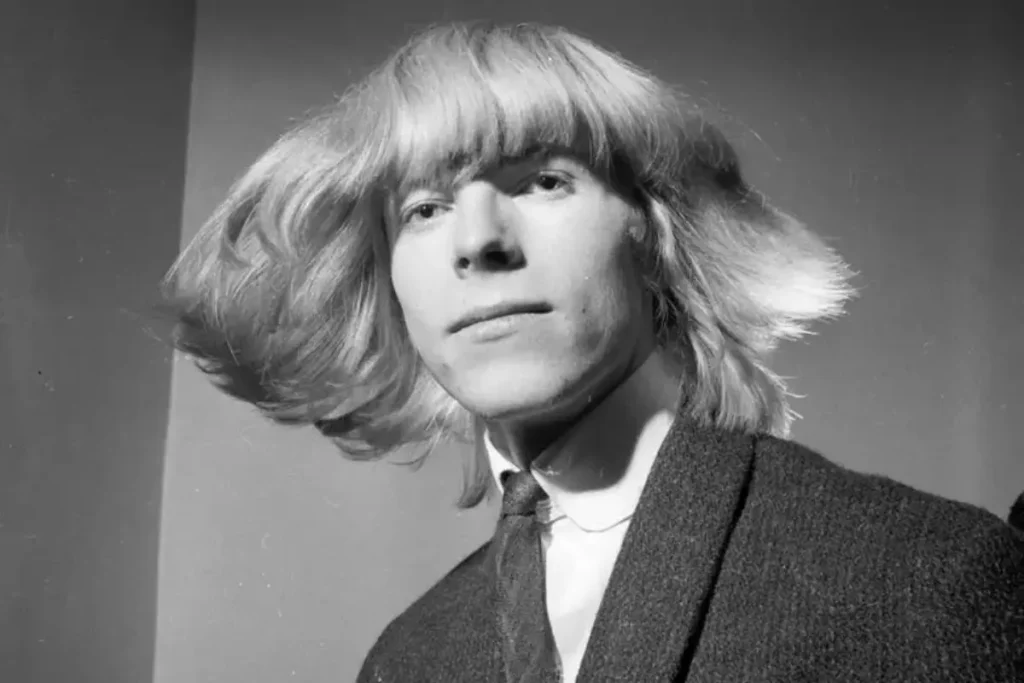
For one brief, electrifying stretch of 1969, the future had a soundtrack. Rockets thundered, televisions glowed blue in British living rooms, and a young David Bowie dropped a single that sounded like the moon landing’s glamorous reflection – until you noticed the reflection was cracked.
“Space Oddity” arrived in the UK in July 1969, right in the slipstream of Apollo 11’s launch and landing month, and it quickly became the era’s most elegant buzzkill: a space-age ballad where the astronaut does not return home, the control room cannot fix it, and the chorus floats off into void. Bowie didn’t write a patriotic fanfare. He wrote a cautionary fairy tale in a silver suit.
“This is Ground Control to Major Tom.” David Bowie, “Space Oddity”
Was “Space Oddity” a response to the Moon landing? Yes, but not the way people think
The lazy version of the story is “Bowie wrote a song about the moon landing.” The sharper truth is that he wrote a song about what the moon landing did to our imaginations – and how fast wonder can curdle into isolation.
Bowie has repeatedly linked the song’s inspiration to Stanley Kubrick’s film 2001: A Space Odyssey, essentially borrowing the cultural mood of space travel rather than reporting on a specific NASA event. The title itself nods to that film’s name, and the lyric’s cool, clinical dialogue mirrors sci-fi’s detached tone even as the narrator panics inside the helmet.
Even so, timing matters. In the UK, “Space Oddity” was released on 11 July 1969, days before Apollo 11 lifted off. That is not an accident of history; it is pop music moving with the news cycle, before “news cycle” became a dirty phrase.
Soho, not Houston: recording a space epic in the heart of London
One reason “Space Oddity” still feels slightly surreal is that it was a space saga built in a very un-space setting: Soho. The song is closely associated with Trident Studios, a major London recording hub known for high-end gear and a hit-making clientele, which helped Bowie’s arrangement feel cinematic rather than demo-ish. Trident’s own history underscores how central the studio was to that era’s British rock infrastructure.
The “London-made response” angle is important because it highlights what British pop often did best in the late 60s: translating American technological spectacle into something artier, stranger, and more psychologically sharp. NASA supplied the hardware. Bowie supplied the existential aftertaste.
The arrangement trick that sells the story
“Space Oddity” works because it behaves like a mini film. It starts with an announcement, builds into liftoff, then slowly reveals that the big mission is also a personal disconnection.
- Ground Control vs. Major Tom: a call-and-response structure that feels like radio traffic.
- Harmonic drift: the chords keep you suspended, never fully resolved, like a ship that won’t dock.
- Production as narrative: the “room tone” around Bowie’s voice changes as the story leaves Earth.
This is why musicians still study it: it is songwriting where the studio is not just a recording space – it is part of the plot.
Release timing: the single that hit at exactly the right (and wrong) moment
“Space Oddity” became Bowie’s first major UK hit, and its chart life is unusually long because it kept getting pulled back into public attention. The UK chart performance and later re-entries are a clue to how often the public reclaims it as “the space song” even when its story is grim.
That July 1969 release date, though, is the core myth engine. When a song arrives at the same time as a world-historic broadcast, people weld them together forever. Bowie understood pop culture gravity: attach your art to a planet-sized event and it will keep orbiting for decades.
The BBC used it in Apollo 11 coverage – and that’s the delicious contradiction
The most famous detail in the “Space Oddity” legend is that the BBC used it during its moon-landing programming, even though the narrative is basically “astronaut loses contact and drifts away.” That moon-landing broadcast association has been widely repeated and remains part of its cultural identity, reinforced in retrospectives and fact summaries about the track’s history.
It’s tempting to scold the BBC for missing the point. But that misses the deeper reason it worked: audiences were not listening to a plot synopsis. They were hearing the sound of modernity. The chorus felt like lift-off, and the melancholy felt like the cost of progress.
In other words, the BBC didn’t need a documentary-accurate anthem. They needed a vibe. Bowie gave them a vibe with teeth.
Major Tom: hero, victim, or something worse?
Major Tom is often remembered as a brave explorer. Read the lyric closely and you hear something more ambiguous: a man who may be seduced by the view, numbed by procedure, and finally detached from Earth in every sense. There is awe, but there is also resignation.
Some interpretations paint Tom as a casualty of institutional failure. Others hear an allegory for addiction, fame, or depression: the moment where you are “above” everyone and still completely alone. Bowie never locked the meaning into a single explanation, which is one reason the character endured and returned in later Bowie work and pop culture riffs.
“Planet Earth is blue, and there’s nothing I can do.” David Bowie, “Space Oddity”
Provocative claim: “Space Oddity” is anti-triumphalism disguised as a singalong
Here’s the spicy take that holds up: “Space Oddity” is the most mainstream anti-triumphalist song ever smuggled onto radio. Where most “space” pop celebrates conquest, Bowie quietly asks whether the human mind is built for the loneliness our technology makes possible.
And that is why it still lands. The subject is not rockets. The subject is disconnection – a 1969 anxiety that somehow predicted the emotional side effects of modern life.
Apollo 11 in the background: what actually happened out there
To appreciate the song’s tension, it helps to remember how real the stakes were. NASA’s mission overview lays out Apollo 11’s basic timeline and objectives: launch, lunar landing, and safe return, a sequence that looked clean on paper but depended on endless moving parts.
Even basic sheet-music summaries of the song’s structure and credits show how it has been standardized for performance, which is another sign of its durability: it lives both as a studio artifact and as a playable, repeatable composition, as reflected in this sheet-music edition and credit listing.
And for a visceral sense of the spectacle the public was watching, this period-style song history and liner-notes recap captures how the track has been framed and remembered around that Apollo-era drama – the bright side of the era that “Space Oddity” gently undercuts.
Why “Space Oddity” feels so modern (and why older listeners still feel it in their bones)
Older music fans remember the moon landing as a communal event: neighbors watching together, a sense that history was happening in real time. “Space Oddity” hits that memory with a twist. It reminds you that even shared milestones can contain private dread.
That’s also why the song plays well to audiences who love 50s-90s music: it is melodic, story-driven, and emotionally clear, but it refuses to be naïve. It is pop that respects the listener’s intelligence.
Musician’s corner: what to steal from “Space Oddity” (legally)
If you write songs or tinker with home recording, Bowie’s blueprint is worth copying as a method, not a costume.
- Write dialogue: two characters, two perspectives, instant drama.
- Let the chorus contradict the verse: uplifting melody, unsettling meaning.
- Use production cues as scene changes: different ambience can feel like different locations.
Tracking the artifact: versions, releases, and the “song as event” idea
Like many classic singles, “Space Oddity” exists in multiple mixes and releases, and its identity has been reshaped by reissues and renewed popularity.
Meanwhile, archival audio initiatives such as the mission-by-mission Apollo 11 reference guide show how landmark events become structured, indexed “artifacts” over time – a useful parallel to how a recording gets preserved, cataloged, and contextualized until it moves from “hit single” to “heritage.”
The moon-landing soundtrack we deserved: wonder with consequences
Apollo 11 is often remembered as pure triumph, but serious space-history resources emphasize the mission’s complexity and risk, not just the flag-planting highlight reel. The track’s long-running cultural footprint and release history sits right inside that same tension: public spectacle versus the darker subtext audiences keep rediscovering.
“Space Oddity” belongs in that more honest frame. It does not deny the achievement. It simply insists that human beings do not become emotionally invincible just because our machines get stronger.
Conclusion: Bowie made the moon landing personal (and a little scary)
“Space Oddity” was a London studio’s answer to an American mega-event, released at the perfect moment to latch onto the world’s attention. The genius is that it didn’t clap along; it stared into the dark between the stars.
If you want the real reason the song endures, it’s this: the moon landing promised we could go anywhere, and Bowie quietly asked what happens to you when “anywhere” finally answers back with silence.