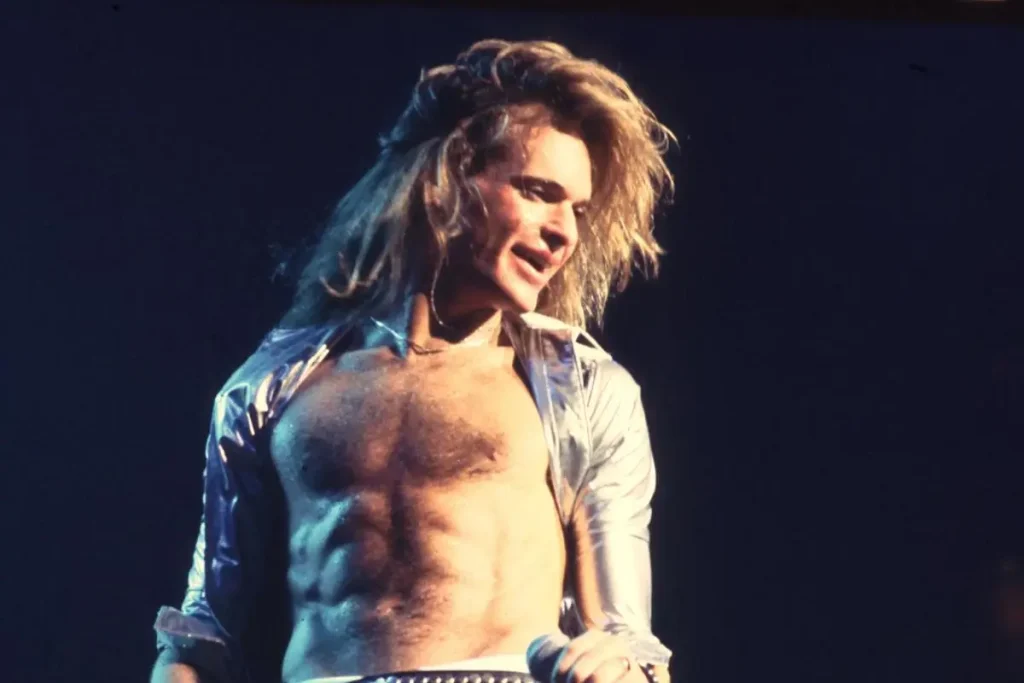
In the 1980s, plenty of rock singers strutted, posed, and yelled. David Lee Roth did that too, but he also treated the stage like a gymnastics floor, punctuating choruses with high kicks, leaps, and his most famous exclamation point: dropping into the splits mid-show.
Those moves were not “extra” in the way a fog machine is extra. They were part of the arrangement, a visual rhythm section that pushed Van Halen’s already athletic music into full-throttle spectacle. If Eddie Van Halen’s guitar playing sounded like it was breaking the laws of physics, Roth looked like he was trying to prove it could be done with hamstrings.
The Splits Heard Round the Arena
Roth’s splits are now a shorthand for peak-era Van Halen: a blur of spandex, lights, and a frontman who seemed to bounce rather than walk. You can see the move captured in widely shared concert footage where he drops down cleanly, then springs back up like it’s a warm-up stretch, not a stunt.
The reason the splits read as so outrageous is simple: it’s a full-body, high-risk move executed on an unpredictable surface. Arena stages have cables, monitor wedges, sweat, beer, confetti, and sometimes pyrotechnic residue. Doing the splits there is like doing figure skating jumps in a parking lot. It’s impressive when it works, and when it doesn’t, it can hurt.
Acrobatics as Arrangement: Not Just Showing Off
Roth’s onstage athleticism worked because it was timed like musical phrasing. He didn’t just randomly “do a move.” He hit visual accents at moments where the band hit musical ones: big chorus arrivals, drum fills, or transitions into a solo.
That matters because Van Halen’s songs are built on tension and release. Eddie’s riffs snap tight, then explode into harmonic squeals and tapped runs. Roth mirrored that arc physically: coil, jump, land, grin. Even from the cheap seats, you could feel the “hit.” The band’s long-running status as an American hard rock institution provides the context: this was pop-savvy showmanship sitting on top of serious musicianship.
“I used to look at James Brown and go, ‘That guy’s got it.’”
– David Lee Roth
Roth has repeatedly cited classic showmen as inspiration, and that James Brown-style “give them a show” philosophy is visible in how he uses movement to drive momentum rather than distract from it, a perspective reflected in archival interview/recording material cataloged on him.
Why It Looked So Good in the 1980s (And Why It Could Only Happen Then)
The 1980s were the decade when rock performance became more visual, more camera-aware, and more “moment” driven. It was the era of MTV, when a band’s look and kinetic energy could matter as much as the guitar tone, and MTV’s rise as a music-television force accelerated the idea that music was something you watched, not just heard.
Roth’s acrobatics were basically made for that new world. A singer doing the splits is not subtle. It reads instantly in a single shot, even with quick edits or grainy broadcast footage. And because it’s unmistakably human, not a lighting effect, it feels personal. It says: the person on stage is risking something for you.
The DLR Move Set: Beyond the Splits
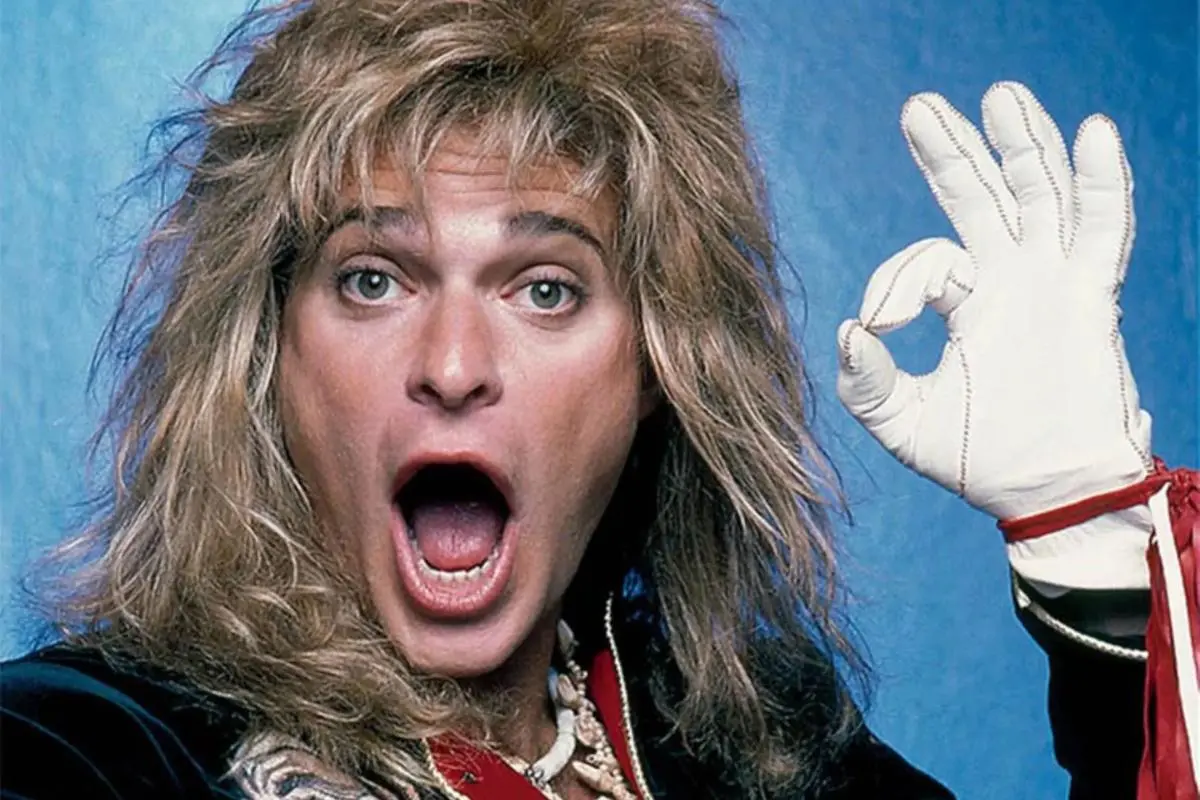
Reducing Roth to “the splits guy” sells the package short. His performance style was a toolkit of athletic tricks and comedic timing. Here are the staples that turned songs into scenes:
1) The airborne high kick
Not a casual kick, but a snap kick high enough to read like a punctuation mark. Roth used it as a visual crash cymbal, typically on downbeats where the band hit hardest.
2) The mic-stand choreography
Roth treated the microphone stand as a prop: spinning it, leaning into it, and using it to frame his body like a vaudeville performer. That mattered because it gave him something to “dance with,” keeping the movement coherent instead of chaotic.
3) The sprint-and-stop
He’d run across the stage and stop on a dime, then deliver a line like nothing happened. That quick change from motion to command created a sense of control, which is the secret ingredient to any stunt. A stunt is only cool if it looks intentional.
4) The grin as choreography
Roth’s facial expression is underrated as a performance tool. The grin is part of the stunt because it tells the crowd, “Yes, I meant to do that.” In live performance psychology, confidence sells risk.
How Acrobatics Made Van Halen Feel Faster
Van Halen’s early music already felt like it was sprinting. But Roth’s movement made the songs feel faster than the metronome. When the frontman is literally airborne during a chorus, your brain registers higher intensity, even if the tempo is unchanged.
It’s the same reason a great drummer’s body language can make a groove feel heavier. We don’t just hear rhythm; we read it. Roth gave audiences a second rhythmic channel through motion.
The Risk Factor: Athletic Frontmen Pay a Price
There’s a reason not every singer copies that level of physicality: it’s brutal on the body and punishing to vocal consistency. Jumping, landing, and dropping into extreme positions can tighten breathing, spike heart rate, and mess with phrasing.
That trade-off is part of what made Roth divisive and magnetic. On a perfect night, the movement elevated the whole show into a kind of rock circus. On an imperfect night, it could make things ragged. But the audience often forgives ragged if the performance feels dangerous and alive.
Showmanship vs. Musicianship: The Van Halen Balancing Act
The reason Roth’s acrobatics “worked” in Van Halen is that the band underneath could carry it. Eddie’s playing was the rocket engine, Michael Anthony and Alex Van Halen were the chassis, and Roth was the fireworks. The spectacle didn’t have to compensate for weak material; it amplified already strong songs.
That’s why footage from the era still hits. Even in stripped-down clips, without modern sound polish, you see a band that can play and a frontman who can perform. Many fans trade and study longform recordings and write-ups in Van Halen-focused archival coverage, which makes it easier to see how the physicality was sustained across an entire set rather than saved for a single moment.
The Splits as Branding: A Human Logo
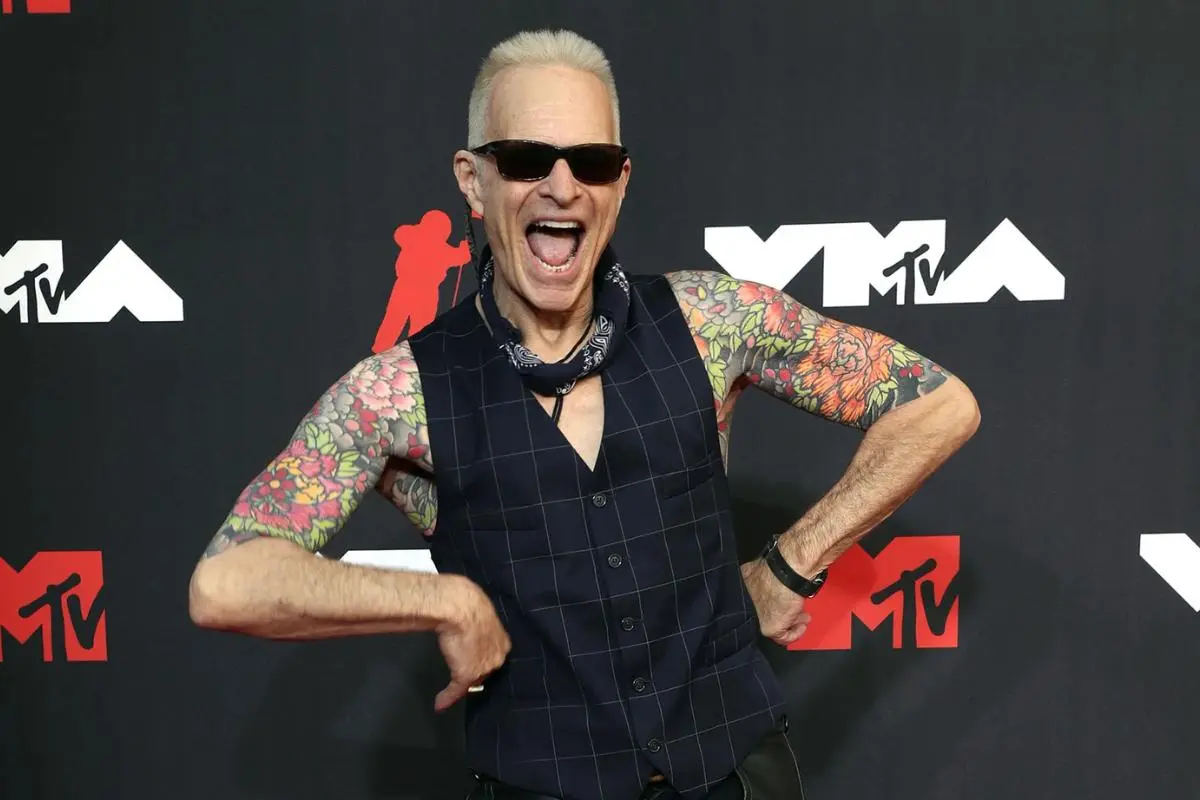
Every iconic performer has a “signature.” For some it’s a hat, a dance step, a scream, a guitar pose. Roth’s splits became a human logo, instantly associated with his persona: brash, athletic, and slightly unhinged in the most entertaining way.
Branding is often treated like a business term, but in live rock it’s memory engineering. Fans leave a show remembering a handful of images. Roth understood that and built his set of images around something you could not confuse with anyone else.
Want to Steal the Vibe Without Tearing a Groin? Practical Lessons for Performers
If you’re a working vocalist or front person, you don’t need to do full splits to borrow what Roth did best. You need the principles.
Use “big moves” sparingly and on purpose
- Pick 2-3 repeatable moments per set where you always hit a visual accent.
- Attach them to musical cues (a snare fill, a chorus arrival, a guitar bend peak).
Build a safe stage map
- Know where cables, wedges, and risers are before you start running.
- Leave one “clean lane” across the stage for movement.
Train like it’s part of the instrument
- Mobility and core strength protect your voice because breathing stays under control.
- If you want to attempt splits, treat it as a long-term flexibility goal, not a party trick.
| DLR Principle | What It Does on Stage | A Safer Modern Alternative |
|---|---|---|
| Visual accents on downbeats | Makes choruses feel bigger | Coordinated step, jump, or stance change |
| Signature move | Creates instant identity | Repeatable pose, mic-stand routine, or call-and-response line |
| Controlled chaos | Feels dangerous but deliberate | Planned movement lanes and rehearsed cues |
Why We Still Talk About It
Roth’s splits endure because they capture a specific rock ideal: the singer as ringleader. Not a polite interpreter of songs, but a physical catalyst who makes the band feel larger than life. In a genre built on exaggeration, he exaggerated with his body, not just his mouth.
There’s also something almost subversive about it. Hard rock masculinity is often presented as tough and stiff, but Roth’s flexibility and flamboyance were practically a dare: you can’t dismiss this as “soft” when it’s objectively athletic.
Conclusion: The Stunt That Raised the Stakes
David Lee Roth doing the splits wasn’t merely a gimmick. It was a high-visibility symbol of a larger approach: treat the concert like an event, move like the music is moving through you, and never let the audience relax into predictability.
Plenty of singers can sing the notes. Roth made you watch the notes happen, and in the 1980s, that made Van Halen feel not just loud, but unstoppable.