
The origin stories we tell about hard rock are usually tidy: a genius guitarist, a thundering riff, a single that detonates on radio. Mountain’s myth often starts at “Mississippi Queen,” as if the band emerged fully formed with a Les Paul in one hand and a Marshall stack in the other.
But the real ignition point is smaller, scrappier, and much more interesting: a Long Island garage-soul band called The Vagrants, fronted by a young guitarist still known as Leslie Weinstein. The Vagrants didn’t just “precede” Mountain; they functioned as a direct pipeline, musically and professionally, into one of the loudest early hard-rock statements on record.
“Mountain co-founder and ‘Mississippi Queen’ singer-guitarist Leslie West has died…” – Rolling Stone.
The Vagrants: a garage band with R&B fingerprints
If you only know Leslie West from Mountain, you might assume his DNA is strictly power-trio rock: thick fuzz, wide vibrato, big notes with bigger attitude. The Vagrants complicate that picture in the best way.
They were part of a mid-60s Long Island scene where British Invasion grit mixed with American soul and R&B. That blend mattered. West’s later heaviness did not come from nowhere – it came from learning how to make riffs swing, and how to make a band hit like a tight R&B unit rather than a loose garage stomp.
Why the soul angle is the secret ingredient
Early hard rock often gets framed as “blues rock turned up,” but soul is an underrated co-parent. In The Vagrants, the backbeat and vocal phrasing lean toward R&B even when guitars get nasty.
This is one reason “Mississippi Queen” feels so physical: the riff doesn’t just roar – it moves. That sense of pocket is easier to understand once you hear West in a band that had to compete with soul records on the same jukebox.
The provocative ‘Respect’ move (and why it mattered)
One of the most fascinating Vagrants details is their heavy rock cover of “Respect” – an aggressive, early interpretation of a song that would soon be permanently associated with Aretha Franklin’s definitive version. The shock value isn’t that a garage band covered “Respect.” It’s that they treated it like a weapon.
To understand why that’s audacious, remember the timeline: “Respect” entered the world through Otis Redding, then got redefined by Aretha Franklin into a cultural earthquake. Aretha’s version is widely recognized as her breakthrough signature, transforming the song’s meaning and impact.
The Vagrants, meanwhile, were leaning into volume and grit – the same instincts that would later make Mountain feel like a live amp stack captured on tape. The throughline is clear: if you can turn a soul standard into a hard-edged rock single without losing its punch, you’ve already learned the central trick of heavy music.
The real plot twist: Felix Pappalardi enters the story
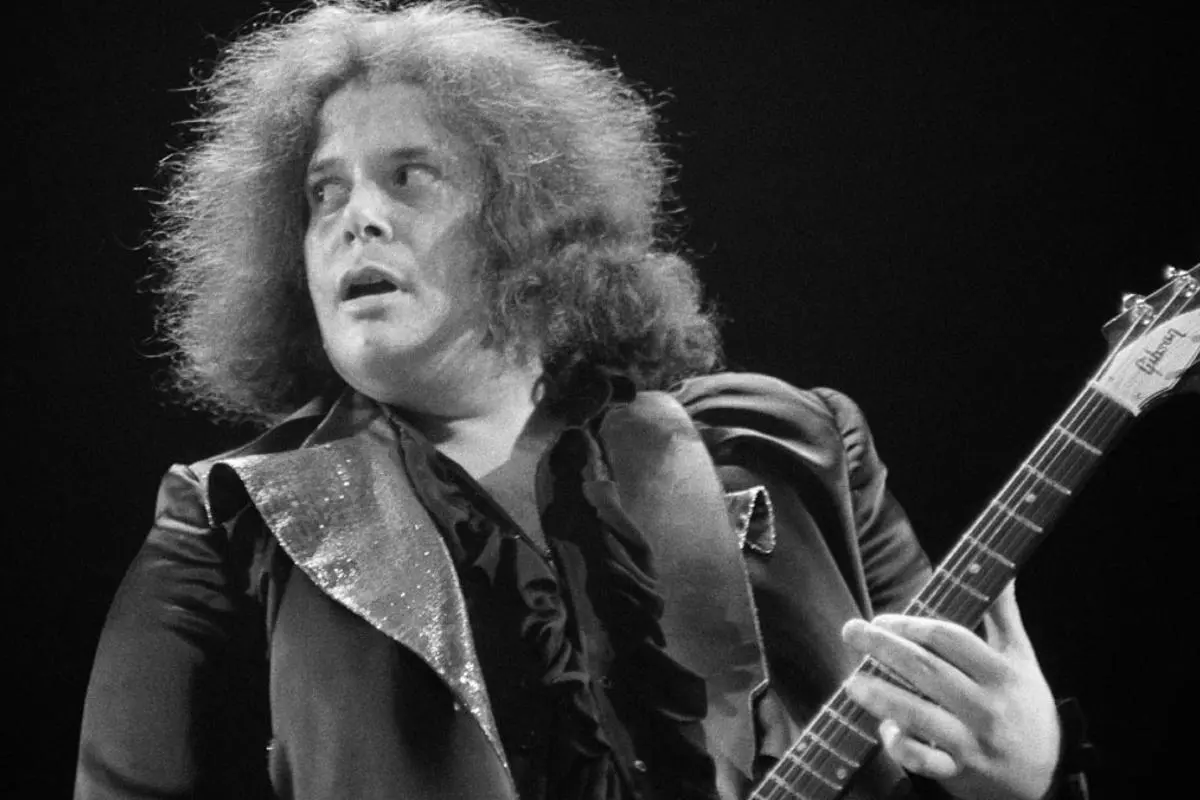
The most important connection between The Vagrants and Mountain is not a riff. It’s a person: Felix Pappalardi.
Pappalardi is often described in big-swinging terms: producer, musician, tastemaker. But in this context, he’s something more specific: the bridge between a local band with serious chops and the next-level infrastructure that turns loud ideas into legendary recordings.
As the story goes, The Vagrants worked with Pappalardi in the late 1960s, and that working relationship later brought him back into West’s orbit when it was time to form a new, heavier project. That collaboration is the “origin story” detail that explains how Mountain’s lineup and sound crystallized so quickly.
Producer chemistry is a career accelerant
In rock history, producer relationships often get treated like footnotes. They shouldn’t. A producer who believes in you can change what rooms you’re allowed into, what musicians you’re introduced to, and what risks you can afford to take.
For West, the Pappalardi connection is crucial because Mountain’s sound is not just “guitar-forward.” It’s arranged, layered, and recorded with a sense of scale. That’s not an accident – it’s the product of a partnership, not a lone-wolf guitarist fantasy.
From Leslie Weinstein to Leslie West: the identity shift
Names matter in rock. “Leslie Weinstein” reads like a talented kid who could be in a dozen different 60s bands. “Leslie West” sounds like a headline.
The change isn’t just cosmetic. It signals a shift from band-member identity to frontman identity – from being part of a scene to being the gravitational center of a new, louder one. West’s role as Mountain’s co-founder and the voice behind their defining hit reinforced how central he became to the band’s public image.
Mountain’s power-trio reputation (and the garage-band roots beneath it)
Mountain is frequently discussed alongside the era’s heaviest acts for good reason: the riffs are huge, the tones are thick, and the performances are unapologetically in-your-face. “Mississippi Queen” became the calling card, and its staying power is tied to the way it compresses blues-rock vocabulary into something more direct and muscular.
What’s easy to miss is how much of that “power trio” impact is built on skills sharpened in The Vagrants: tight rhythm instincts, punchy arrangements, and a willingness to grab a well-known song and make it mean something else.
Think of The Vagrants as the prototype lab
- Song choices: a band unafraid to tackle R&B material and twist it into rock.
- Band discipline: groove and structure, not endless noodling.
- Stage logic: make the hook land, make the crowd move.
- Volume philosophy: loudness as a musical statement, not just a byproduct.
A quick timeline: how the pipeline worked
Here’s the cleanest way to visualize how a “small” local band becomes the launchpad for a hard-rock institution.
| Phase | What happened | Why it matters |
|---|---|---|
| The Vagrants era | Leslie Weinstein plays gritty garage-soul rock and cuts key singles, including “Respect.” | West develops a punchy, groove-aware approach to heavy guitar. |
| Pappalardi connection | The Vagrants work with producer Felix Pappalardi. | Creates the relationship that later enables Mountain’s formation. |
| Mountain ignition | West and Pappalardi team up, pushing a louder, heavier aesthetic. | Sets the stage for “Mississippi Queen” and Mountain’s early influence. |
“Mississippi Queen” wasn’t just loud – it was engineered to hit
Mountain’s breakthrough has the reputation of being brute force, but brute force still needs design. The guitar tone is thick, yes, but the song’s structure is compact and hook-driven. That’s not accidental in an era where plenty of heavy bands wandered into jams and never came back.
One way to hear The Vagrants in “Mississippi Queen” is to focus on the song’s economy: the riff arrives quickly, the chorus is unmistakable, and the whole track behaves like a single meant to win a fight with whatever else is on the radio.
An edgy claim (with a point)
It’s tempting to say Mountain invented a template for heaviness. The spicier truth is that Mountain weaponized an existing template – soul drive, garage urgency, and producer-level polish – and then turned it up until the speakers begged for mercy.
Proof in the paper trail: the 60s music press context
One reason these “pipeline” stories get lost is that 60s bands often lived in a fog of local gigs, regional radio, and short-lived label pushes. The best antidote is period documentation.
Trade magazines tracked singles, releases, and chart movement week by week, giving you a snapshot of how records entered the marketplace at the time.
That kind of documentation matters because it keeps us honest: you can track when a band’s single is being promoted, when a label is making noise, and how the industry framed these acts before later narratives solidified.
How to listen: a mini “origin story” playlist
If you want to actually hear the pipeline from The Vagrants to Mountain, don’t just play the hits. Listen like a detective: what stays the same, what gets amplified, what gets simplified?
- The Vagrants – “Respect”: listen for the aggressive attack and the way the groove stays intact even when guitars bite.
- Early Vagrants singles: note the soul-rock hybrid and how the band balances hooks with grit.
- Mountain – “Mississippi Queen”: hear how the same instincts get framed as hard rock: bigger tone, bigger space, bigger attitude.
For accessible listening references and historical context, official uploads of key recordings like “Mississippi Queen” help keep this era available to modern ears.
What this teaches musicians today (yes, even if you’re not a 60s head)
This story isn’t just trivia. It’s a practical lesson in how careers actually form in music.
1) Your “small band” can be your biggest credential
The Vagrants weren’t a stadium act, but they were a real band with a sound, releases, and the ability to deliver in a room. That’s what attracts serious collaborators.
2) Producer relationships can be destiny
Players obsess over gear, but connections often matter more than pedals. The West-Pappalardi relationship shows how one productive collaboration can echo into the next phase of your career.
3) Covers can be strategy, not desperation
A smart cover is a statement: “We can take a known song and make it ours.” The Vagrants covering “Respect” is exactly that kind of bold calling card.
Conclusion: the “origin story” is the point, not the footnote
If you love Mountain for their volume and swagger, you should love The Vagrants for making that future possible. In a straight line: The Vagrants helped forge West’s groove-heavy attack, introduced him to Felix Pappalardi, and created the conditions for Mountain to exist at all.
So the next time “Mississippi Queen” hits, remember what came before it: a Long Island band that dared to play soul music like it was already hard rock, and accidentally built a bridge to one of the genre’s loudest legends.
Archival note: Institutions like the preservation of recorded sound history are essential for keeping early popular-music documentation accessible for future listeners and researchers.


