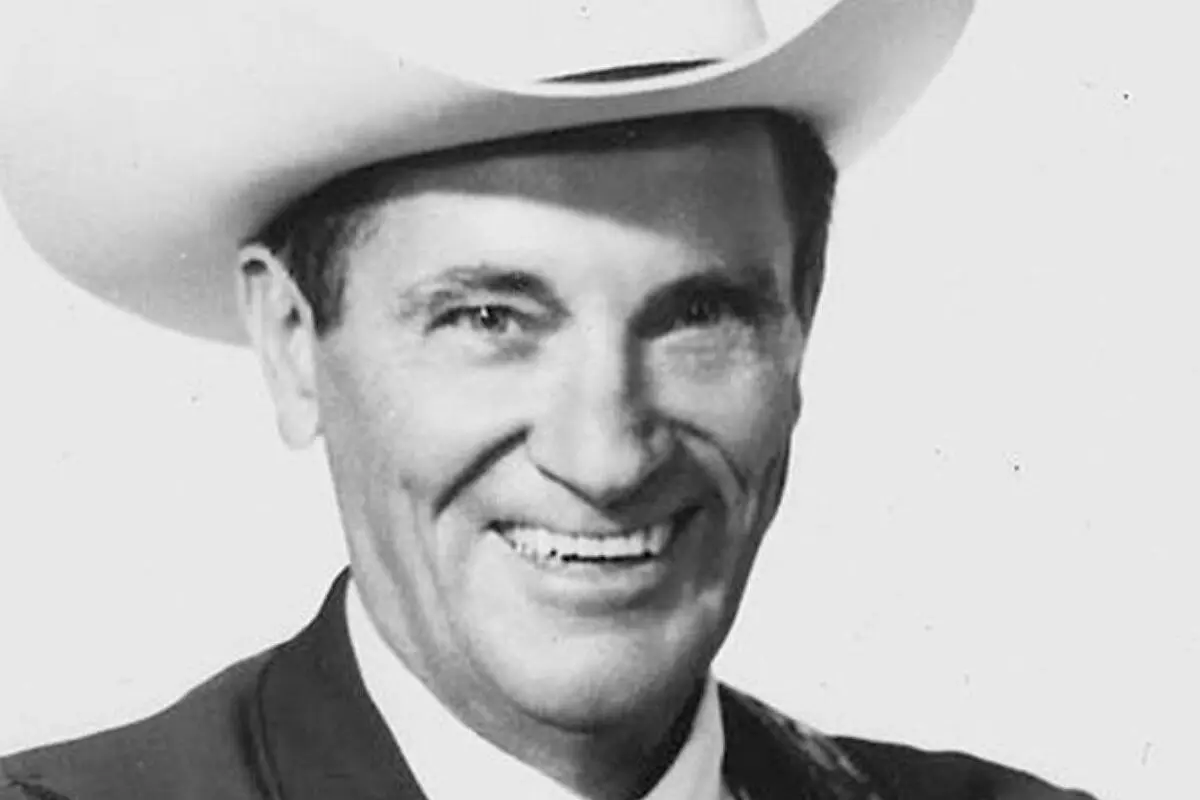
Country music loves a saintly origin story, but Ernest Tubb was never really built for sainthood. He was built for the kind of songs you can spill beer on: plain-spoken, repetitive in the right ways, and emotionally blunt enough to leave a mark. Nicknamed the “Texas Troubadour,” Tubb did not just ride honky-tonk’s rise – he helped hardwire it into the genre’s DNA with “Walking the Floor Over You” in 1941, a record that still sounds like a neon sign flickering to life in a roadside bar, as profiled by the Country Music Hall of Fame and Museum.
And if you think of “Blue Christmas” as an Elvis Presley song, you are already living in a world Ernest Tubb helped create. Tubb cut a hit version first, years before Presley’s late-1950s recording turned it into a perennial pop-culture reference point.
Why Ernest Tubb still matters (even if you don’t own a cowboy hat)
Some pioneers are “important” in the way textbooks are important: respectable, distant, a little dusty. Tubb is different. His legacy is practical. He helped define a vocal delivery that made pain sound conversational, and he pushed a band sound that could fill noisy rooms without losing the story.
He also built infrastructure. The Ernest Tubb Record Shop and the Midnite Jamboree turned Nashville into something like a living showroom for country music, where fans, musicians, and radio all collided on purpose.
“Ernest Tubb’s ‘Walking the Floor Over You’ became a template for the honky-tonk sound.”
– Country Music Hall of Fame and Museum
From Jimmie Rodgers superfan to working radio singer
Tubb’s early story reads like a blueprint for country ambition before there were blueprints. Inspired by Jimmie Rodgers, he spent his spare time learning to sing, yodel, and play guitar, then went where the work was: radio—details covered by the Texas State Historical Association’s Handbook of Texas entry on Ernest Dale Tubb.
At 19 he landed a job singing on San Antonio station KONO, but it did not pay enough to live on. Like plenty of musicians in the Depression era, he stitched together survival jobs, including labor through the Works Progress Administration.
The contact that changed everything: Rodgers’ widow
In 1936, Tubb reached out to Jimmie Rodgers’ widow for an autographed photo and ended up building a relationship that mattered professionally. According to the Texas State Historical Association, she played a key role in helping Tubb secure a recording contract with RCA.
The first records did not hit. Then a tonsillectomy in 1939 altered his voice, forcing a pivot that would end up defining him: he leaned harder into songwriting and a more direct vocal approach.
“Walking the Floor Over You”: the honky-tonk Big Bang
In 1940 Tubb switched to Decca, and soon the breakthrough arrived. “Walking the Floor Over You” (recorded for Decca and released in 1941) did not just chart well – it announced a new center of gravity for country music, one that prioritized danceable backbeats, electric energy, and lyrics that did not bother dressing up misery.
If you want to get slightly provocative: “Walking the Floor Over You” is one of the first country records that sounds like it understands nightlife. Not the wholesome kind, either. It is the sound of somebody pacing, spiraling, and turning personal chaos into something a bar band can play all night.
What made the record feel new?
- Relentless motion: the lyric is literally about pacing, and the performance mirrors that anxiety.
- Plain language: no poetry contest, just obsession you can hum.
- Dance-hall practicality: it cuts through noise – a key honky-tonk requirement.
For recording-history nerds, the Discography of American Historical Recordings’ Decca documentation details the “Walking the Floor Over You” session and release information, grounding the song’s timeline in hard discographic data.

Before Elvis: Ernest Tubb’s “Blue Christmas” hit
“Blue Christmas” is now basically a seasonal industry. But the song’s early commercial life matters, and Tubb’s 1948 hit version is a major reason the composition traveled so well before Presley gave it a new, smoother heartbreak glow.
AllMusic’s song entry notes the writers (Billy Hayes and Jay W. Johnson) and provides context across versions, a reminder that standards are often built by multiple careers, not one iconic performance.
Here is the uncomfortable truth for “Elvis-only” narratives: Tubb’s version helped prove the song’s hit potential in the country market. Presley did not pick it out of thin air; he stepped into an already-lit room.
“Waltz Across Texas”: the dance hall anthem that outlived trends
By the mid-1960s, country was fighting on multiple fronts: Nashville polish, rock’s invasion, and changing radio tastes. Tubb still landed a signature: “Waltz Across Texas” (1965), written by his nephew Quanah Talmadge Tubb (known professionally as Billy Talmadge).
The song became a dance-hall staple, still used in waltz lessons across Texas because it sits at a friendly tempo and carries a melody that makes beginners feel like they can actually dance. AllMusic’s entry on “Waltz Across Texas” is a quick confirmation of the title’s durability as a recorded work and commonly referenced track.
| Song | Why it hit | Long-term impact |
|---|---|---|
| “Walking the Floor Over You” | Restless groove + raw heartbreak | Template for honky-tonk attitude |
| “Blue Christmas” | Seasonal sadness that feels adult | Helped establish the song pre-Elvis |
| “Waltz Across Texas” | Danceable, memorable waltz | Enduring dance-hall and lesson favorite |
The Texas Troubadours: a band that doubled as a launching pad
Tubb’s backing band, the Texas Troubadours, was more than accompaniment. In the mid-century country ecosystem, a strong road band was a finishing school: you learned discipline, stagecraft, and how to make a song land in a noisy room.
Two notable alumni often connected to Tubb’s orbit are Jack Greene and Cal Smith. Greene became a major solo star, and Smith later scored his own hits in the 1970s—connections noted in AllMusic’s Ernest Tubb biography.
AllMusic’s Ernest Tubb biography captures how the band and Tubb’s long career intersected with the genre’s broader professional pipeline, reinforcing that this was not a one-hit operation but a durable institution.
The Midnite Jamboree and the record shop: building country music’s “third place”
In 1947, Tubb launched the Midnite Jamboree, a show that became deeply tied to his record shop presence and Nashville’s weekend rhythm. The basic idea was brilliant: turn a retail space into a stage, then turn the stage into radio content, and let the Grand Ole Opry crowd spill over into your world afterward.
The shop’s legacy and its connection to country tourism and fandom, explaining how it became part of Nashville’s identity rather than just a storefront.
“The Ernest Tubb Record Shop is a Nashville landmark that has served country music fans for decades.”
– Ernest Tubb Record Shop (official site)
Why this mattered beyond nostalgia
- Access: fans could experience artists up close, not just on radio.
- Community: the shop became a meeting point for touring players and locals.
- Media loop: retail, live performance, and broadcasting reinforced each other.
Country Music Hall of Fame: the formal stamp
Honky-tonk can be treated like the unruly cousin at the country family reunion: fun, loud, sometimes messy. But Tubb’s contributions are not just “rowdy history.” They are canon. The Country Music Hall of Fame and Museum profiles Tubb as a key figure in the development of modern country music, cementing his role as a foundational artist.
Listening notes: how to hear Ernest Tubb like an expert
If you want to understand why Tubb’s records worked, do not listen like you are studying a museum piece. Listen like you are in a room where people are talking. Great honky-tonk survives because it competes with real life.
Try this quick checklist
- Vocal phrasing: notice how conversational it is, almost stubbornly un-fancy.
- Rhythm: focus on how the beat supports dancing, not just listening.
- Lyric economy: he gets to the point fast, then drives it home.
Conclusion: the troubadour who made country music tougher
Ernest Tubb’s genius was not perfection. It was utility: songs engineered for jukeboxes, dance floors, and late-night thoughts that will not shut up. With “Walking the Floor Over You,” he helped ignite honky-tonk’s rise; with “Blue Christmas,” he proved a standard could live multiple lives; and with the Midnite Jamboree and record shop, he helped build the places where country music could gather and grow.
If you like country music that has fingerprints on it – human, imperfect, and honest – you are already in Ernest Tubb territory.