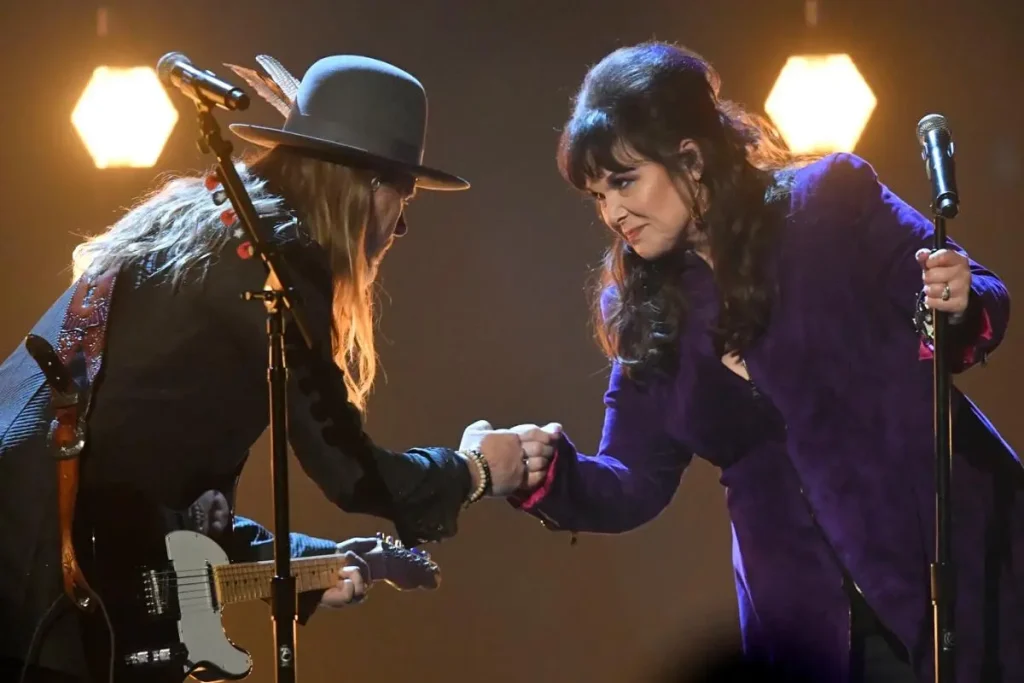
Long before the confetti fell on Bon Jovi, the real gut punch of the 33rd Rock & Roll Hall of Fame ceremony came in near-darkness. Heart’s Ann Wilson and Alice in Chains guitarist Jerry Cantrell walked out with a single guitar and a Soundgarden song that had haunted a generation. In three uneasy, beautiful minutes, the glossy industry party turned into a wake for Chris Cornell.
The night the Rock Hall quietly turned into a Seattle wake
Held at Cleveland’s Public Auditorium on April 14, 2018, the 33rd Rock & Roll Hall of Fame induction was supposed to belong to classic radio royalty. Bon Jovi, The Cars, Dire Straits, The Moody Blues, Nina Simone and Sister Rosetta Tharpe were the names on the plaques, with Ann Wilson scheduled to present The Moody Blues and HBO cameras rolling for a later broadcast.
On paper it was a night with zero Seattle representation, at least in the official class. Yet as one Seattle reporter noted, the most human moment of the show came when two hometown veterans, Wilson and Cantrell, stepped out for a stripped-down version of “Black Hole Sun” that cut through the nostalgia and the Bon Jovi reunion buzz.
Rock Hall ceremonies are usually about victory laps and self-congratulation. This one suddenly felt like something else: an uncomfortable reminder that the scene that sold millions of records in the 90s also left a trail of bodies. For a crowd raised on arena rock, Seattle’s grief walked right onto the stage and refused to smile for the cameras.
Why Ann Wilson and Jerry Cantrell were the only ones who could pull this off
Chris Cornell was not just another fallen rock singer; he was the strange, self-taught genius who could move from metal roar to haunted falsetto without losing control. His four-octave range, ear-trained songwriting and taste for odd tunings made Soundgarden the most musically dangerous of the Seattle bands, with “Black Hole Sun” standing as his surreal, era-defining masterpiece.
Wilson’s connection to Cornell ran far deeper than casual industry friendship. When Heart were inducted into the Rock Hall in 2013, Cornell did the honors and told a story about almost quitting music until he saw one of the Wilson sisters walking out of a Seattle studio, a glimpse that convinced him his heroes were real people and that he should keep going.
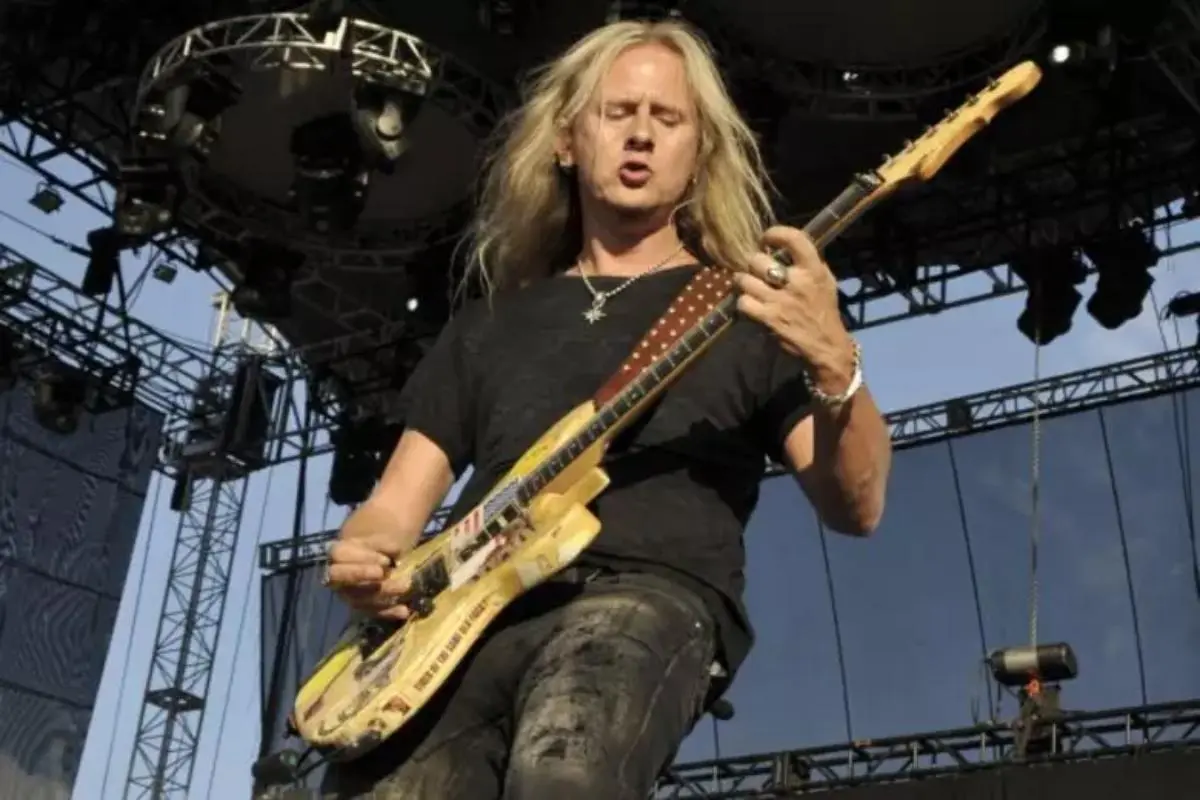
Cantrell, for his part, was the grim architect behind Alice in Chains: chief songwriter, harmony singer and owner of a guitar tone so sour and heavy it practically redefined what grunge metal could sound like. Gear-heads point to his G&L Rampage and wall of vintage and high-gain amps, but what really matters is that Cantrell is widely regarded as one of the most distinctive, influential guitarists to crawl out of that scene.
Inside the “Black Hole Sun” tribute
When their moment came, there was no band, no video montage and no polite speech. Wilson stood at center stage while Cantrell, dressed in black, took a seat with an electric guitar and eased into the unnerving chords of “Black Hole Sun,” turning a dense studio creation into a bare, slow-motion lament that left the room hushed, as captured in coverage of their Rock Hall tribute performance.
Wilson did not try to imitate Cornell’s acrobatics so much as drag the melody through deeper blues and gospel colors, saving her top register for a few brutally placed lines. Cantrell answered with dissonant voicings and subtle bends, hinting at the original’s psychedelic swirl while refusing to prettify it. The performance felt less like a cover and more like two survivors processing the same loss in real time.

On paper it was just two musicians playing someone else’s hit, but the casting was surgical:
| Performer | Band | Role in tribute |
|---|---|---|
| Ann Wilson | Heart | Lead vocal, spiritual center, elder stateswoman of Seattle rock |
| Jerry Cantrell | Alice in Chains | Guitar, harmony, the grunge songwriter saluting a peer |
| Chris Cornell (in image) | Soundgarden | Absent presence whose song, face and memory framed the entire night |
What they said when the lights came back up
Backstage, Wilson did not sanitize what had happened to her friend. She talked about an “exodus” of artists like Cornell, Tom Petty and Leonard Cohen, called Cornell the beating heart of the Seattle scene, and admitted that she believed he had gone as far as his soul could manage in this world.
Cantrell, usually the least sentimental man in any room, sounded shaken in interviews from the night, describing Cornell as a longtime friend whose work ethic and band had quietly pushed Alice in Chains to raise its game. Coming from a guitarist famous for turning trauma into riffs, that kind of naked admiration landed hard.
Cornell’s absence, painfully visible
Cornell’s death the previous year still felt unreal. The Soundgarden and Audioslave frontman was found in a Detroit hotel room in May 2017, hours after a show, and his passing at 52 was later ruled a suicide, the final turn in a long, public struggle with depression.
That context made the Rock Hall tribute feel less like ceremony and more like communal shock. A year after losing him, two of his Seattle peers stood onstage playing his most famous song as a huge image of Cornell filled the screen behind them, and Cantrell turned to face it, fist raised in a stark, wordless salute.
How the Rock Hall kept chasing Seattle’s ghosts
It is darkly fitting that Cornell was honored at the Hall years before his own band got in. Soundgarden did not actually make the Rock Hall until 2025, after previous nominations in 2020 and 2023, finally entering alongside acts like Bad Company, Chubby Checker, Joe Cocker, Cyndi Lauper, Outkast and The White Stripes, as detailed when Soundgarden was officially inducted.
In other words, the institution waited until grunge nostalgia was completely safe before embracing one of its most adventurous bands. Yet in 2018, when the plaques still went to safer names, the most memorable shot of the night was not a smiling inductee at the podium, but a dead Seattle singer’s face looming over the stage while his friends tried not to fall apart.
Inducting Soundgarden years later might look like the fix, but it was really that modest 2018 tribute that exposed how small and cautious the Hall’s choices had become.
Conclusion: one song, two survivors, and a legacy that will not stay quiet
For older rock fans who watched both Heart conquer the 70s and Alice in Chains darken the 90s, the Wilson/Cantrell tribute is a rare cross-generational flashpoint. It is the sound of two survivors facing down the cost of a scene that gave them everything and took just as much back.
Plenty of Rock Hall performances are slicker or more viral. Almost none have the emotional recoil of watching Ann Wilson and Jerry Cantrell try to carry “Black Hole Sun” without the man who wrote it. If you want to remember Chris Cornell honestly, skip the highlight reels and return to that bare Cleveland stage, where grief briefly drowned out the corporate script.