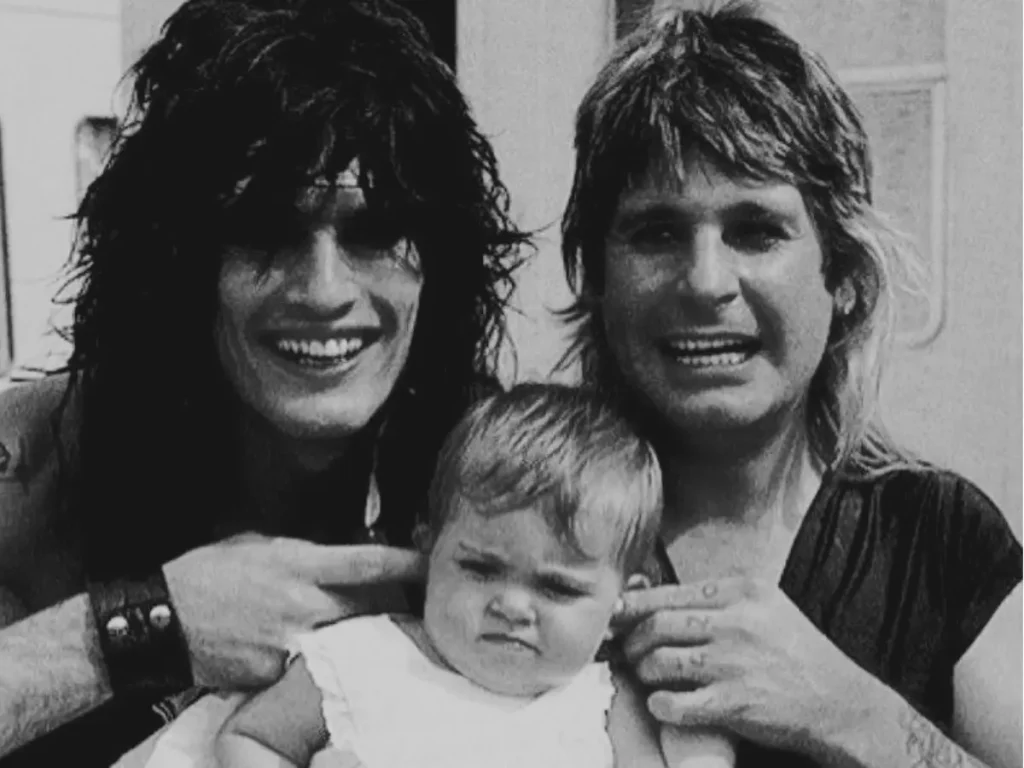
Call it the most unhinged mentor-student relationship in rock history. Tommy Lee and Ozzy Osbourne did not just share stages; they turned touring into a full-contact sport in self-destruction.
What started with a young Mötley Crüe opening for the already notorious Prince of Darkness in the early 1980s evolved into a decades-long bond built on excess, dark humor and grudging respect. Along the way they spawned some of the most disgusting, magnetic legends metal has ever seen.
Beneath the urine-soaked pool decks and elevator horror stories is a revealing portrait of how an older outlaw taught a younger one both how to command an arena and how close to the edge you can dance before gravity wins.
Two princes of chaos: how their worlds collided
Tommy Lee came out of the Sunset Strip’s hairspray riot, co-founding Mötley Crüe in 1981 and rising from cramped clubs like the Whisky a Go Go to the center of Los Angeles’ glam-metal explosion.
With bassist and chief songwriter Nikki Sixx, Lee helped forge a band image built on being “loud, dirty, dangerous and undeniably catchy,” making Mötley Crüe instant poster boys for excess.
Across the ocean, Ozzy Osbourne had already been fired from Black Sabbath, reinvented himself as a solo act and was gearing up for his Bark at the Moon world tour. After seeing Mötley Crüe at the US Festival in 1983, he chose them as a support act for his 1983–1985 tour, a run that many historians credit with boosting Crüe’s fame and even their hedonistic reputation.
Nikki Sixx later recalled that they were “a wild young band” and that Ozzy “kind of took us under his wing” on that tour, joking that whenever they tried to compete with his insanity “you can’t with Ozzy – he won.”
Different flavors of outrageous
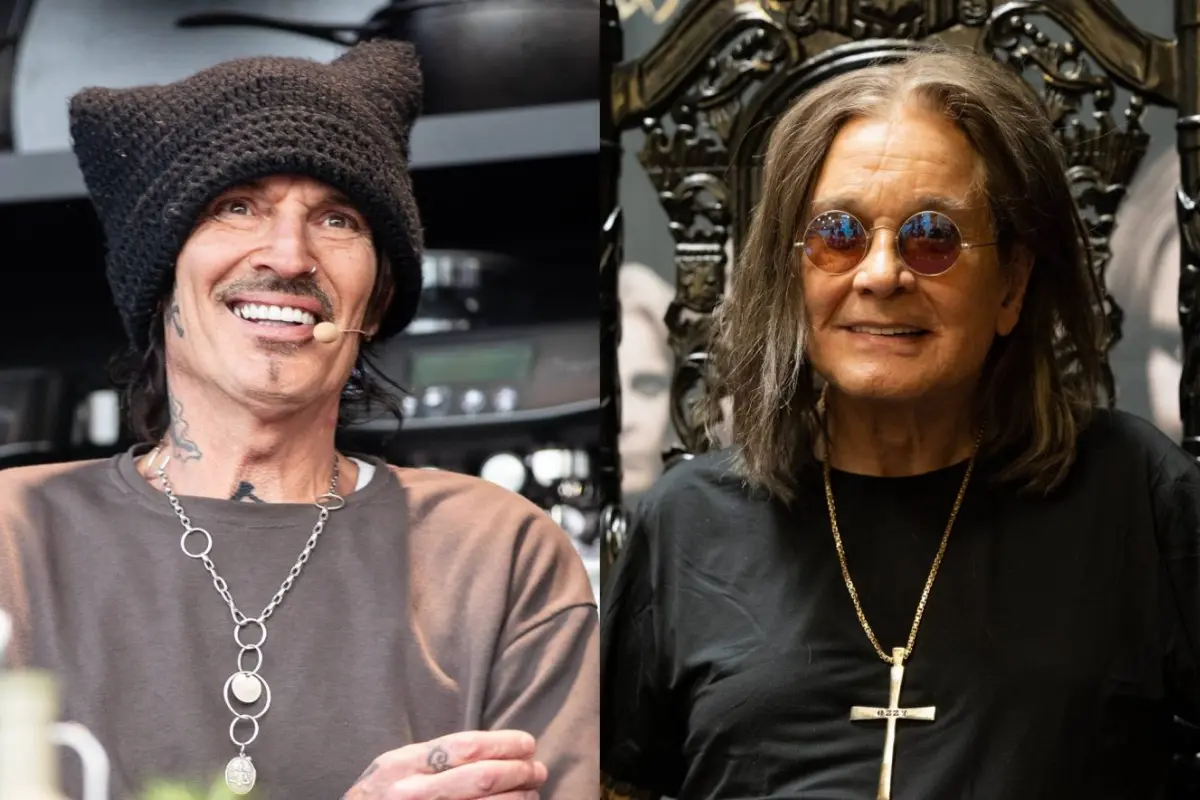
Part of the fascination with their relationship is how neatly they mirror and exaggerate each other. One is a California drummer obsessed with spectacle, the other a Birmingham singer who accidentally turned misbehavior into mythology.
| Tommy Lee | Ozzy Osbourne | |
|---|---|---|
| Primary role | Drummer and founding member of Mötley Crüe | Vocalist, Black Sabbath frontman and solo artist |
| Onstage signature | Rotating drum kits, flying rigs, bare-chested showmanship | Unsteady swagger, manic banter, buckets of water over the crowd |
| Public persona | Strip-club glam, sex-tape infamy, tattooed prankster | Bat-biting “Prince of Darkness,” reality-TV antihero |
| Shared origin story | Earned his arena stripes as Ozzy’s opening drummer | Used his tour to showcase and harden up Mötley Crüe |
Put the two together on a mid-1980s tour bus and you do not get sensible mentorship. You get a feedback loop where every dare is an invitation to find a new low.
Bark at the Moon: mentorship by mutual destruction
On the Bark at the Moon tour, Tommy was effectively enrolled in Ozzy Osbourne University. Night after night he watched a singer nearly twice his age stagger onstage after chemical marathons, hit those haunted melodies and then disappear into an after-show that made the daytime look tame.
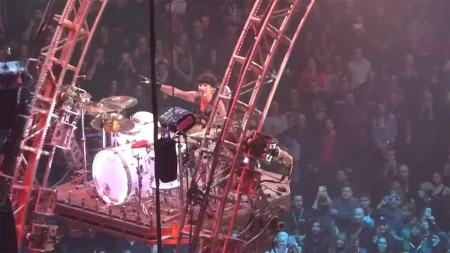
The young drummer soaked up more than bad habits. He saw how Ozzy turned apparent chaos into crowd control: the pratfalls, the foul-mouthed charm, the way every off-key stumble somehow made fans love him more. That looseness would bleed into Mötley Crüe’s own stagecraft, right down to Lee’s later spinning drum cages and water-drenched antics.
At the same time, Ozzy fed off the raw, reckless energy of the Crüe. They were the Sunset Strip’s most dangerous export, and parking them in front of his audience made his own show feel more contemporary, more decadent, more like the future of metal than a nostalgia act.
What emerged was less a traditional mentor-protégé relationship and more a twisted uncle-nephew dynamic. Tommy has often sounded equal parts grateful and traumatised when he talks about those years, as if he knows Ozzy gave him the world and nearly took his life in the same breath.
The day Ozzy out-grossed the Crüe
Ask any metal fan about Tommy Lee and Ozzy and one story will come up first: the ant-snorting incident by a hotel pool during that 1984 tour. In Tommy’s own recent retelling, Ozzy, already drunk, spotted a trail of ants marching toward a kid’s abandoned popsicle, dropped to his knees and inhaled them through a straw as if they were cocaine, then allegedly upstaged Nikki Sixx by urinating on the pool deck and licking it up when Sixx tried to one-up him; years later Ozzy himself laughed that, yes, he really did it.
According to Lee, the band could only throw up their hands and laugh that “Ozzy wins.” The tale was immortalized in Mötley Crüe’s memoir The Dirt and its 2019 film adaptation, turning a deeply unsanitary afternoon into heavy-metal folklore.
What most casual fans miss is the aftermath. In an interview later summarised by iHeartRadio, Lee said he was tasked with escorting Ozzy back to his hotel room, only for the singer to drop his pants in a crowded elevator, then defecate on the room’s carpet and smear it on the walls “like art” once they made it upstairs.
It is grotesque, juvenile and, in Lee’s telling, completely real. It also shows why Tommy talks about Ozzy with a kind of horrified affection: he loved him, but he also had to play babysitter to the most uncontrollable rock star on earth.
Spider, not ants: when legends warp the truth
The poolside contest is so outrageous that some fans assume it must be exaggerated, and at least one eyewitness agrees. Former Ozzy guitarist Jake E. Lee has insisted that he never saw a line of ants at all and that what Ozzy actually snorted was a small spider crawling across the pavement, a version highlighted in Showbiz Cheat Sheet’s breakdown of how The Dirt embellished some of Osbourne’s scenes while keeping the urine-drinking contest intact.
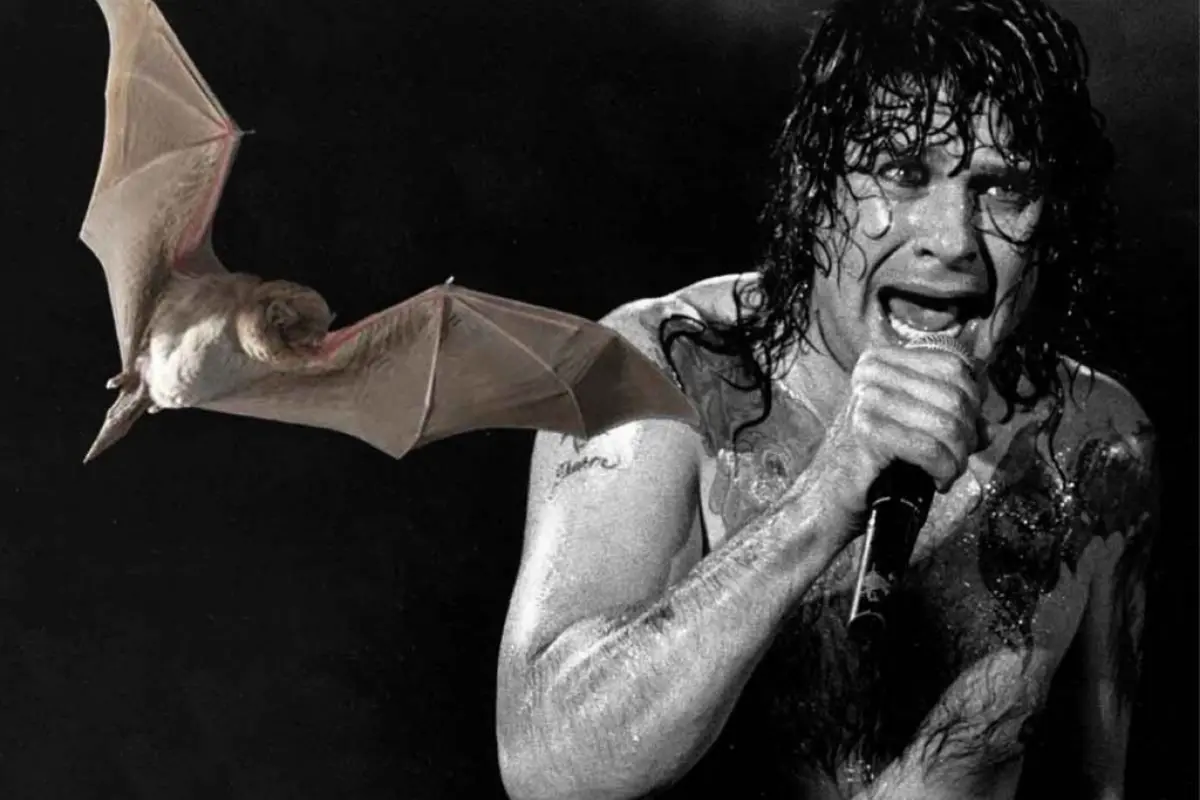
That tension between half-remembered truth and cinematic legend runs all through Ozzy’s career. Even his infamous bat-biting episode, which Know Your Instrument has carefully unpacked as a case of a fan tossing a dead bat onstage that Ozzy assumed was a prop, still dominates how casual listeners picture him decades later.
For Tommy Lee, those warped stories are part of the appeal. The more unbelievable the tale sounds, the more it captures what it felt like to share space with Ozzy in the 1980s, when nobody was sober enough to take notes and everybody seemed weirdly proud of surviving.
From opening act to co-headliner
The relationship between Tommy and Ozzy did not end when the Bark at the Moon tour finally lurched to a stop. After the 1980s, their paths diverged as Mötley Crüe battled addictions, lawsuits and “farewell” cycles while Ozzy built the Ozzfest brand and unexpectedly became a household name via The Osbournes.
In 2010 the circle closed when Ozzfest returned to the road with a short U.S. run that featured Ozzy and Mötley Crüe as co-headliners, the first time they had toured together since the mid-1980s.
On paper it looked like a business decision: two legacy names sharing a bill. In spirit it felt more like a twisted family reunion, with Tommy back on drums a few slots below the man who had once dragged his unknown band into the global spotlight.
By then both camps had at least flirted with sobriety and grown old enough to see the Bark at the Moon years as cautionary tales rather than aspirational ones. What had started as a contest to see who could die first had quietly become a shared project of staying alive long enough to laugh about it.
A bond sealed by survival
When Ozzy Osbourne died in July 2025, tributes poured in from every corner of rock, but one message from his former protégés stood out. Mötley Crüe publicly thanked him for all he had done “for music and for Mötley Crüe,” admitting that their story simply would not exist in the same way without his early support.
For Tommy Lee that was not just a polite social-media farewell. He had spent his formative touring years watching Ozzy stagger right up to the line between life and death, then somehow drag himself back for one more chorus, and he knew exactly how much of his own career had been built in that shadow.
In a darkly poetic way, their relationship is heavy metal in miniature. A kid from the Strip falls under the wing of the genre’s wildest front man, tries to outdo him, almost dies in the process and eventually learns that survival is the most rebellious act of all.