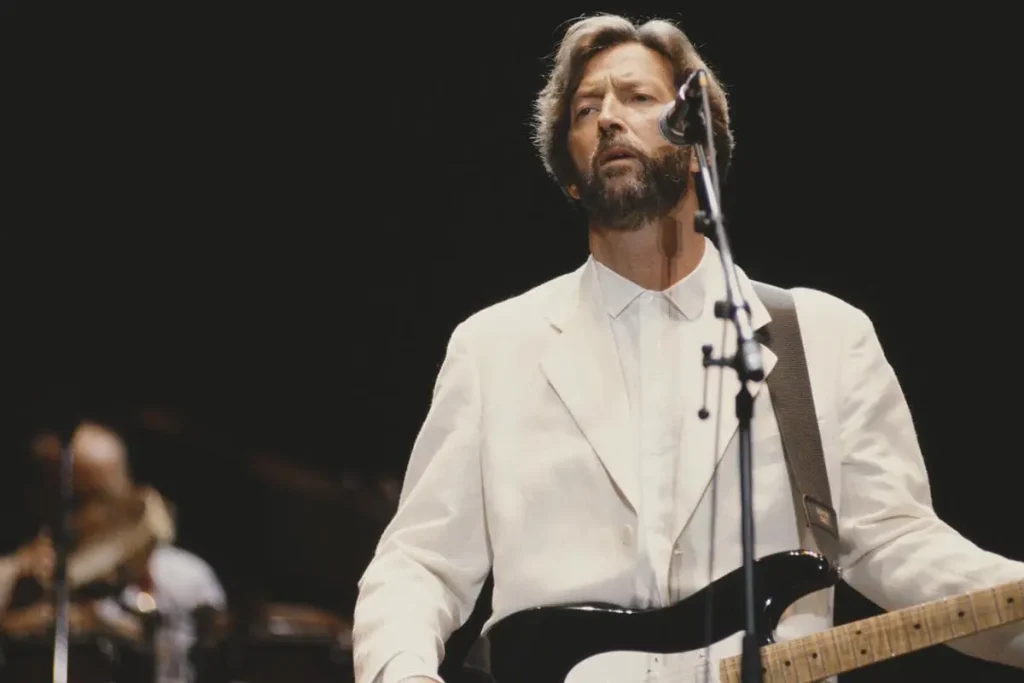
Everybody knows the gentle sway of “Tears in Heaven.” It plays at weddings, in supermarkets, on late night radio. Yet behind this soft rock lullaby sits one of the ugliest stories in rock history: a four year old boy, a 53rd floor window, and a father whose flaws were as legendary as his solos. No wonder “Tears in Heaven” regularly tops lists of the most heartbreaking songs ever written about a son.
Conor Clapton: the boy behind the ballad
Conor Loren Clapton was born in 1986, the son of Eric Clapton and Italian actress Lory del Santo, arriving while the guitarist was still deep in alcohol and drug abuse. Clapton would later write that Conor became the closest relationship of his life, the child whose birth finally pushed him into sobriety and the little boy he had been sober for only three years when tragedy struck on March 20, 1991. That morning, four year old Conor fell from a janitor-left-open window on the 53rd floor of a New York apartment where he was playing before a planned zoo trip with his father, prompting a hysterical phone call that left Clapton feeling he had stepped into “someone else’s life” as he arrived at a building full of emergency vehicles just days before his 46th birthday.
Out of that single, shattering morning came a cluster of songs. Clapton turned the previous night’s circus outing with Conor into “Circus Left Town,” then began sketching a more direct conversation with his dead child that would become “Tears in Heaven.” Both songs started as private attempts to survive the unimaginable before friends and collaborators pushed him to let the world hear them.
Key moments in the Conor story
| Year | Event |
|---|---|
| 1986 | Conor Clapton is born to Eric Clapton and Lory del Santo. |
| 1991 (March 20) | Conor dies after falling from a 53rd floor window in New York City. |
| 1991 | Clapton writes music for the film Rush, including what becomes “Tears in Heaven.” |
| 1992 | “Tears in Heaven” is released as a single and performed on MTV Unplugged. |
Grief, sobriety and a late blooming father
By the late 1970s Clapton had kicked heroin but was drinking heavily and using other drugs, the classic self-destructive guitar hero. He later admitted he got sober less for his own sake than for Conor’s, unable to stand the idea that his son’s mental picture of “Dad” would be a stumbling drunk. The horror of Conor’s death could easily have sent him back to the bottle; instead, Clapton buried himself in meetings, isolation and the guitar, framing music as the only thing that still made sense.
That decision matters for how we hear “Tears in Heaven.” This is not only a lament for a dead child; it is the sound of a man determined not to anesthetize himself, forced to feel every second of his grief in real time. The song is chilling partly because it is sung by someone who chose to stay awake while his life burned down.
How “Tears in Heaven” was really born
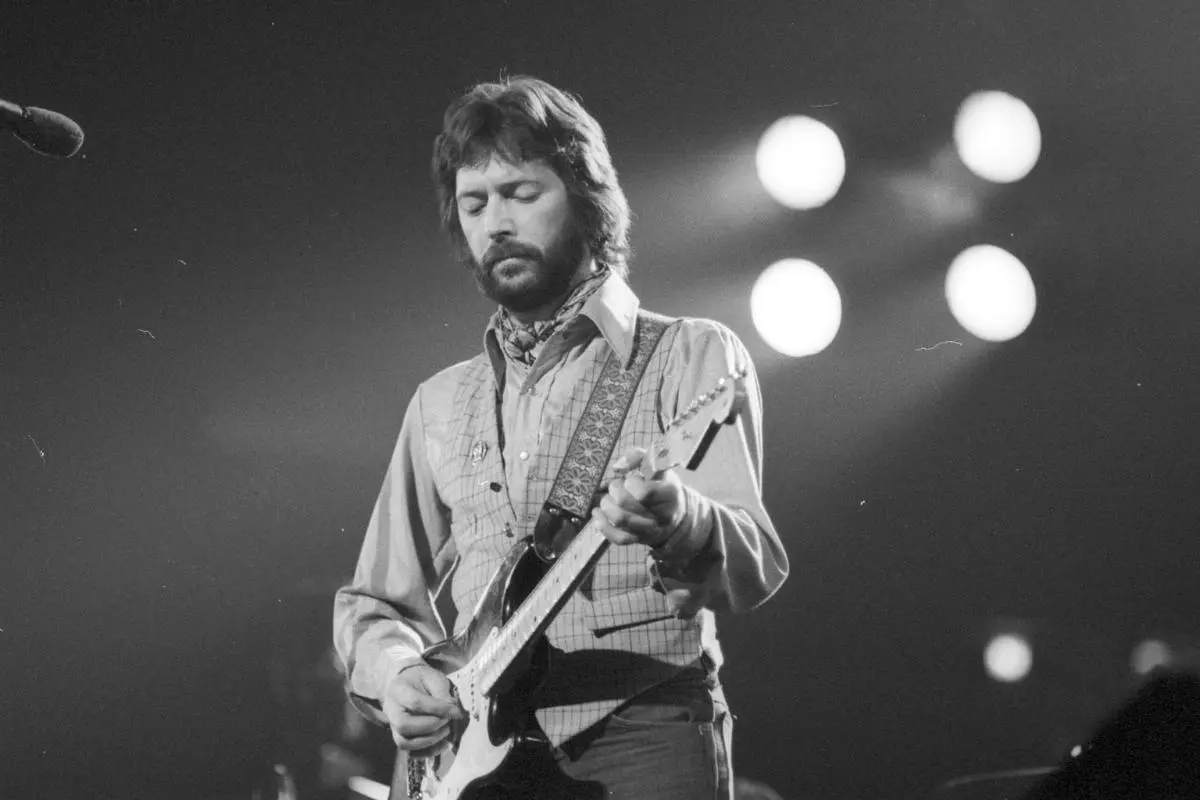
Ironically, the first home for Clapton’s most personal song was not a confessional singer songwriter album but a grim drug thriller. While scoring the film Rush, he saw a scene that needed a song about loss and realized it was the one place he could write directly about Conor and still keep a little distance. He later said the movie gave him an excuse to “channel” what had happened to him and to share that story with an audience that already loved his music.
Clapton co wrote “Tears in Heaven” with lyricist Will Jennings, building the song around simple chords, a nursery rhyme melody and a brutal emotional question: would his son even recognize him if they met again in heaven. Released in 1992, the single became his best selling record in the United States, hit number two on the Billboard Hot 100, charted across Europe and beyond, and won three Grammys including Song of the Year and Record of the Year.
From film cue to global hymn
When Clapton performed “Tears in Heaven” on MTV Unplugged, the song escaped its movie origins and entered the global bloodstream. That acoustic set, with its soft shuffle groove and nylon string guitar, became the best selling live album in history, turning a private eulogy into something millions of people would quietly sing along to in cars and living rooms.
Clapton has said that after the song’s release his mail exploded: for about a year he received roughly 150 letters a day from people trying to process their own bereavements, often with no other tools for dealing with death. That turn from personal dirge to public grief counseling is exactly what makes “Tears in Heaven” both powerful and, in some ways, uncomfortable to listen to.
The song he tried to bury
Success brought its own curse. Performing “Tears in Heaven” night after night meant reopening the same wound onstage while strangers cheered. By the early 2000s Clapton decided he could not do it anymore, telling interviewers that he felt it would be inappropriate to keep using the memory of his son as a way to move an audience and that he simply could not connect to that level of loss every night.
In 2004 he formally retired “Tears in Heaven” and another Conor related song, “My Father’s Eyes,” from his live repertoire. He explained that he no longer felt the raw grief that had powered those performances and did not want to drag those emotions back just to give fans a moment of catharsis, saying the songs probably needed “a rest” and might later return in a more detached way.
Comfort, activism and an ugly legacy
The story could have ended there: a grieving father, a healing song, a dignified decision to move on. To his credit, Clapton did more than sing. In the early 1990s he recorded public service announcements urging parents to use window guards and stair gates, explicitly invoking his son’s death and pleading with viewers to prevent similar falls in their own homes.
Yet any honest look at Clapton, Conor and “Tears in Heaven” has to sit alongside a darker chapter. In 1976 he delivered a now infamous onstage rant in support of anti immigration politician Enoch Powell, peppered with racist slurs and calls to “keep Britain white”; eyewitness accounts and later interviews confirm the tirade, which helped spark the Rock Against Racism movement. Clapton has since blamed drunkenness and expressed regret, but the fact remains that the man whose ballad has become a universal lullaby of loss once used his microphone to promote bigotry.
Why “Tears in Heaven” still hits like a punch
None of this lets listeners off the hook. If anything, the contradictions sharpen the song. “Tears in Heaven” is at once a tender conversation from father to son, a sober man clinging to music instead of relapse, a lucrative hit and the product of someone whose public behavior has often been selfish, ugly and chaotic. That tension is precisely why the song refuses to fade into background wallpaper.
So when you hear those opening guitar notes in a bar or on an oldies station, it is worth remembering the full picture: a little boy in red pajamas vanishing out of a window, a rock star forced to grow up in one brutal instant, a piece of music that carried millions of other people through their own losses, and a deeply flawed human being who turned his worst day into the most devastating song about a son ever written.