If you went to rock concerts in the 1970s, you did not just attend a show. You stepped into a roaring, smoky ecosystem where music, technology, drugs and barely controlled chaos all collided.
It was cheaper, louder and often far less safe than live music today, but it also felt shockingly free. Here is what those nights were really like, from the parking lot to the last encore.
From hippie fields to concrete stadiums
The 1970s inherited both the utopian dream of Woodstock and the nightmare of Altamont, where Hells Angels acting as security were paid in beer and a fan was stabbed to death in front of the stage, an event often cited as the dark full stop on the 1960s counterculture. Promoters took the lesson that big rock gatherings needed more structure, but not necessarily more gentleness.
By the middle of the decade, “arena rock” was the business model. Pink Floyd, once an underground psychedelic act, evolved into a global machine on the back of albums like “The Dark Side of the Moon”, headlining ever larger venues and turning their shows into total audiovisual experiences.
You can see the shift in artists who had been too big for clubs but not yet stadium gods. Dylan’s 1974 comeback tour with the Band sold every seat in indoor sports arenas by mail order, with average tickets at about $8, then considered pricey for rock. Fans literally lined city blocks just to get their envelopes postmarked on the first eligible day.
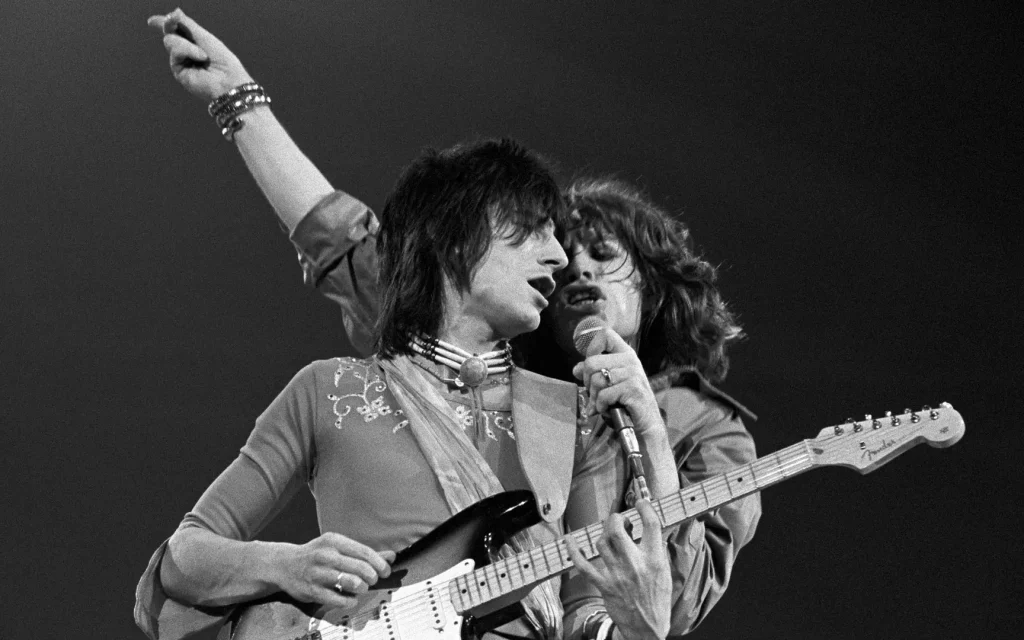
At the extreme end, Rolling Stones dates like the 1975 Cleveland Municipal Stadium show drew around 82,000 fans, with 22 tons of sound and lighting gear and $10 tickets that still felt accessible to working teenagers. Those mega-productions helped lock in the template: all-day partying in the parking lot, hours of opening bands, then a main act framed by fireworks and a mountain of amplifiers.
Tickets, queues and getting through the gate
Compared with today’s dynamic pricing circus, 1970s ticket buying was simple and brutal. You either queued at the box office, mailed in a money order, or hoped a friend would stand in line for you, and scalping was illegal enough that people worried about undercover cops outside the venue.
Prices reflected a world where records, not tours, paid the bills. Industry analyses put typical 1970s arena tickets in the $5 to $10 range in the US, roughly $30 to $60 in today’s money, with an $8 Rolling Stones ticket in 1972 as a textbook example. That is why so many fans could afford to see multiple big acts a year, not just one “bucket list” show.
| Era | Typical rock ticket | Modern equivalent | Example |
|---|---|---|---|
| Early 1970s | $5 – $8 | About $30 – $50 | Dylan & The Band tour |
| Mid 1970s | $8 – $10 | About $40 – $60 | Rolling Stones stadium dates |
| Late 1970s | $10 – $12.50 | Roughly $45 – $65 | Typical hard rock arena show |
Fans who went constantly remember most big-name shows hovering around ten bucks, even for acts like Kiss or Three Dog Night, as in many firsthand accounts. The real cost was often the logistics: taking the day off work to queue, or driving hours to the nearest city with a proper arena.
The sound: from muddy PAs to mind-blowing rigs
Sonically, the 1970s were a revolution. At the start of the decade, many rock PAs were just slightly souped-up vocal systems that distorted under real volume, which is why early stadium gigs like the Beatles at Shea are remembered as glorious but practically inaudible.
Engineers like Bob Heil changed that. After building a massive custom PA that rescued a Grateful Dead show in 1970, Heil’s touring systems were adopted by the Dead, The Who and others, becoming a template for the modern rock sound rig and even powering the quadrophonic system on The Who’s “Quadrophenia” tour.
The Grateful Dead then went completely over the top with their 1974 “Wall of Sound”: hundreds of speakers in towering arrays behind the band, driven by banks of McIntosh amplifiers and elaborate noise-cancelling mic systems so the musicians could hear exactly what the crowd heard. It was stunning and absurd, requiring multiple semi-trailers and dozens of crew, but it proved what was technically possible in open-air sound.
Pink Floyd took the other path: not raw power so much as immersion. On the Dark Side of the Moon tours they used quad sound, taped effects and synchronized visuals; commentators later noted that between 1972 and 1975 they jumped from roughly 3,000-capacity theaters to 60,000-seat stadiums, helping define stadium rock as a multi-sensory ritual rather than just a loud gig.
Viewed from the cheap seats, all of this tech translated into one feeling: for the first time, even in the back rows of a ballpark, you could actually hear detail, not just a distant roar.
Crowd culture: freedom, vice and real danger
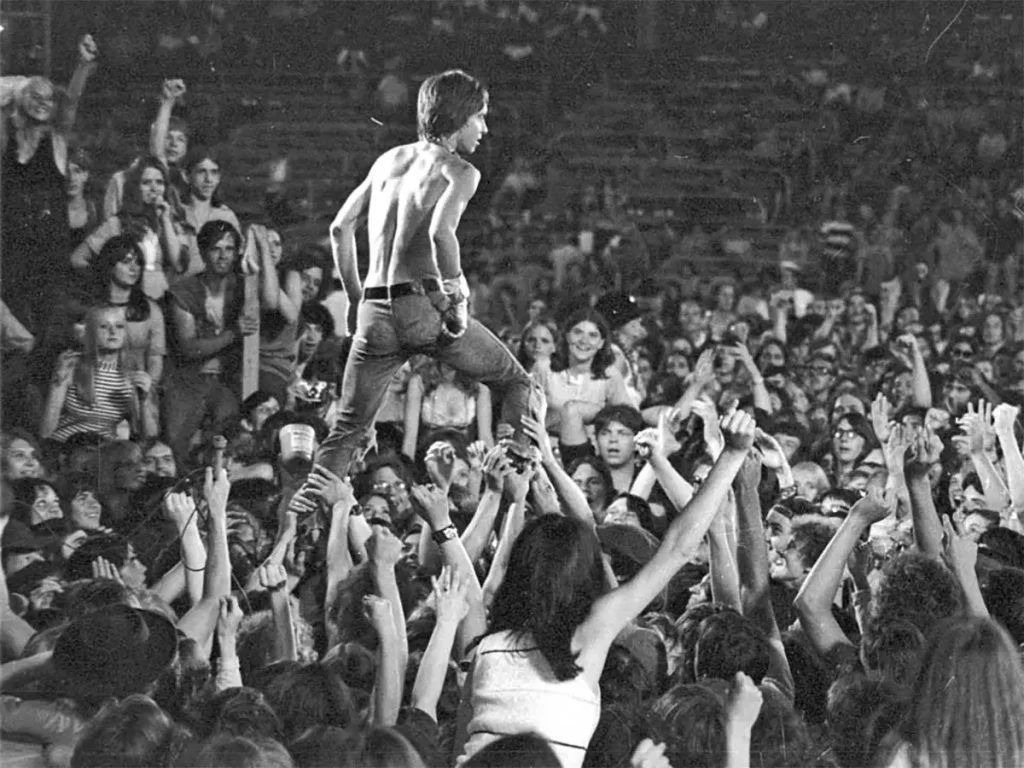
Inside the venue, 1970s crowds were looser and less managed. General-admission “festival seating” meant that if the doors opened late or a rumor spread that the band had started soundcheck, thousands of people could surge forward at once, often with no meaningful crowd control in place.
The most infamous example came at the end of the decade, when 11 fans died in a crush outside The Who’s 1979 Cincinnati show as general-admission ticket holders surged toward a few open doors, a tragedy that pushed many US cities to rethink festival seating entirely. For a lot of older fans, that disaster is the line between the “wild” 70s and the more regulated 80s.
On the spectrum between utopia and mayhem, Cleveland’s World Series of Rock captures the era perfectly. These day-long stadium festivals regularly drew 60,000 to nearly 90,000 fans on general admission, with official archives describing the shows as spectacular, rowdy and soaked in drug and alcohol use, with enough falls from the upper deck that the local Free Clinic staffed dedicated aid stations.
Violence did not define every show, but it was never far away in the collective memory. Altamont’s chaos and killing at the end of 1969 haunted the new decade, a grim warning about what could happen when promoters cut corners on security and threw volatile crowds together with booze, acid and bad planning.
For most fans, though, the risk felt like part of the charge. You lit your joint, hoped the biker next to you was in a good mood, and trusted the crowd to catch you if you decided to stage-dive before anyone had invented the word.
What a 1970s concert night actually felt like
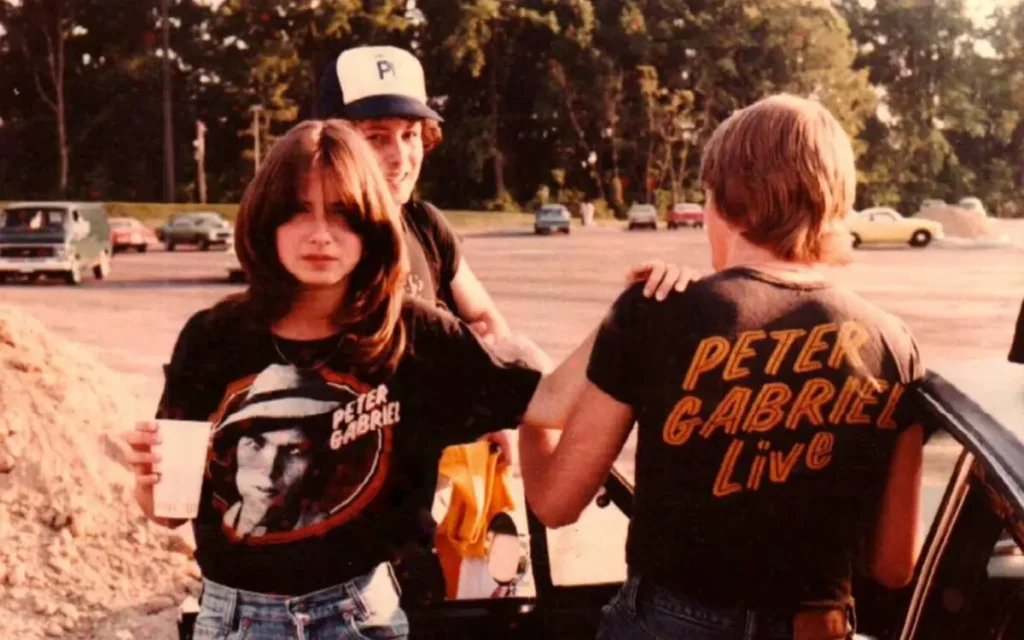
For a typical rock fan, the night started in the parking lot hours before showtime. Cars would arrive stuffed with friends, coolers and cheap beer, stereos blasting the album you were about to hear live. People traded tickets, stories and occasionally stronger substances in a kind of impromptu street fair.
Inside, opening acts mattered more than they often do now. A single bill might stack three or four bands that would all headline arenas today, especially on package tours and events like the World Series of Rock. You got your money’s worth, but it also meant sitting through six or seven hours on hard concrete or battered field turf.
During the headliner’s set, the sensory overload really hit. Stadium shows by the mid 70s could involve planes flying low over the crowd, pyro, inflatable pigs, or bands appearing from elaborate stage sets, all framed by light shows that would look primitive now but felt futuristic at the time. The sound might not meet modern hi-fi standards, yet hearing your favorite riff bounce off the upper deck with 70,000 people singing along was life-changing.
Security pat-downs were lighter, merch was comparatively minimal, and almost nobody watched the show through a camera. You experienced it in the moment, maybe came home with a cheap program and ringing ears, and relied on bootlegs or your own memories to relive it.
How 1970s concerts rewired live music
Seen from today, 1970s concerts look like a dangerous laboratory. Engineers like Bob Heil and the Grateful Dead’s crew were inventing the touring sound system in real time, with no textbooks and a lot of risk. Promoters were scaling up from ballrooms to ballparks faster than safety practice could catch up.
Out of that mess came much of what we take for granted: full-scale touring PA systems, the idea that a rock show should be a narrative spectacle, and the expectation that a single night of music can feel like a pilgrimage rather than a casual evening out. The price for that progress was paid in near misses and, at places like Cincinnati and Altamont, real human lives.
If you were lucky enough to be there, though, the memory is probably less about tragedy and more about intensity. You bought a cheap ticket, trusted the crowd, and stepped into a wall of sound that felt like it might knock the decade itself off its axis.
Today’s concerts are safer, slicker and astronomically more expensive. But that raw mix of sweat, smoke and stadium-scale ambition that defined 1970s gigs still echoes through every big rock tour that rolls through town.