
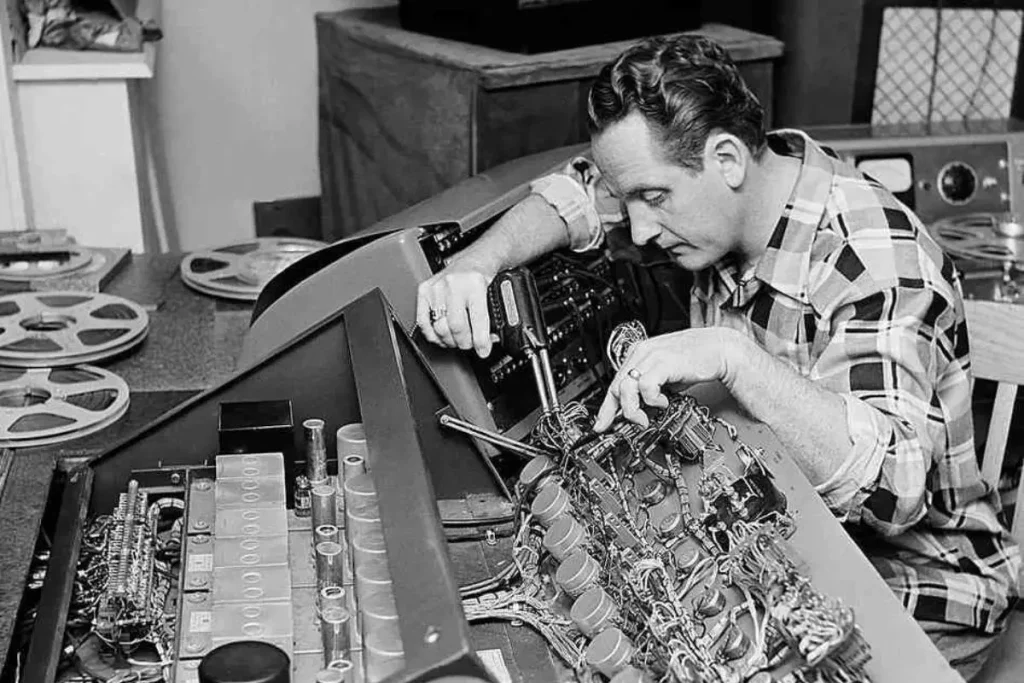
In a grainy studio snapshot from the early 60s, Les Paul leans over a console while a gleaming white 1961 Les Paul Custom rests within arm’s reach. It looks every bit like an SG, yet the headstock still carries his signature, freezing the exact moment Gibson reinvented his guitar behind his back.
That kind of image is more than nostalgia. It captures a fault line in guitar history, where a struggling icon was rebuilt, rebranded, nearly scrapped altogether, and then resurrected by a new generation of blues-obsessed players.
Gibson vs Fender: why the original Les Paul had to change
By the late 1950s the carved-top, single-cut Les Paul had a problem that no endorsement could fix. Fender’s Stratocaster was lighter, cheaper, aggressively modern, and its double cutaways and vibrato made Gibson’s heavy, no-whammy workhorse look old-fashioned.
Sales on the original line slid so hard that in 1961 Gibson replaced the model with a thin, bevelled double-cutaway design often referred to as the Les Paul/SG, and the classic single cut did not return to the catalog until a reissue in 1968.
Meet the ‘new’ Les Paul: a thin, double cutaway rebel
In 1961 company president Ted McCarty and his team unveiled what catalogs simply billed as the ‘new’ Les Paul. It was a radically slim all-mahogany body with deep bevels, twin pointed horns and a neck that joined the body at the 22nd fret, built to hang with Fender on weight and upper fret access.
Vintage Guitar has documented how this redesign was developed, while Les himself later recalled that it had been designed and introduced without his consultation or knowledge; when his endorsement deal expired around 1962, the same guitars were quietly rebranded as the SG, short for Solid Guitar.
From Black Beauty to bright white: the 1961 Les Paul Custom
For the top-of-the-line Les Paul Custom the makeover was even more dramatic. Gibson’s own account notes that in 1961 into a sleek, double-cutaway body in white, a look that would go on to define what the world now thinks of as the SG Custom.
Under the hood of a 1961 Les Paul Custom
Flip that 1961 Custom off the stand in your mind and the spec sheet reads like a hot-rod fever dream, not a polite jazz box. Premier Guitar’s rundown of an original example mirrors the 1961 catalog: an ultra thin, hand contoured double-cut body, extra slim low-action neck that joins at the 22nd fret, ebony fingerboard, three humbuckers and a sideways vibrato tailpiece aimed squarely at the surf era.
- Ultra thin mahogany body with deep bevels.
- Very light weight compared with 50s Customs.
- Far easier reach to the top frets for Les-style multi-track runs.
- A brighter, snappier attack than many carved-top Standards.
- Showpiece looks that jump off mid-century black-and-white TV screens.
On paper, this ‘new’ Custom was everything a modern player was supposed to want. In practice, it felt like a different species to the dense, sustaining brute that had carried Les Paul’s name through the 1950s.
So why did Les Paul hate his own ‘new’ Les Paul?
Les Paul had bled for the original single-cut design, literally hacking up guitars in his workshop to prove a solid body could work. To him the SG-shaped ‘new’ model felt like a corporate remix that put marketing ahead of musical sense.
Later in life he did not mince words. Quoted in A R Duchossoir’s study of Gibson electrics, he said of the SG-style Les Paul, ‘I was not happy with that guitar, I did not like the horns, the cutaway… too sharp,’ and complained that it had never been cleared with him; Ted McCarty in the same account notes that when Les’s endorsement contract came up for renewal around the time of his divorce, Gibson simply let it run out, dropped his name and kept building the design as the SG, as discussed in Duchossoir’s commentary.
Contract drama, divorce and a quiet exit
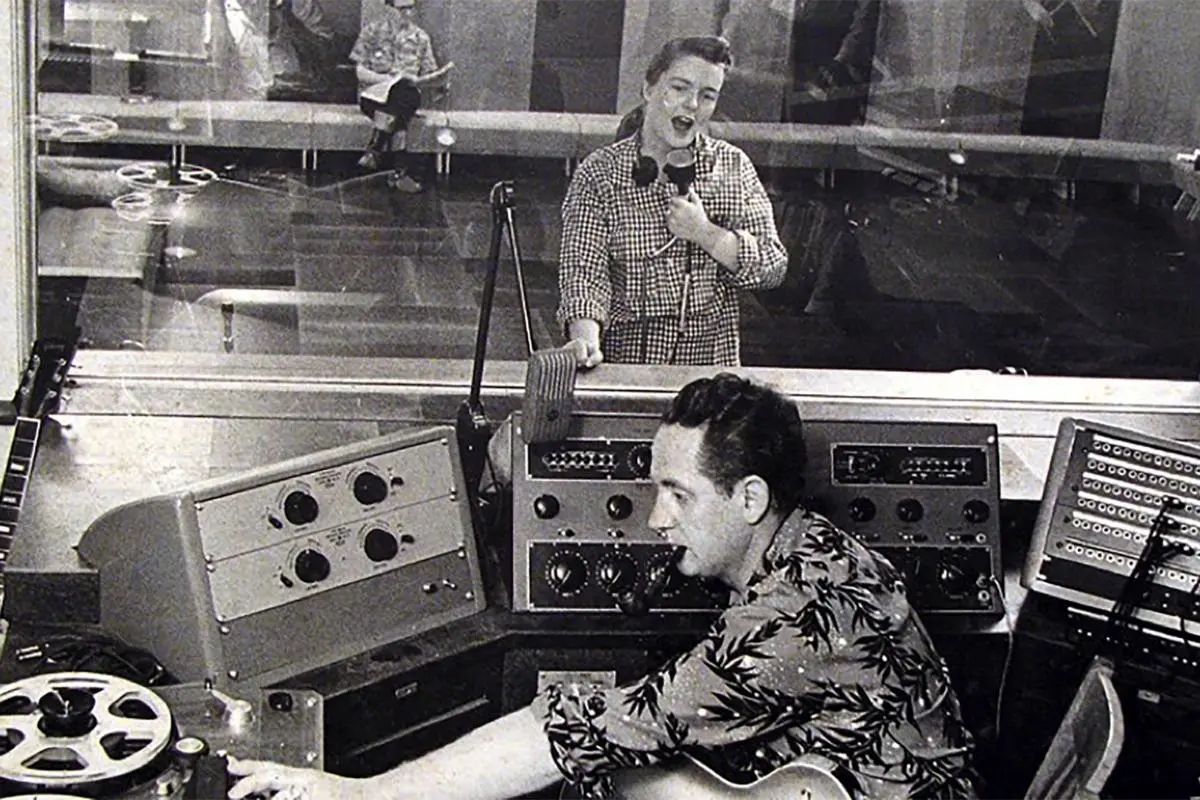
At the same time, Les Paul and Mary Ford were coming apart at the seams as a duo and as a couple. According to Les’s own foundation, years of relentless work, family tragedy and a fading chart presence left Ford desperate to stop performing, while Les pushed to keep the act moving.
Their marriage was finally dissolved in 1964, taking their golden TV era with it. Against that backdrop it is not surprising that he wanted distance from a guitar he no longer recognised, just as Gibson wanted to pretend the redesign was his brainchild.
From Les Paul to SG on the headstock
Open a 1961 catalog and the thin, bevelled solidbodies are still proudly called Les Pauls, complete with his script on the truss-rod cover. Within a couple of years the marketing caught up with the reality in the factory: the original single cut was gone, and the pointy double-cut had become the SG in name as well as shape.
Gibson got its sleek modern solidbody, but it also created a new set of headaches. That ultra thin neck joint that felt so fast in the showroom proved more fragile and less stable on the road, and for all its virtues the SG never fully replaced the thick, sustaining punch of the old single cut in the minds of blues and rock players.
Clapton, Bloomfield, Richards: the revenge of the old Les Paul
While Kalamazoo churned out SGs, a few rebellious guitarists started dragging battered 50s Les Pauls back onto loud stages. Eric Clapton’s use of a sunburst Les Paul Standard on the 1966 turned that short-lived 1958 to 1960 run of ‘Bursts’ into near-mythic objects, especially after his own guitar was stolen and stories about the lost ‘Beano’ Les Paul began to snowball.
On the American side, Michael Bloomfield’s switch from a 1954 goldtop to a 1959 Standard with the Paul Butterfield Blues Band convinced a whole generation of tone chasers that the thick, screaming humbucker Les Paul was the ultimate blues weapon; Vintage Guitar has traced how his influence, pushed Gibson to reissue a single-cut Les Paul Standard in 1968 as a P90-equipped goldtop rather than the exact Burst players were hunting.
Gibson’s own Custom Shop literature now openly credits British players like Keith Richards with helping to revive the single-cut design, noting that his mid 60s embrace of a sunburst Les Paul Standard during the beat boom and electric blues resurgence set the stage for the 1968 return of the classic shape to the lineup.

The 1961 Les Paul Custom in that photo, decoded
Seen through that history, a simple studio shot of Les Paul with a white 1961 Custom is almost uncomfortably symbolic. He is holding the very instrument that visually birthed the SG yet temporarily erased the single-cut from Gibson’s catalog, a guitar that GuitarPlayer points out was normally issued in white and examples carrying his name on the headstock now exceptionally rare.
On a rack it reads like a contradiction: SG body lines, Les Paul logo, Custom-level bling. It is both the knife that killed his original design and the blueprint for the guitar that would help define late 60s hard rock.
What players and collectors can learn from that moment
For players, the contrast between a 50s Les Paul, a 1961 SG-style Custom and a late 60s reissue is not academic. It is a roadmap to three very different attitudes about what an electric guitar should be.
| Model | Body and feel | Sound and role |
|---|---|---|
| 1950s Les Paul Custom | Thick single cut, carved maple cap, hefty weight, shorter neck joint. | Compressed sustain and smooth top end, ideal for jazz, early rock and studio work. |
| 1961 ‘new’ Les Paul Custom | Thin double cut, bevelled edges, very slim neck, 22nd fret neck joint. | Fast attack with more bite, effortless upper-register fireworks but less sheer mass behind each note. |
| 1968 Les Paul Standard / Custom | Single cut returns with a maple cap and sturdier feel, nodding to 50s style with late 60s tweaks. | Thick rock voice that powered blues rock, arena rock and later metal, cementing the Les Paul as a permanent fixture. |
If you love SGs, that 1961 Custom is the missing link between Les’s jazz-leaning aspirations and the snarling rock plank Angus Young would later weaponise. If you are a Les Paul traditionalist, it is the cautionary tale that shows how close your favourite shape came to vanishing.
For modern players chasing the feel of that era, there are a few practical takeaways.
- If upper fret access and low weight trump everything, a well set up SG or 1961-style reissue will feel like cheating in the best way.
- If you live for thick low mids and singing sustain at sensible volume, a 50s-spec or 1968-style single cut will probably speak your language more clearly.
- If you are a collector, those short-lived 1961 to 1963 ‘Les Paul’ SG Customs are historically loaded pieces, but their thin necks and joints make condition and repairs far more critical than on most other Gibson solidbodies.
In the end that rare early 60s snapshot is not just a celebrity-with-guitar moment. It is a frozen frame of the instant when corporate strategy, personal drama and changing musical tastes collided around a single instrument, producing both the SG and, thanks to a noisy revolt by blues fanatics, the triumphant return of the original Les Paul.
Look closely and you can almost imagine it in Les Paul’s body language: he is already halfway gone from the guitar that bears his name, even as history quietly prepares to crown that nameplate one of the defining shapes of rock music.


