“I’d rather have a bottle in front of me than a frontal lobotomy” might be the perfect drinking line: catchy, a little sick, and just clever enough to feel profound after the third round.
You see it on T-shirts, in meme streams and scratched into barroom toilets. Most people assume Tom Waits invented it. Others swear it has the fingerprints of Dorothy Parker or Groucho Marx. A few music nerds point to a novelty record from the Dr. Demento universe.
The truth is messier and, fittingly, a little drunk. The joke has a paper trail that runs from a 1960s philosophy book to 1970s TV comedy, novelty vinyl and, yes, at least two different bathroom walls. Let’s follow the trail and see who can honestly claim the line – if anyone can.
The night Tom Waits put it on television
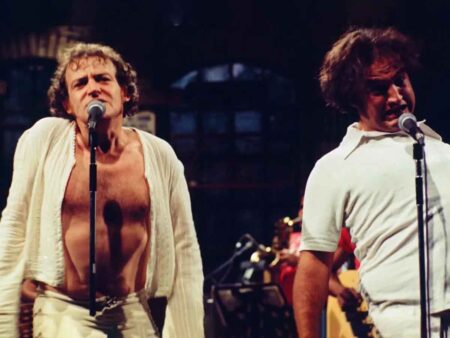
Tom Waits did not invent the quip, but he absolutely shot it into pop culture. On August 1, 1977, he appeared on the satirical talk show Fernwood 2 Night, playing the down-and-out piano bum persona that defined his early records.
After performing “The Piano Has Been Drinking,” Waits sat down with hosts Martin Mull and Fred Willard. Mull joked that it was odd to have a guy sitting there with a bottle in front of him. Waits deadpanned the killer reply: “Well, I’d rather have a bottle in front of me than a frontal lobotomy.”
The studio audience roared. In an era when lobotomies still sat in living memory as a brutal psychiatric treatment, the collision of cheap booze and crude brain surgery was shocking, funny and strangely on-brand for a songwriter who lived at the corner of Bedlam and Squalor.
Quotation dictionaries and barroom chalkboards quickly grabbed the line and stapled Waits’s name to it. By the time The Yale Book of Quotations appeared in 2006, the entry for the joke was filed squarely under Tom Waits.
But the joke is older than Waits
If you stop at television, Waits looks like the originator. The printed record says otherwise. Barry Popik’s deep dive into the phrase finds the earliest known version in a 1965 book by philosophy professor Carlton W. Berenda, who wrote about a man weighing “a bottle in front of me, a frontal lobotomy” as competing options.
That is not quite the polished gag we know today, but the key wordplay is already there: bottle in front of me / frontal lobotomy. By the mid 1970s, comedian Steve Allen was joking about “a free bottle in front of me” versus “a prefrontal lobotomy” on television, again showing the pun circulating in showbiz circles before Waits ever growled it on Fernwood.
Drinks writer Simon Difford’s discussion of the quote also flags Berenda’s 1965 book as the first print sighting, noting that the quip had already been “doing the rounds” long before Waits used it and that there is no serious evidence for the usual suspects like Dean Martin, W.C. Fields or Dorothy Parker.
A quick timeline of the quip
| Year | Appearance | What we see |
|---|---|---|
| 1965 | Carlton W. Berenda, World Visions and the Image of Man | First known print version of “a bottle in front of me, a frontal lobotomy.” |
| 1976 | Steve Allen routine reported in newspapers | Television gag contrasting “free bottle in front of me” with “prefrontal lobotomy,” documented in Popik’s research. |
| 1977 | Tom Waits on Fernwood 2 Night | Classic one-liner delivered on national TV, as preserved in the Fernwood 2 Night transcript, widely repeated and credited to Waits. |
| 1980 | Randy Hanzlick’s novelty song | “I’d Rather Have a Bottle in Front of Me (Than a Frontal Lobotomy)” becomes a Dr. Demento staple. |

Bathroom walls and a forensic pathologist
Here is where things get delightfully sordid. In the early 2000s, radio host Nick Spitzer asked Waits about the line during an interview on American Routes. Waits shrugged it off with typical nonchalance: he said he had simply read it on a bathroom wall.
That is not showbiz false modesty; another claimant tells almost the same story. Forensic pathologist Randy Hanzlick, recording as “Dr. Rock,” wrote and performed the 1980 novelty song “I’d Rather Have a Bottle in Front of Me (Than a Frontal Lobotomy),” beloved by listeners of the Dr. Demento radio show, and his account is preserved in a detailed fan history of the song.
According to that history, Hanzlick said his inspiration was graffiti in a VA hospital restroom that read “I’d rather have a free bottle in front of me than a pre-frontal lobotomy.” He tightened the wording, wrapped it in a darkly comic narrative about two brothers and psychiatric surgery, and turned it into a sing-along.
So we have at least two credible artists, working independently, saying they found the line in bathrooms. That fits the way a good joke really spreads: orally, anonymously and with just enough filth on it that nobody thinks to write down the original tagger’s name.
How a drinking joke ended up in quote books
Once the pun escaped into mainstream entertainment, attribution turned into a free-for-all. A modern cocktail reference site treats it as a “classic drinking quote” and notes that people have tried to hang it on everyone from Dorothy Parker to Dean Martin, despite the lack of evidence.
On the literary side, a popular quote site presents the line as a Dorothy Parker gem, but quietly tags it as “misattributed”. Another online collection lists the author as “unknown” and then, just in case, brackets the phrase with a roll call of cultural heavyweights: T.S. Eliot, Pablo Picasso and Tom Waits, all in a single grab-bag of competing attributions.
The pattern is familiar to anyone who has chased down old musicians’ one-liners. A good joke migrates upward. If it is vicious, it must have been Oscar Wilde. If it is cranky and alcohol-soaked, stick it on Parker, Bukowski or Waits. Folk wit gets laundered as high culture.
Bottle vs brain: why the line hits so hard
Part of the quip’s punch is its casual approach to a genuinely ugly procedure. Lobotomies were once mainstream treatment for serious mental illness; surgeons literally cut connections in the frontal lobes, often leaving patients dulled, docile or worse.
By the 1940s and 1950s thousands of people, disproportionately women, were lobotomized before antipsychotic drugs and better therapies pushed the practice to the fringes. The operation is now viewed as a cautionary tale about medicine’s capacity for violence dressed up as progress.
So when the joke says “I’d rather have a bottle in front of me,” it is not just a neat spoonerism. It is choosing everyday self-destruction over institutional violence. A hangover feels like a bargain compared with an ice pick to the frontal lobe.
For a performer like Waits, who spent his early career marinating in a barfly persona, the line also poked at a deeper fear. In a later interview about quitting drinking, he admitted that heavy users often wonder if the “spirits” moving through them come from the bottle instead of their own imagination, a point he makes in a set of remarks on alcohol and creativity.
He described getting sober as facing down the question of whether he was truly eccentric or just hiding behind a costume, and what would be left “when you drain the pool” of booze and drugs. In that light, the lobotomy line is more than a joke; it is a dare to find out what is left of you without chemical vandalism or surgical shortcuts.
So who said it first?
If you want a precise, courtroom-ready name, you are out of luck. The best we can say is this: the earliest known print ancestor is Carlton Berenda’s 1965 philosophical aside; the joke was on the lips of TV comics like Steve Allen by 1976; Tom Waits gave it the most famous performance in 1977; and Randy Hanzlick turned it into a cult novelty song in 1980, as traced through Popik’s research, the Fernwood 2 Night appearance and the Dr. Rock discography.
Both Waits and Hanzlick credit anonymous bathroom graffiti for the wording that stuck, and nothing in the surviving record contradicts that. Folklore scholars would call it a modern proverb: a line polished as it passes from stall to stage to studio until no single author can fairly own it, a view reinforced by both the Waits interview and the fan accounts of Hanzlick’s inspiration.
If you are filling in a quotation book, it is reasonable to tag the line as “popularized by Tom Waits” and “adapted by Randy Hanzlick.” If you are being intellectually honest, the origin story probably belongs to some nameless wiseguy with a marker in a hospital john, choosing the bottle over the ice pick and cracking a joke in the face of both.
And maybe that is the most fitting answer. A joke about wrecking your brain that nobody can truly claim – the folk anthem of drunks, damaged geniuses and the rest of us trying to keep our frontal lobes intact.