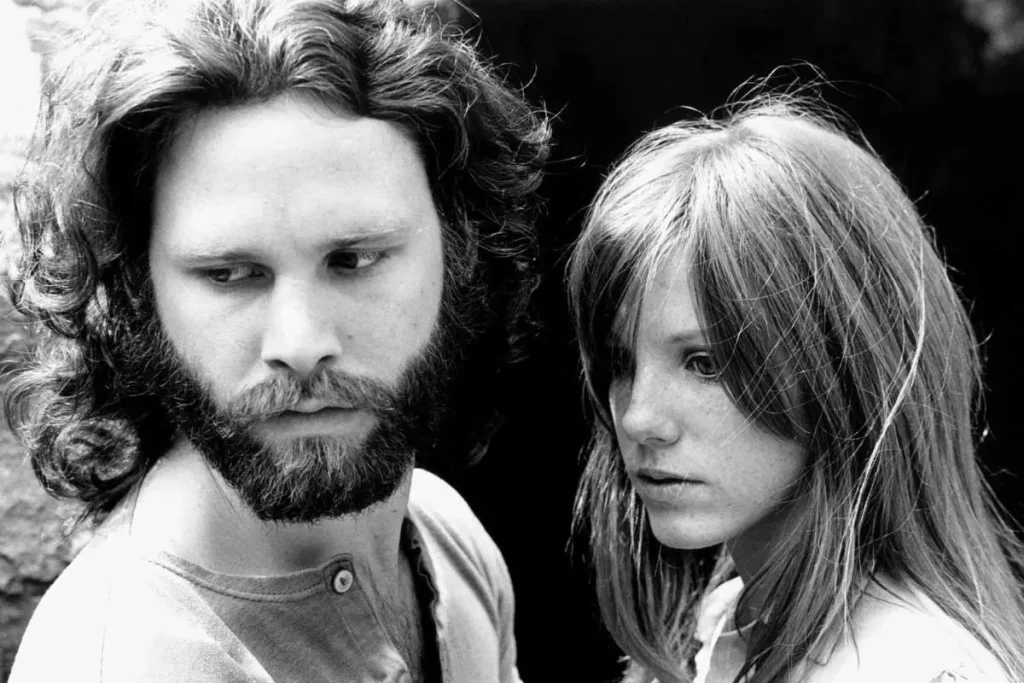
By the time Jim Morrison and Pamela Courson slipped into Paris in early 1971, they were not just escaping fame. They were running from courts, from drugs, from themselves and from the wreckage they had already made of each other.
What they found instead was a few short months of fragile calm, heavy drinking, whispered poetry and a death that still refuses to sit quietly in its coffin. Strip away the romance and you get something far darker: a codependent love story that ended in a small Paris bathtub and three years later on a couch in Los Angeles.
If you grew up with The Doors as a soundtrack, this is the chapter the albums could only hint at – the part where the glamour peels off and you are left with two young people who loved each other so much they helped finish each other off.
Why Jim and Pam ran to Paris
By 1970 Morrison was bloated, drunk most nights and on trial in Miami for alleged indecent exposure on stage. Concerts were canceled, songs were pulled from radio and the frontman who once looked like a rock god now felt like a courtroom defendant with a target on his back, as he contemplated fleeing to Paris for a fresh start.
Paris offered an old romantic fantasy: a place where a serious poet could disappear, walk the same streets as Baudelaire and Rimbaud, and maybe outgrow the circus of being The Doors’ frontman. Pamela, already there ahead of him, promised a quieter life and a chance to dry out.
He arrived in March 1971, moved into a modest apartment on Rue Beautreillis in the Marais, and talked of taking a long break from music. Friends later remembered him lugging notebooks, scribbling poems in cafes, and talking more about writing than about arenas or record sales, according to accounts of his Paris exile.
| Date | Key moment |
|---|---|
| March 1971 | Morrison joins Courson in Paris, settling in the Marais |
| Spring 1971 | Long walks, poetry, and attempts to cut back on the chaos from Los Angeles |
| July 2-3, 1971 | The still disputed night of Morrison’s death |
Quiet days, wild nights
The postcard version is simple: Jim and Pam in a bohemian apartment, listening to records, slipping into cinemas and museums, healing. Parts of that were real. In letters, Morrison mentioned long solitary walks and losing some of the weight that shocked fans on recent American tours, details preserved in accounts of his final months in Paris.
The reality also included heavy drinking and a growing nightlife habit centered around Paris rock dives. Accounts from club staff and biographers place Morrison at the Rock & Roll Circus on the Left Bank “practically every night,” treating alcohol as both social lubricant and slow suicide.
What Paris did not change was the dynamic between him and Pamela. They had already survived years of affairs, fights, drugs and reconciliations in Los Angeles. Those patterns simply moved apartments. A different continent does not magically fix the people you bring with you.
Still, for a short stretch that spring, friends say they seemed unusually close, almost domestic. The myth of Paris as their brief paradise exists because there really were mornings when Morrison wrote at the table while Pamela made coffee and the day looked almost normal.
Pamela’s world shrinks to one patient
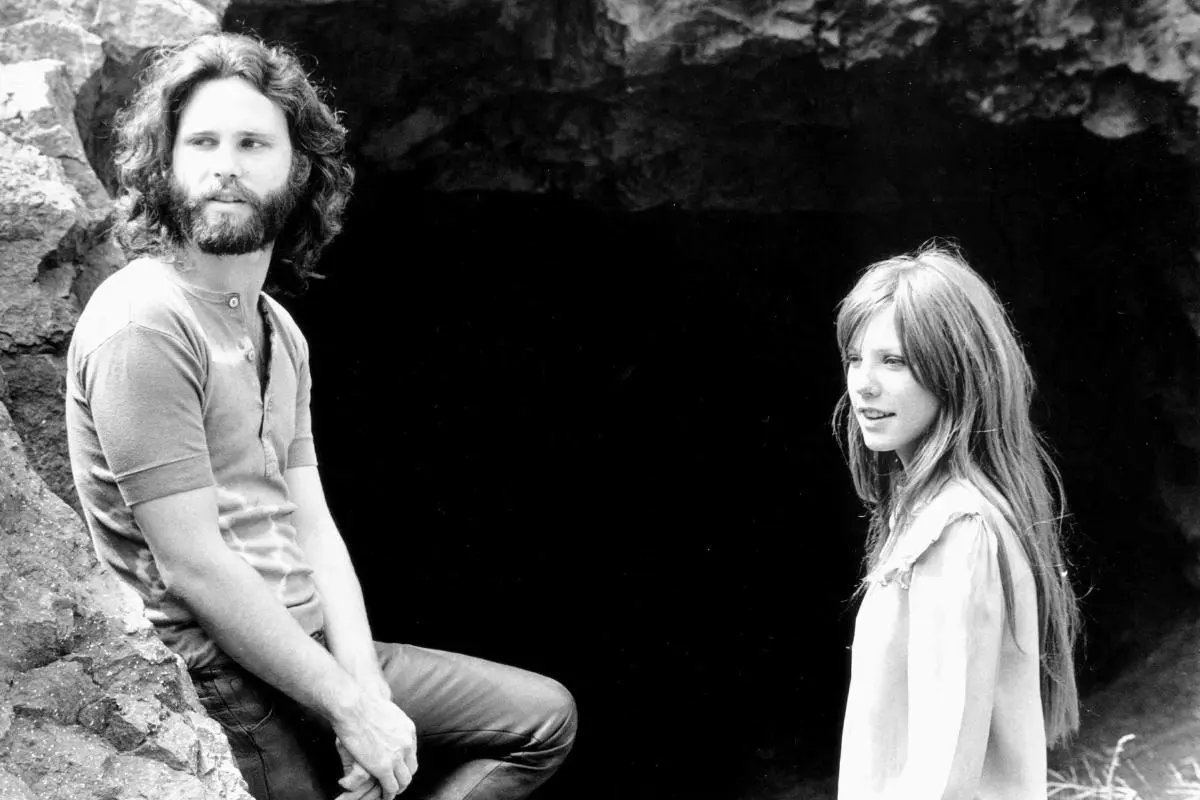
Pamela Courson was not just the tragic girlfriend in the movie version. She had grown up in a respectable California family, drifted into the Los Angeles art and club scene, and briefly ran her own boutique, Themis, financed by Morrison’s royalties.
By 1971, though, her life revolved around a single task: manage Jim. That meant soothing his rages, feeding his ego, trying to nurse him through hangovers and, according to multiple accounts, juggling her own drug use at the same time. She was not a clean caretaker tending a fallen angel; she was another addict trying to keep the show on the road.
Biographers often paint her as both muse and mirror. She wanted to be taken seriously as an artist and outsider, just as he did. The danger was that they confirmed each other’s worst impulses. If Morrison romanticized self destruction as a form of authenticity, Pamela often played the audience that applauded it.
Love, addiction, and a death with two scripts
On the night of July 2 into the early hours of July 3, 1971, something went wrong in that Paris apartment. What exactly happened depends on which version you choose to believe, and rock culture has spent decades arguing over the options.
The official script comes from French authorities and Pamela’s own statement. In a translated death certificate, doctors described “heart problems” aggravated by heavy alcohol use and a sudden change in temperature after a hot bath. No autopsy was ordered, because there was no clear sign of foul play and France did not require one in such cases.
In Pamela’s account to police, she and Jim watched a late movie, came home, viewed some home films and went to sleep. She claimed he woke up coughing and vomiting blood, refused a doctor, chose to take a bath instead, and was later found unconscious in the tub. It is a grim, almost mundane story of an alcoholic body finally giving out, preserved in that same official documentation.
But then comes the second script. Years later, club manager Sam Bernett and others claimed Morrison overdosed in the restroom of the Rock & Roll Circus after snorting heroin he believed was cocaine, collapsed, and was quietly carried back to the apartment by dealers who did not want a scandal in their nightclub, an account detailed in a Los Angeles Times investigation.
Modern summaries of the case often present this version as at least as plausible as the official one, given conflicting statements by Pamela and later claims that she admitted Jim had used heroin that night despite his fear of needles, as explored in retrospectives on Morrison’s death.
One detailed investigation in a British newspaper argued bluntly that an accidental heroin overdose was the most likely cause of death, pointing to foam at the mouth, the absence of an autopsy, and the behavior of the small circle of users around Morrison in his final weeks, concluding that heroin, not just alcohol, killed Jim Morrison.
The result is a perfect rock myth generator. With no autopsy, two incompatible stories and both primary witnesses dead within three years, every fan is free to choose a favorite explanation. Heart failure sounds dull. Heroin in a club toilet sounds like a Doors song.
Pamela after Jim: the second half of the tragedy
After Morrison’s death, Pamela found herself in a strange position: grieving partner, suspected enabler and suddenly wealthy heir. American courts later recognized her as Morrison’s common-law wife, which meant she inherited his estate, at least on paper, before dying herself.
She drifted back to Los Angeles, deeper into heroin, running with the last stragglers of the West Coast rock scene while lawyers fought over royalties in the background. Friends later described her as haunted and adrift, clinging to the idea that she and Jim were still spiritually connected.
On April 25, 1974, Pamela Courson died on a couch of a heroin overdose at 27, the same age as Jim. The symmetry is so on the nose that if you wrote it into fiction, an editor might tell you to tone it down.
Why this doomed romance still grips rock fans
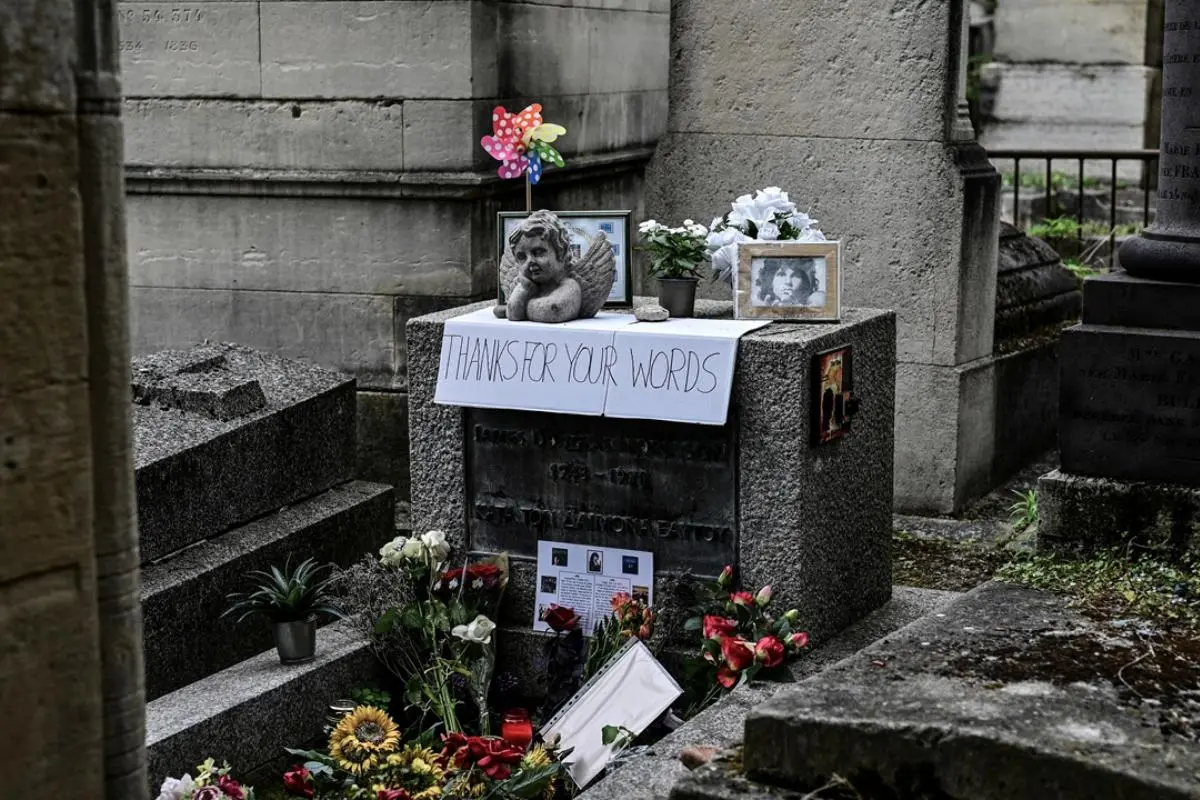
Walk through Père Lachaise cemetery in Paris and you can spot the Morrison grave by the crowd long before you see the stone. For years it was half shrine, half drunken meeting spot, busy enough that a sculpted bust placed there in the early 1980s was stolen and only recovered by French police decades later.
Fans do not just go to honor a singer. They go to stand at the intersection of talent, self sabotage and romance. Morrison and Courson’s story delivers all three in concentrated form: great records, bad decisions and a love that feels intense because it did not have to last very long.
There is also the pull of the so called 27 Club. When your heroes die young, you never have to watch them grow ordinary. In Jim and Pam’s case, that glow is intensified by how little we truly know about their last night together. Mystery is rocket fuel for nostalgia.
Devotion without survival is not romance
It is tempting to see Jim and Pamela as rock and roll Romeo and Juliet, doomed by a hostile world. The record tells a rougher truth: two bright, damaged people who mistook volatility for passion and addiction for depth, and paid with their lives for the confusion.
If there is anything useful left in their story for listeners who still treasure those Doors records, it is this: charisma does not make you immortal, and loving someone does not mean joining them in their slow suicide. Morrison and Courson had devotion. What they did not have was a way out.