
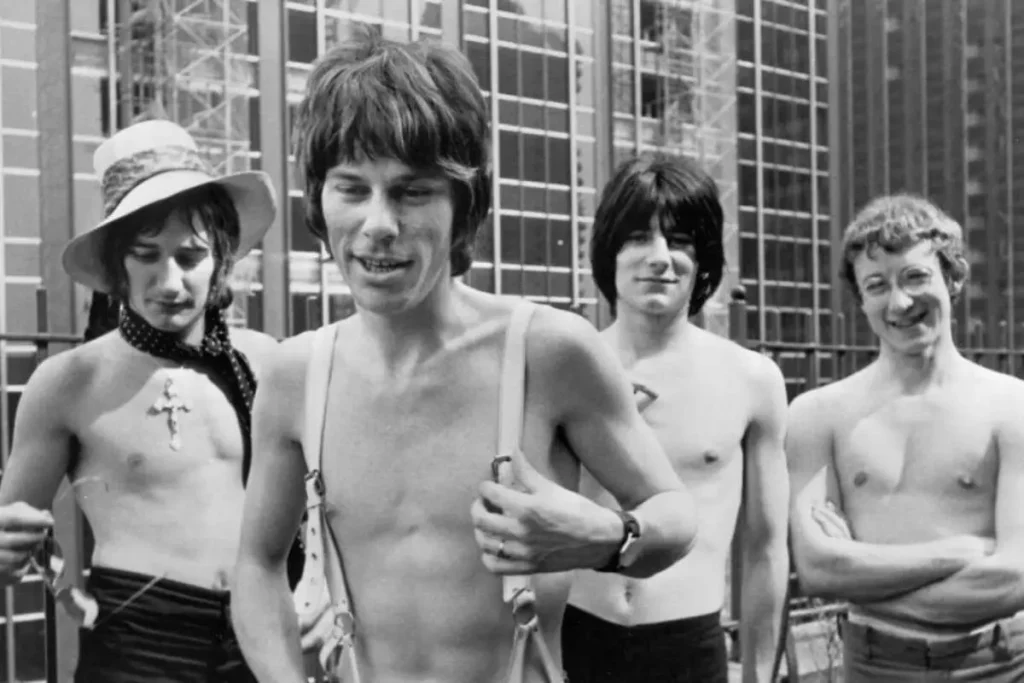
If you love classic rock but only know Jeff Beck from his solo work, the Jeff Beck Group is the giant missing piece in your record collection.
For a brief, chaotic stretch in the late 60s and early 70s, Beck, Rod Stewart and Ronnie Wood created a sound so heavy and soulful that it arguably sketched out Led Zeppelin’s playbook before Zeppelin hit the studio. Then, almost on cue, the whole thing imploded.
From Yardbirds exile to London wrecking crew
After leaving the Yardbirds in 1966, Beck spent a frustrating year cutting pop-leaning singles for producer Mickie Most, watching his guitar reduced to garnish on radio-friendly tunes. He wanted something nastier and closer to the American blues and R&B records he loved.
In early 1967 he formed the Jeff Beck Group in London with a then-unknown Rod Stewart on vocals, Ronnie Wood on bass, and a revolving cast of drummers that eventually settled around Micky Waller. They tore up the UK club circuit, signed with Epic in the US, blew minds at New York’s Fillmore East, and got so hot that legendary fixer Peter Grant lined up a Woodstock slot before the band splintered on the eve of the festival.
Those tours were loud, ragged and devastatingly effective. Reviews at the time talked about the band upstaging headliners and driving crowds into the kind of pandemonium usually reserved for Beatlemania.
‘Truth’ – the almost-forgotten big bang of heavy rock
The group’s first album, Truth, arrived in 1968 and should probably be filed next to the first Black Sabbath and Zeppelin LPs in any serious collection. Built from turbocharged versions of Yardbirds tunes, Chicago blues standards and a few originals, it welded Beck’s feral guitar to Stewart’s shredded voice in a way that felt genuinely dangerous.
Contemporary and later critics praised its overdriven take on the blues as a key stepping stone toward early heavy metal, with Classic Rock magazine going so far as to crown it a kind of hard-rock Holy Grail. The record landed in the US Top 20, introduced Stewart and Wood to a global audience, and quietly influenced a generation of guitar players who wore out their copies learning every bend and squall.The record landed in the US Top 20, introduced Stewart and Wood to a global audience, and quietly influenced a generation of guitar players who wore out their copies learning every bend and squall. Classic Rock magazine went so far as to crown it a kind of hard-rock Holy Grail.
Part of what makes Truth so volatile is the personnel orbiting the core band. Sessions roped in Jimmy Page on rhythm guitar, John Paul Jones on bass and organ, Keith Moon on drums and Nicky Hopkins on piano, turning tracks like “Beck’s Bolero” into a shadow version of the supergroups that would soon dominate rock radio.
Key tracks from ‘Truth’
- “Shapes of Things” – Slows a Yardbirds hit to a stalking groove, with Beck tearing the melody apart while Stewart howls over the top.
- “You Shook Me” – A Willie Dixon blues recast as a molten slow-burner. Led Zeppelin would cut their own version months later, fueling endless arguments about who really defined the template.
- “Morning Dew” – Apocalypse folk turned into wah-drenched drama, hinting at the atmospheric side of Beck’s later fusion work.
- “I Ain’t Superstitious” – Beck’s dive-bombing guitar and Stewart’s snarling vocal feel like heavy metal before the term existed.
- “Beck’s Bolero” – Essentially an instrumental supergroup one-off, it shows how far Beck was willing to stretch song form and texture in 1966.

‘Beck-Ola’, burnout and the gig that never happened
The follow-up, Beck-Ola (1969), was shorter, louder and even less interested in pop polish. Nicky Hopkins became a full-time member, and the band leaned into a thicker, more brutal sound on tracks like “Spanish Boots” and “Rice Pudding”.
Released under the Jeff Beck Group name, the album pushed the band further toward heavy rock, cracked the US Top 15 and the UK Top 40, and marked the final studio outing with Stewart and Wood before they left to form Faces. The album pushed the band further toward heavy rock, cracked the US Top 15 and the UK Top 40, and marked the final studio outing with Stewart and Wood before they left to form Faces.
Decades on, reappraisals have cast Beck-Ola as a foundational British rock record, highlighting how its dense riffs and unorthodox arrangements anticipated much of the 70s hard rock aesthetic. Writers have pointed to the sheer weight of “Plynth (Water Down The Drain)”, the deranged reworkings of “Jailhouse Rock”, and the closing “Rice Pudding” as proof that Beck was testing the limits of the blues-rock format while most bands were still trying to copy it.
Behind the scenes, though, the band was cracking. Constant touring, clashing egos and Beck’s perfectionism made the group volatile. They were advertised for Woodstock, but Beck pulled the plug at the last minute, later arguing that the band would have been frozen forever as a late-60s act before they had truly nailed the music.
One of their wildest detours came backing Donovan on the single “Barabajagal (Love Is Hot)”, essentially the Jeff Beck Group in all but name. The chaotic session, with Beck turning up guitar-less and grabbing a rental Strat on the spot, produced a hit that climbed into the UK Top 20 and US Top 40, proving just how explosive this line-up could sound when pointed at a single.
The second Jeff Beck Group: funk, jazz and the ‘Orange Album’
After a serious car crash sidelined him around the turn of the decade, Beck rebuilt the Jeff Beck Group with a new cast: Bobby Tench on vocals and rhythm guitar, Max Middleton on keys, Clive Chaman on bass and Cozy Powell on drums. The music shifted away from straight blues toward a chewy blend of soul, jazz-rock and early funk.
The 1971 album Rough And Ready captured this phase, with Beck producing himself and writing much of the material. Recorded at Island Studios and released in October 1971, it reached the mid-40s on the album charts and drew polarised reviews, some critics dismissing it as unfocused while others hailed its forward-looking mix of groove and guitar fire.
A year later came the self-titled Jeff Beck Group, often nicknamed the “Orange Album” after its cover art. Produced by Stax legend Steve Cropper in Memphis, it doubled down on fluid jazz-rock textures and featured two luminous instrumentals – a reimagined “I Can’t Give Back the Love I Feel for You” and the closing “Definitely Maybe” – alongside a ferocious take on Don Nix’s “Going Down”, a song Beck would keep in his setlists for decades.
Later commentators have zeroed in on “Going Down” in particular as a near perfect storm of tone, phrasing and aggression, with some writers flatly calling it one of the greatest rock guitar performances ever caught on tape. The irony is that it lives on an album many casual fans have never heard start to finish. Later commentators have zeroed in on “Going Down” in particular as a near perfect storm of tone, phrasing and aggression, with some writers flatly calling it one of the greatest rock guitar performances ever caught on tape.
Why the Jeff Beck Group never became Zeppelin-size – and why they still matter
On paper, the Jeff Beck Group had everything: a devastating guitarist, a once-in-a-generation rock singer, a future Rolling Stone on bass and a sound that practically defined late-60s heaviness. What they did not have was stability. Lineups changed constantly, management was messy, and Beck himself was too restless to keep playing the same set long enough to become a stadium act.
Beck was also wired differently from his guitar-hero peers. He was less interested in dominance than in exploration, bending pitch, time and tone in ways that made genres feel irrelevant and turned the electric guitar into something closer to a human voice or a synth than a traditional rock weapon.
As he grew older he moved even further from the volume wars, deliberately downsizing his amps and talking about tone and dynamics as the real source of power. In interviews he argued that if you could not make a small amp sing, cranking four full stacks would only make things worse – a philosophy that runs completely counter to the macho mythology of classic rock. As he grew older he moved even further from the volume wars, deliberately downsizing his amps and talking about tone and dynamics as the real source of power.
By the mid 70s he had abandoned the Jeff Beck Group banner for good and plunged into instrumental fusion with albums like Blow By Blow, solidifying the idea that his truest voice was the guitar itself, not a frontman’s microphone. In the process, the band that had helped invent heavy rock became a cult reference point instead of a household name. By the mid 70s he had abandoned the Jeff Beck Group banner for good and plunged into instrumental fusion with albums like Blow By Blow.
Essential Jeff Beck Group listening guide
| Song | Album | Year | Why it matters |
|---|---|---|---|
| Shapes of Things | Truth | 1968 | Turns British beat-group pop into a slow, apocalyptic stomp and announces Beck’s new sonic language. |
| You Shook Me | Truth | 1968 | Heavy blues so thick it practically dares comparison with Led Zeppelin’s later version. |
| I Ain’t Superstitious | Truth | 1968 | Prototype metal riffing with Stewart howling over Beck’s fuzzed-out guitar avalanches. |
| Spanish Boots | Beck-Ola | 1969 | Shows how far the band had moved toward riff-driven, 70s-style hard rock. |
| Rice Pudding | Beck-Ola | 1969 | Seven minutes of controlled chaos that ends mid-phrase, like the tape was ripped from the machine. |
| Got the Feeling | Rough And Ready | 1971 | Funky, hooky and surprisingly commercial, it hints at the fusion direction to come. |
| New Ways / Train Train | Rough And Ready | 1971 | Elastic groove playing that would not sound out of place on an early 70s jazz-rock LP. |
| Going Down | Jeff Beck Group | 1972 | Beck in full flight over a pounding shuffle – the definitive lesson in how to make three chords feel lethal. |
Closing thoughts
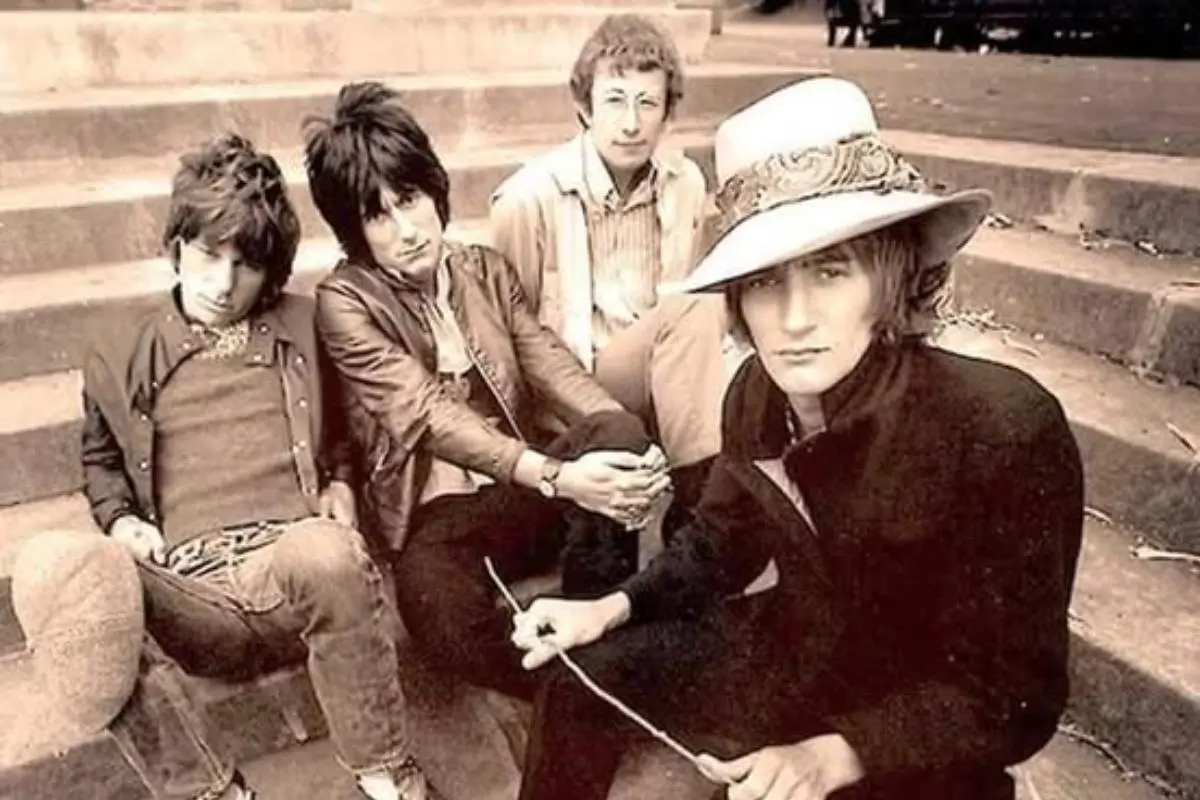
If you strip the mythology out of classic rock and just listen to the records, the Jeff Beck Group sound less like a footnote and more like the missing chapter. Truth and Beck-Ola in particular feel like the rough drafts for an entire decade of heavy music.
The band burned out fast, but that volatility is part of the appeal. These records capture the moment when blues, R&B and British volume collided so violently that something new emerged – and then, just as the rest of the world caught up, Jeff Beck was already somewhere else.


