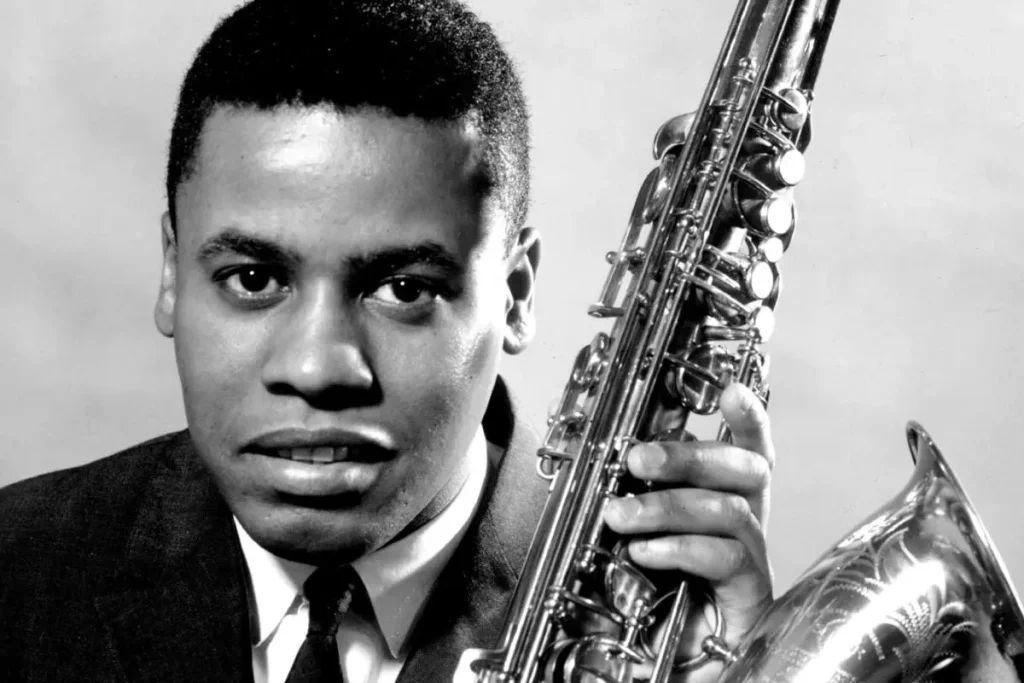
Wayne Shorter liked to insist there is no such thing as a real beginning or end. In one interview he dismissed those ideas as temporary “word tools,” talked about reading Stephen Hawking’s The Grand Design and its claim that the universe “created itself,” then described jazz as “something that’s done in the moment” and asked, “How do you rehearse being in the moment” if the music is really about losing fear of the unknown.
If that sounds more like a cosmologist than a saxophonist, that is the point. Shorter treated a jazz set as a lab for questions most bandleaders are too polite or too scared to touch.
Why Herbie Hancock called Wayne Shorter the master writer
Inside Miles Davis’s volatile mid 1960s quintet, pianist Herbie Hancock insists that the quietest guy in the room was often steering the ship. In Len Lyons’ book The Great Jazz Pianists, he remembers Shorter as “the master writer” in the band and one of the few who could hand Miles a chart that did not get changed.
Miles agreed. In an oft quoted passage from his autobiography, cited by writer Greg Thomas, he calls Shorter “a real composer” who wrote full scores and parts for everyone, and who brought a rare curiosity about what would happen if you pushed musical rules until they cracked instead of saluting them from a safe distance.
In other words, the supposed sideman was the group’s in house architect. Where earlier Davis bands stretched over standard forms, Shorter arrived with asymmetric themes, ambiguous harmonies and cryptic titles that turned every tune into a little science fiction story.
Music theorist Keith Waters bluntly describes Shorter as one of the most significant jazz composers of the 1960s, noting how pieces like “El Toro,” “Virgo” and “Face of the Deep” rely on irregular phrase lengths, axis progressions and harmonies that dodge easy tonal labels.
On paper, many of those tunes barely look like conventional songs at all. Take his ballad “Iris:” scholars comparing Shorter’s original lead sheet to the Miles Davis recording point out that the band shifted the meter, stretched the phrase lengths and thickened the harmony into stacked 11th and 13th chords, turning a concise idea into a twenty five bar maze for improvisers.
Yet even when the band warped his materials, the core DNA was his. Obituaries have stressed that Shorter compositions such as “Speak No Evil,” “Footprints,” “Nefertiti” and “Juju” set a new bar for melodic and harmonic sophistication and quickly became standards serious small groups are expected to wrestle with.
No beginnings, no endings: Shorter’s cosmic view of music
Shorter’s refusal to treat a tune as tidy drama with exposition, climax and resolution mirrors the way he talked about life. If there is no true start or finish, then every chorus is just dropping into a story already in motion and exiting before it is “done.”
That metaphysical streak was not some late career posture. Associated Press obituaries describe him as a visionary composer, saxophonist and devout Buddhist, a gentle but relentlessly inquisitive soul for whom spiritual practice and music were just different faces of the same long quest.
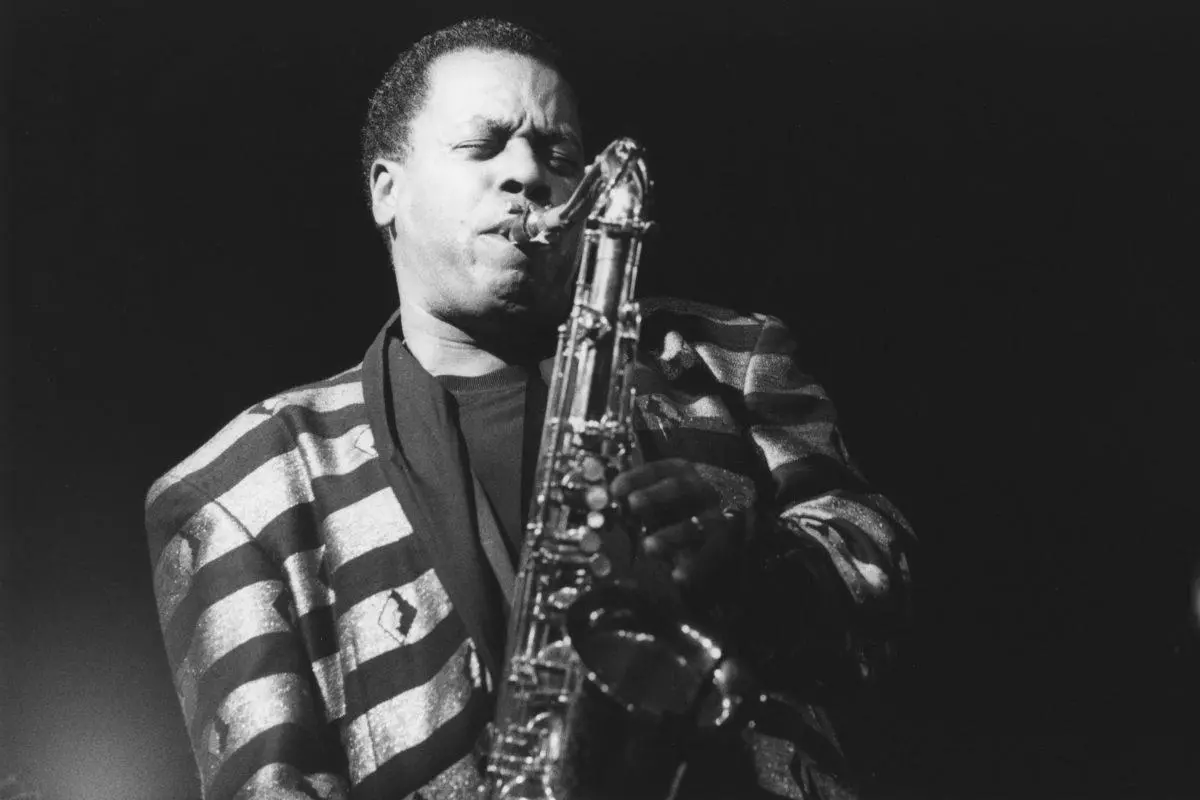
Hawking, spontaneous creation and the jazz solo
Shorter was not name dropping Hawking just to sound clever. In The Grand Design, Hawking argues that a law such as gravity makes it possible for the universe to “create itself from nothing,” and that “spontaneous creation is the reason there is something rather than nothing, why the universe exists, why we exist.”
For a composer obsessed with erasing beginnings and endings, that line is pure gasoline. If reality itself is a kind of self starting improvisation, then every solo, every strange voicing, is a small scale replay of the universe bursting out of silence with no guarantee of where it is heading.
Jazz as “I dare you”
By the time he was promoting his album Without a Net, Shorter had boiled his definition of jazz down to a dare. “Jazz shouldn’t have any mandates,” he told NPR, adding that for him the very word jazz really means “I dare you” and asking the killer question, “How do you rehearse the unknown?”
He was not celebrating laziness or chaos. The dare was to learn harmony, rhythm and form so deeply that you could throw yourself into the void without clinging to them, exactly what Miles was getting at when he praised Shorter for knowing the rules well enough to bend them instead of merely obeying them.
Pianist Danilo Pérez recalls asking Shorter when their quartet would rehearse, only to be told, “You can’t rehearse the unknown.” For a generation raised on spotless conservatory juries, that sentence lands like a slap in the face.
Listening to Shorter through this lens
If your jazz shelves lean heavily on the 1950s and 60s, chances are you already own some Shorter records. To really hear what Hancock and Davis were talking about, try listening to them as philosophical experiments in time and uncertainty rather than just cool tunes.
- On “Footprints,” notice how the groove slides between waltz and straight time and how the harmony never quite settles, as if the band is testing how long you can walk without a clear ground under your feet.
- On “Nefertiti,” listen to how the horns keep repeating the theme while the rhythm section improvises underneath, turning the usual solo order upside down so that background becomes foreground.
- On later quartet recordings like Beyond the Sound Barrier or Without a Net, focus on how often the music seems to start in the middle of a thought and end mid sentence, exactly in line with Shorter’s claim that there are no real beginnings or endings.
For musicians: radical, not reckless
For players, Shorter’s philosophy is not a license to coast or hide behind free jazz noise. It is a demand that you know harmony as well as any classical musician, then have the nerve to risk sounding vulnerable while you search for something you did not plan.
One practical way to work on that is to treat every rehearsal as only half about notes and half about comfort with not knowing. Take a standard you think you own, strip away the intro and tags, change where the form starts, or agree that no one will solo in the expected order and see what that does to your reflexes.
Shorter’s own career shows that this attitude does not kill rigor. It produced some of the most carefully crafted post bop compositions on Blue Note, some of the wildest electric experiments with Weather Report, and one of the most intricate modern operas in his collaboration with esperanza spalding on Iphigenia.
Conclusion: the courage to sound unsure
Herbie Hancock and Miles Davis did not call Wayne Shorter the master writer or a real composer because his charts were tidy. They heard a mind willing to put its doubt, curiosity and cosmic questions directly into the notes.
For listeners, that can feel disorienting, especially if you grew up thinking jazz was either pretty dinner music or athletic bebop. For Shorter, jazz was a way to train yourself to live with the unknown and maybe even enjoy it.
In an era obsessed with certainty, that might be his most subversive legacy. He made it cool for virtuosos to sound unsure and invited the rest of us to stop rehearsing our lives so tightly that nothing truly new can happen.