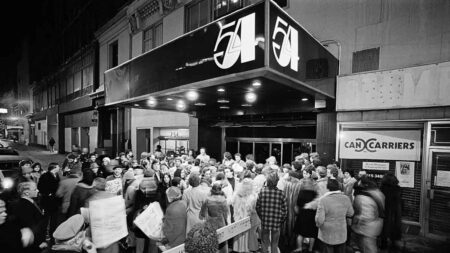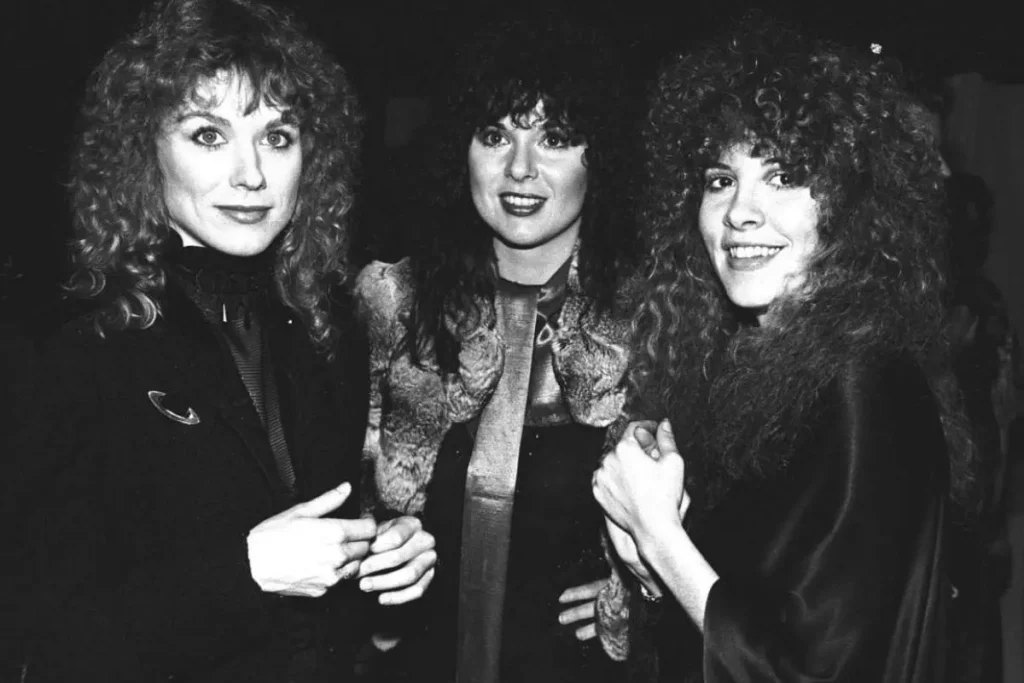
Somewhere on the wall of a die-hard classic rock fan hangs a grainy photo of three women who changed the game. Ann and Nancy Wilson of Heart flank Stevie Nicks, all curls, eyeliner and attitude, supposedly caught in the wild at Studio 54.
That single image – sold as signed 11x14s and glossy posters – has become its own little urban legend. Whether or not the shot was actually taken inside Studio 54 almost matters less than what it represents: the moment three queens of 70s and 80s rock seized a space that was never built for them in the first place.
The night everyone wants to believe happened
Autograph dealers describe the photo as “Ann & Nancy Wilson with Stevie Nicks at Studio 54,” and fans snap it up like a relic from a lost temple of glitter and cocaine. Big-box retailers quietly move poster versions that simply market it as a candid of Heart and Stevie, because the image sells even without the club’s name attached.
Here is the uncomfortable truth: there is no widely cited, date-stamped documentation that nails down the exact night, photographer, or even confirms the club beyond memorabilia descriptions. What we do know is that the myth lines up with the timeline. Studio 54 opened in 1977, just as Heart’s Dreamboat Annie and “Barracuda” were turning them into stars and Fleetwood Mac’s “Dreams” had made Stevie Nicks the most recognizable witch in rock.
So the legend persists because it fits the story fans want to tell themselves. Heart and Stevie did not just dominate radio and arenas – the story says they walked into the most exclusive room in New York and owned that too. Whether the venue tag is 100 percent accurate or not, the symbolism is brutal and clear.
Studio 54 vs the rock world that said “disco sucks”
Studio 54 was not a normal club. It was an ex-TV studio turned sensory overload machine: theatrical sets, a moon that “snorted” confetti, champagne sprayed like fire hoses, and a door policy that treated fame as currency. On a random night you could see Bowie, Jagger, Grace Jones, fashion royalty and half of Hollywood sharing the same sweaty dance floor.
Behind the sparkle was something uglier. Co-owner Steve Rubell famously bragged that “only the mafia made more money,” and federal agents eventually raided the place, uncovering millions skimmed from the books and sending the owners to prison for tax evasion. At the same time, outside those velvet ropes, the “Disco Demolition Night” backlash turned rock crowds into a mob that literally blew up disco records in a baseball stadium.
Here is the twist: fans remember rock as the righteous rebellion and Studio 54 as decadent fluff. In reality, the misfits, queer kids and genre-benders on that dance floor had far more in common with Ann, Nancy and Stevie than the beer-soaked guys chanting “disco sucks” ever did. The photo of those three inside that world flips the script on who was actually challenging norms.
Three women who rewired rock’s power grid
By the late 70s, the rock landscape was still overwhelmingly male. Most of the women who broke through – Carole King, Joni Mitchell, Janis Joplin, Grace Slick – were treated as rare exceptions rather than the new rule. Into that bottleneck walked two Seattle sisters with a Led Zeppelin fixation and a California songwriter who wrote about witches, dreams and power instead of boys and heartbreak.
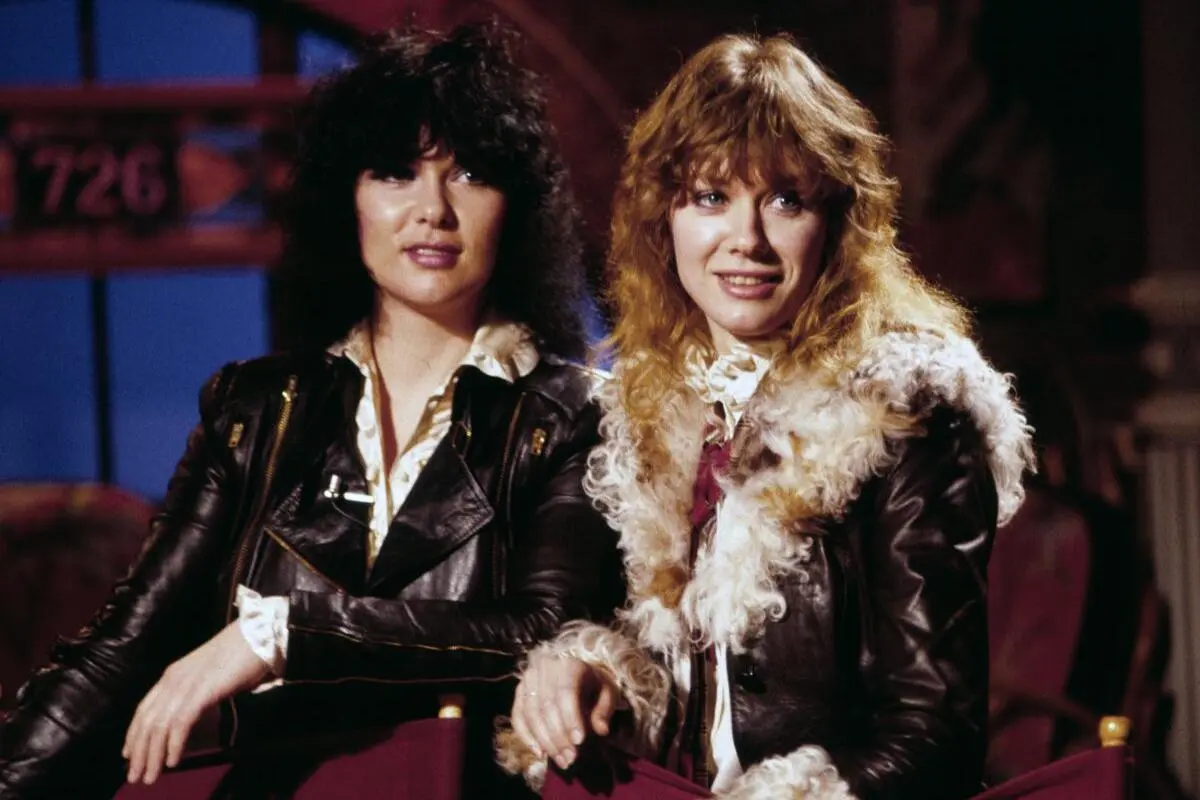
Ann Wilson – the voice that could level a stadium
Ann Wilson grew from a shy kid with a stutter into one of the most dangerous singers in rock, fronting Heart with a four-octave range that could float through “Dreamboat Annie” or rip the roof off “Barracuda.” When “Barracuda” exploded in 1977, it was not just a riff showcase – it was Ann spitting venom at an industry creep who had sexualized the Wilson sisters in a trade ad, turning her disgust into a permanent-rock-radio war cry.
Ann has been blunt about how little the business understood women like her. She recalls that in the 70s and 80s the only template executives had was the “Lita Ford-type, real sexy kind of porn girl image,” while she and Nancy were “down-to-earth gals you could go camping with.” In the 80s, people around them pushed hard to shove Nancy to the front “wearing almost no clothes, jumping off a cliff with a guitar.” That Studio 54 myth-photo matters because it captures them on their own terms, not as some label’s idea of a pinup band.
Nancy Wilson – the acoustic assassin in a video age
If Ann was the flamethrower, Nancy was the sniper. Her acoustic intro to “Crazy On You” is still one of the most vicious fingerpicked openings in rock, and the main riff of “Barracuda” is her answer to every guy who ever asked if she “really” played guitar. She smuggled intricate folk voicings and odd accents into songs that still hit like hard rock, proving you could be both technically deep and radio friendly.
Then MTV arrived and tried to turn her into something else. Nancy has talked about how she and Ann walked into rock thinking they were just like Zeppelin or the Stones, only to find the early 80s obsessed with how much skin they would show on camera. There was, as Ann put it, “no precedent for the image of a strong woman in rock,” so the default was to strip them down and hope for ratings. In that context, a photo of Nancy shoulder to shoulder with Stevie Nicks – not as a prop, not in lingerie, just as another heavy hitter in a club – is low-key revolutionary.
Stevie Nicks – the witch who broke the spell
While Heart were kicking doors in from the Pacific Northwest, Stevie Nicks was quietly hijacking one of the biggest bands on earth. “Dreams,” written in a few minutes in a side room at the Record Plant during the toxic breakup soup that became Rumours, gave Fleetwood Mac its only number one single in the United States and proved that a song built on subtle groove and emotional ambiguity could still dominate AM radio.
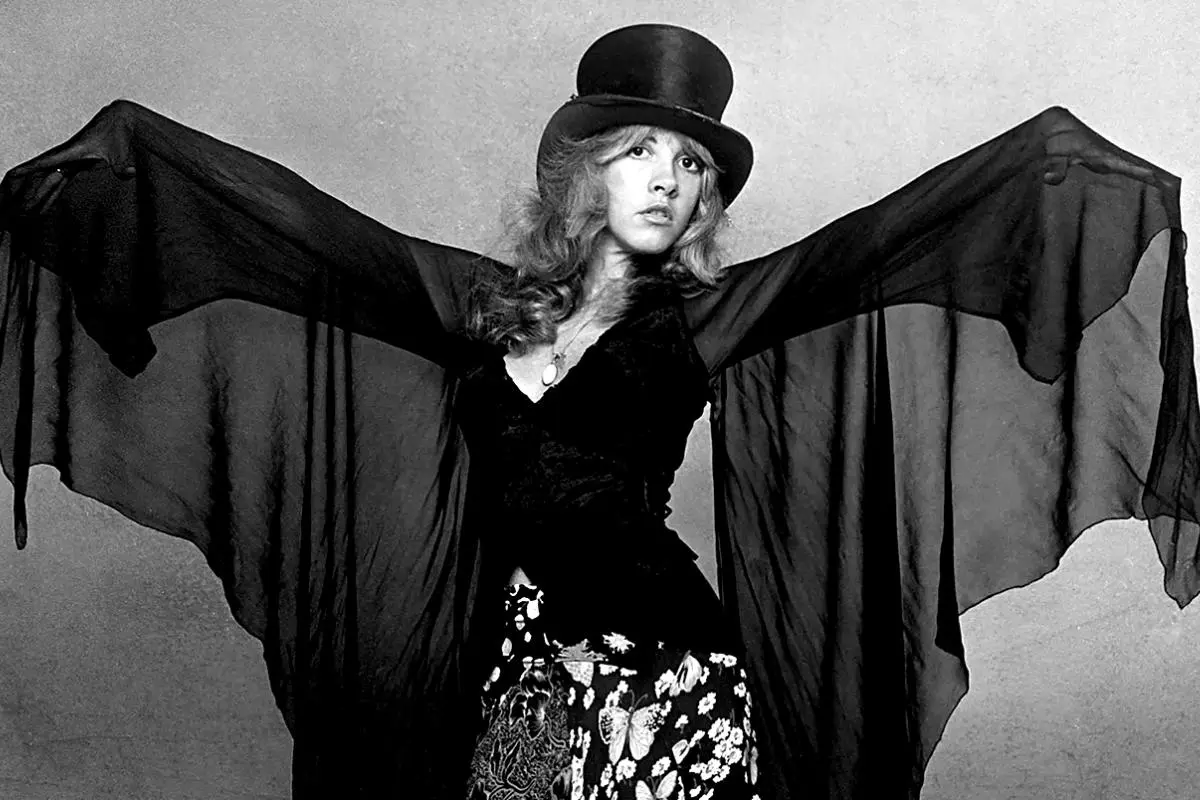
Stevie’s power went far beyond chart stats. Her lyric heroines – from “Rhiannon” to the woman “taken by the wind” – embodied a kind of feminine autonomy that refused the saint-or-sinner box rock usually reserved for women. She doubled down with fashion: shawls, chiffon, platform boots and top hats that turned the rock witch archetype into armor rather than a punchline. Critics and scholars alike have pointed out that Nicks spent the 70s and 80s walking a tightrope between audience expectations of “the rock chick” and her own need to control her image and narrative, making her a case study in how a woman could bend the rules without pretending the rules were not there.
| Artist | Role | Signature weapon | Calling card track |
|---|---|---|---|
| Ann Wilson | Lead vocalist, songwriter | Four-octave power and control | “Barracuda” |
| Nancy Wilson | Guitarist, vocalist, songwriter | Aggressive acoustic and riff writing | “Crazy On You” intro |
| Stevie Nicks | Vocalist, lyricist, band visionary | Mythic storytelling and stage persona | “Dreams” |
Why that “Studio 54” image hits harder than a stadium poster
Most classic rock imagery trains you to think in terms of scale: giant stages, walls of Marshalls, a male singer crucified on a mic stand while pyro explodes behind him. The Wilson sisters with Stevie Nicks in a crowded club is the opposite kind of power shot. No special lighting, no spectacular staging – just three women who did not need any of that to sell out arenas anyway.
It also quietly rejects the fake catfight narrative that the industry loves to paste onto women. Heart have said they never set out to be “women in rock” standard-bearers at all; Nancy recalls feeling surprised to be singled out that way, seeing themselves instead as part of a continuum that ran from Janis Joplin and Grace Slick to Fleetwood Mac. The vibe in that photo is not rivalry, it is solidarity – three veterans taking a breath together while the circus rages around them.
In a sense, that one candid is more subversive than half the leather-and-spandex “bad boy” shots of the era. It shows the real threat to the old order was not cocaine on the dance floor, but competent women who wrote, played and produced at the same level as the men, then had the nerve to enjoy themselves in the same rooms.
What musicians can actually steal from this moment
For players and songwriters, the point is not to cosplay 70s decadence. It is to notice what these three did musically and personally that let them walk into any scene – from a Vancouver club to a Manhattan VIP room – without blinking.
- Lead with the songs, not the scene. Heart’s breakthrough came from tracks like “Magic Man” and “Crazy On You” that stood up stripped bare, before any stylist or video director got involved.
- Blend worlds instead of picking sides. The Wilsons fused folk voicings with hard rock; Nicks mashed Laurel Canyon introspection, British blues dynamics and the dreamy pop and witchy imagery of her solo voice into something that worked in both FM rock sets and Top 40 rotations.
- Use image as armor, not a leash. Ann and Nancy spent the 80s fighting off attempts to turn them into pinups, while Stevie turned hyper-feminine costuming into a shield that let her control what people projected onto her.
- Treat peers as allies, not competition. That is the real lesson of the photo. Three headliners from different camps can occupy the same frame without anyone shrinking. If you are a younger artist, your “rivals” are often your future collaborators.
You do not have to be invited to Studio 54 to apply any of this. It is about building a musical identity so solid that whatever room you walk into bends a little in your direction.
The myth, the music, the reality
Maybe that autograph listing is perfectly accurate and the shot really was taken in the middle of Studio 54’s champagne fog. Maybe it is just a killer backstage photo that sellers learned moves more product when you slap that club’s logo on it. The historical record, at least so far, is slippery.
What is not slippery is what the image captures: three women who had already survived label nonsense, media sexism, band drama and the grind of the road, standing together in the supposed capital of 70s excess and looking utterly unimpressed. In the end, Studio 54 did not anoint Ann and Nancy Wilson and Stevie Nicks. If anything, they anointed that room by walking into it, then walked back out and kept ruling the only kingdom that really mattered – the songs.