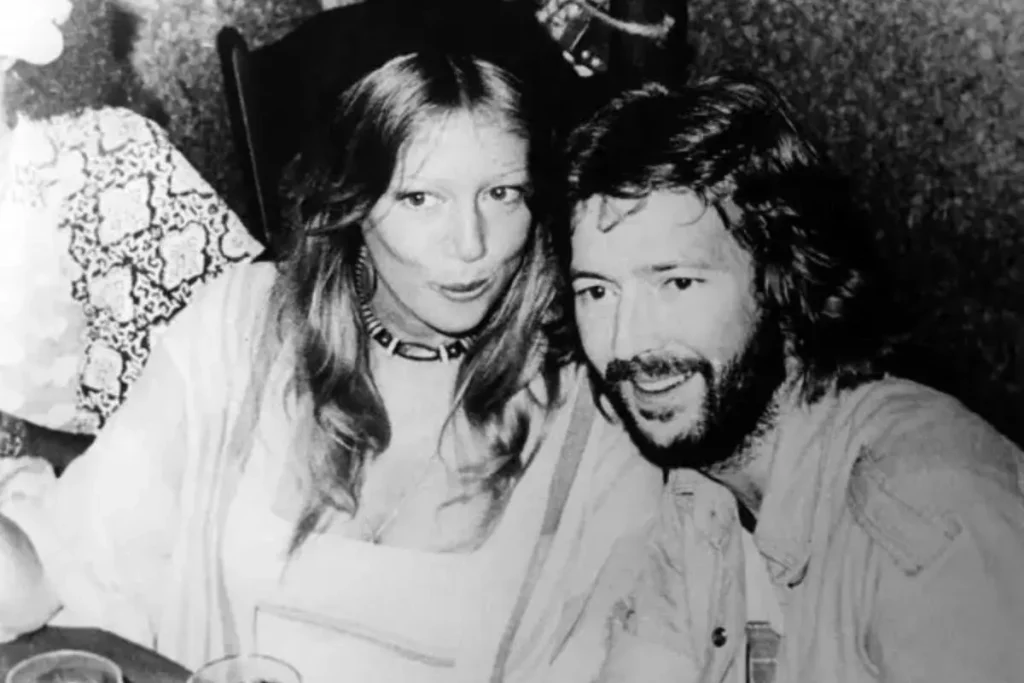
On March 27, 1979, in a small church on the edge of Tucson, Arizona, Eric Clapton finally married the woman who had haunted his songs for a decade: Pattie Boyd, ex-wife of his friend George Harrison. The ceremony at Temple Bethel reportedly drew only about 40 guests and was squeezed in the day before Clapton’s U.S. tour opened, with a larger reception months later at his Surrey estate where George, Paul McCartney and Ringo Starr jammed together for the first time in years.
If that sounds more like tour logistics than romance, the eyewitness accounts do not soften the picture. Boyd’s close friend Chris O’Dell remembers flying in from Los Angeles, sharing a room in a freeway motor hotel with Pattie and her sister Jenny, then heading to a tiny south-side church chosen precisely because reporters were unlikely to find it, with most of the guests drawn from Clapton’s road crew and producer Rob Fraboni’s circle, as she later recounted in stories accompanying her wedding photos.
Afterward, the newlyweds returned to a hotel room where the promised elegant cake quickly devolved into a food fight among band and crew. It was a rock-star wedding that felt more like an after-show party: rushed, slightly shambolic and already half swallowed by the machinery of a major tour.
A rock wedding in the Arizona desert
Temple Bethel, not a London palace
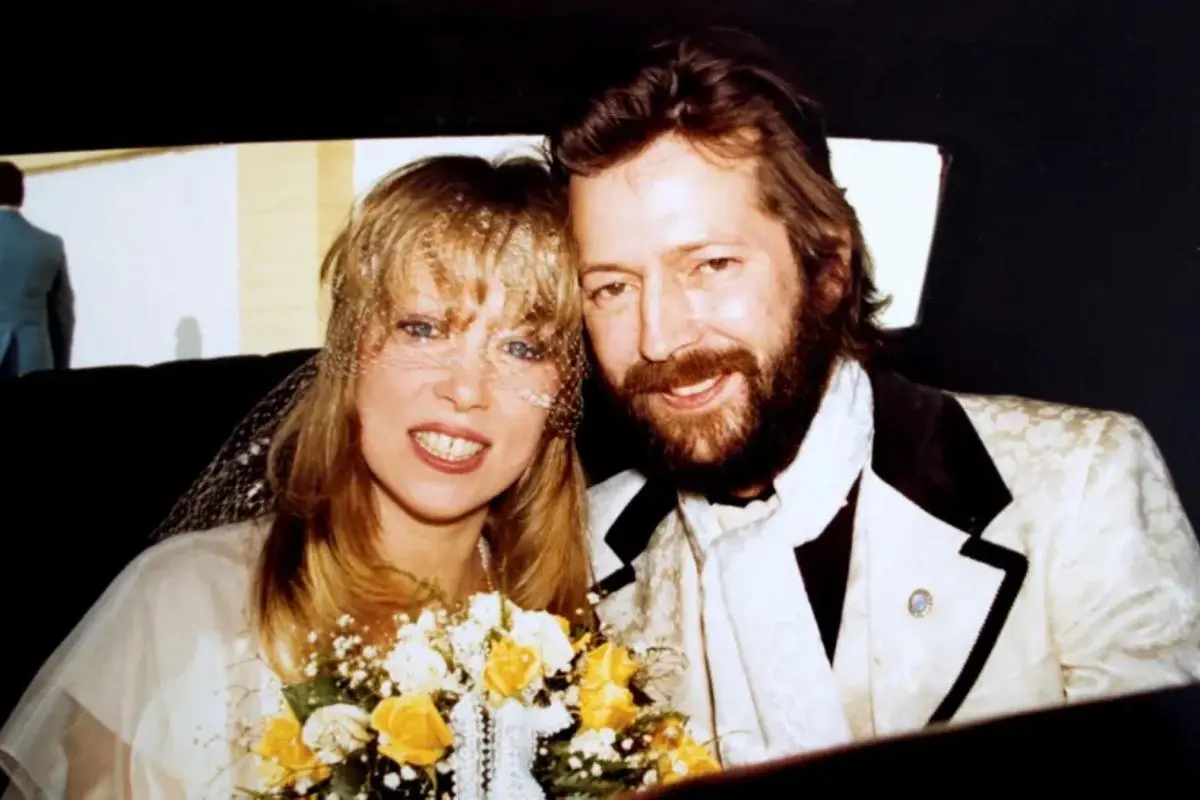
The most iconic image of the day is not from London or Los Angeles but from Tucson’s own press archive: a photograph of Clapton and Boyd stepping out of Bethel Temple, the low, unglamorous church where they had just exchanged vows. The caption notes that Boyd, who had once been married to George Harrison, later wrote that hearing Clapton’s “Layla” for the first time was so overwhelming it helped pull her toward him, long before anyone imagined they would marry in an Arizona side street.
Local obsession with that odd choice of venue grew so strong that the Arizona Daily Star eventually had to run what it bluntly called a “Clapton correction”. O’Dell clarified that the wedding was at Apostolic Bethel Temple near Valencia Road and 12th Avenue, followed by a low-key reception at the Sheraton Pueblo Inn, and that George Harrison was nowhere near Tucson that week; they were there because Tucson was simply the first stop on Clapton’s American tour and conveniently off the British tabloids’ radar.
A prank, a bet and a best man
Decades later, Boyd described the wedding with a coolness that still shocks fans who see it as the culmination of rock’s grandest love story. In accounts drawn from her memoir, she calls it “more of a prank than a wedding,” claiming Clapton rushed the ceremony largely to win a drunken bet that he could get his manager’s face into the local paper; he duly made the manager best man and clinched the wager when the wedding photo ran in the Tucson press.
So you have one of the most charged romances in rock history being formalized in a cinderblock church, partly as a gag and partly to fit around a tour itinerary. It was romance wrapped in cynicism, a pattern that would echo grimly through the decade that followed.
From Beatle bride to “Layla”
The triangle that launched a thousand riffs
To understand why that little Tucson wedding still fascinates people, you have to rewind to the mid 1960s. Boyd was a 19-year-old model when she met George Harrison on the set of “A Hard Day’s Night”; they married in 1966, and she became the inspiration for his luminous Beatles ballad “Something.” In the late 1960s Harrison’s close friend Eric Clapton fell hopelessly in love with her, confessed his feelings around 1970 and, when she chose to stay with George, poured his anguish into “Layla” and the rest of Derek and the Dominos’ album Layla and Other Assorted Love Songs, while sliding into heroin addiction, a saga later summarized in retrospectives on their relationship.
After Clapton kicked heroin, he and Boyd began an affair around 1974 with Harrison’s wary blessing; Boyd and Harrison divorced in 1977, the same year Clapton recorded “Wonderful Tonight” about waiting for her to get ready for a night out. From the outside, their 1979 wedding looked like the blissful resolution of a tortured triangle, but even that American Songwriter summary concedes that the marriage itself was a wreck: Clapton’s alcoholism, episodes of physical abuse, repeated affairs and the sorrow of failed attempts to have children, culminating in the birth of his son Conor with another woman and a divorce from Boyd in 1989.
Love letters, not just love songs
If the songs left any doubt about the extremity of Clapton’s obsession, the letters have erased it. Recently auctioned correspondence from 1970 shows him writing to Boyd while she was still Mrs. Harrison, begging to know whether she still loved her husband or had “another lover,” lamenting that his own romantic life was a “galloping farce” as he juggled other women, including Boyd’s sister. Reports on those letters describe him in one note, scratched on a torn title page from Of Mice and Men, calling her “Layla” and declaring he would sacrifice his family, his god and even his own existence if she would only choose him.
These are not the calm, considered notes of a man weighing up a new relationship. They read like the diary of someone who has already tied his identity to a woman he cannot yet have, then turned that fixation into art that the whole world sings along to.
The real-life Layla
Clapton’s choice of the name “Layla” was not random either. He had been given a translation of the 12th century Persian poem Layla and Majnun, the story of a man driven insane by his unfulfilled love for a married woman, and explicitly grafted his own impossible longing for Boyd onto that legend in the song and album. When she finally left Harrison and, after their 1977 divorce, married Clapton during his Tucson tour stop, reality briefly caught up with the myth; Harrison even attended the later wedding party in England alongside Paul McCartney and Ringo Starr, apparently more bemused than embittered by the whole affair.
| Year | Key event | Song connection |
|---|---|---|
| 1964 | Boyd meets Harrison on “A Hard Day’s Night” set | Seeds for “Something” |
| 1966 | Harrison and Boyd marry | Boyd becomes Harrison’s primary muse |
| 1970 | Clapton confesses his love and is rejected | “Layla” and the Dominos album |
| 1977 | Harrison-Boyd divorce finalized | “Wonderful Tonight” recorded for Boyd |
| 1979 | Clapton and Boyd wed in Tucson | Clapton finally marries his “Layla” |
| 1989 | Boyd and Clapton divorce | Love triangle becomes pure history |
Marriage, fallout and a very strange friendship
From muse to collateral damage
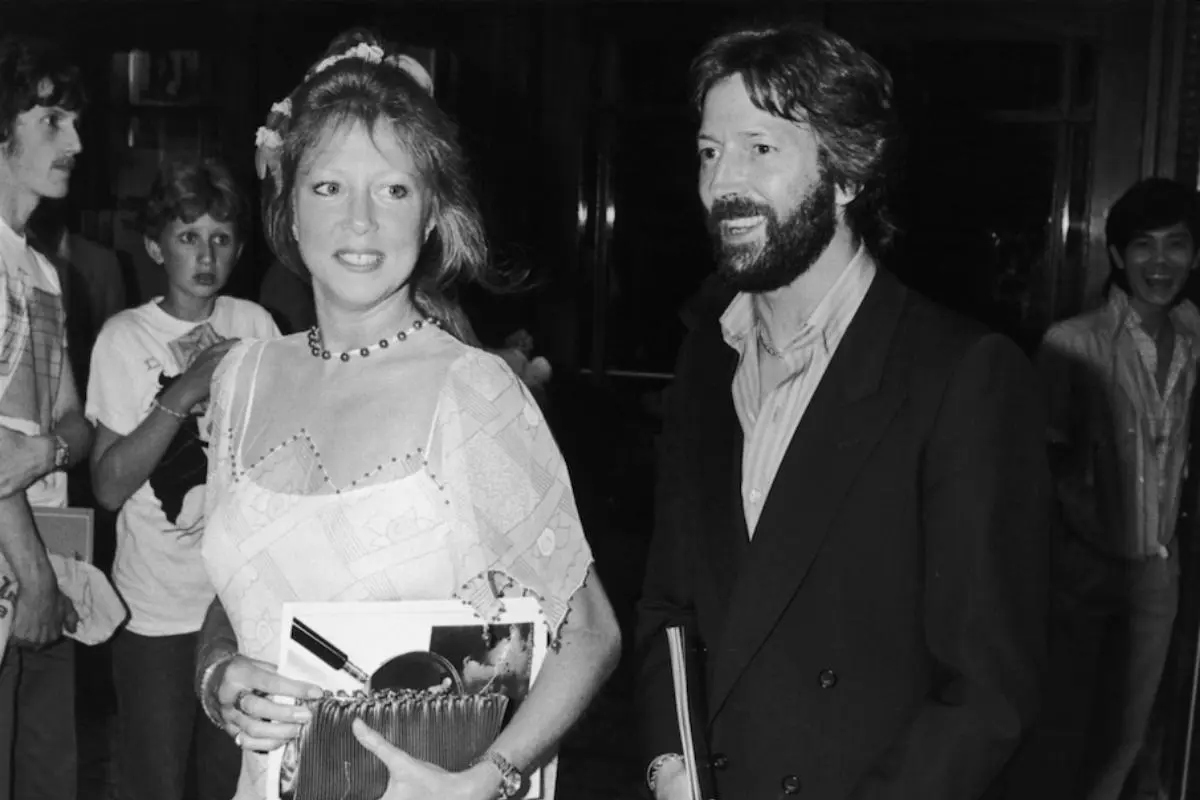
The brutal irony is that the same white-hot passion that powered those songs seems to have scorched the marriage itself. By most accounts, Boyd’s years with Clapton were defined less by romance than by his drinking, volatility and serial infidelity, all playing out under the public gaze that their songs had created, as later profiles of their relationship make clear. The Tucson wedding that once looked like rock’s answer to a Hollywood happy ending now reads more like the midpoint of a long, slow car crash.
Husband, ex-husband and “husband-in-law”
What truly pushes this story from messy into surreal is how civil the men managed to remain. Even with all the history, Boyd later recalled that her ex and her then-husband continued to socialize, and a Euronews report on her memorabilia auction notes that Harrison jokingly referred to Clapton as his “husband-in-law,” a grim little in-joke that only rock royalty could pull off with a straight face. Whatever private resentments simmered underneath, the public line was that the friendship survived the romantic wreckage.
Who profits from being a muse?
Boyd has been candid about the financial imbalance built into that mythology. In a later interview she said, half joking and half not, that she even asked Clapton for a share of the royalties from “Layla” during their divorce proceedings and was flatly refused, according to her own account of that conversation. Given that her face and story helped turn one blues guitarist’s turmoil into a catalogue of classics, the idea that she was left to keep working while the songs minted money for others adds a bitter twist to the legend.
Why Tucson still matters in this story
So what does that March afternoon at Temple Bethel actually represent? On one level it is the moment a notorious love triangle finally became legal, in a church chosen for its anonymity, witnessed mainly by crew, assistants and a couple of bridesmaids, while the tour buses idled outside, details preserved in O’Dell’s wedding mementos. On another, it shows how casually rock stars in that era treated events that most people regard as sacred – as a wager, as a photo op, as something to squeeze in between soundcheck and showtime, as Boyd herself suggested when describing the ceremony’s prank-like origins.
Yet the fact that local newspapers still publish the wedding photo, that letters and album artwork linked to that triangle now sell for huge sums and that fans still argue about who was in the room tells you something else. The Tucson wedding is not just a footnote in Clapton’s tour history; it is the real-world hinge on which songs like “Something,” “Layla” and “Wonderful Tonight” swing between fantasy and fact, quietly reminding us that behind every rock epic there is usually someone, often a woman, who paid the bill in private.